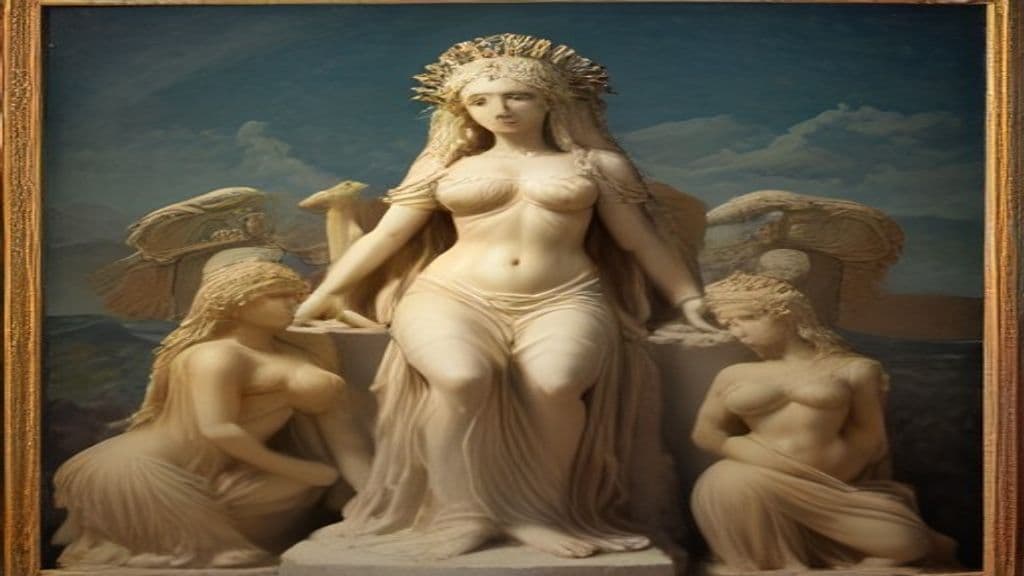
Accounts vary by author: in the Hesiodic tradition the canonical Nine Muses are daughters of Zeus and Mnemosyne (Memory), personifying knowledge and the arts; other ancient traditions and local cults recorded alternate genealogies (for example older triads and attributions connecting them to springs on Helicon and to Pegasus). Classical writers therefore present multiple, regionally attested origin narratives rather than a single universal birth-myth.
Classical sources treat the Muses primarily as goddesses rather than providing a single fixed physical description; they are female divine figures associated with spring sites, mountains and artistic paraphernalia. Later classical and Hellenistic tradition standardised nine named Muses (Calliope, Clio, Erato, Euterpe, Melpomene, Polyhymnia, Terpsichore, Thalia, Urania) each linked to particular arts. Poetic topography and mythic motifs also associate them with springs (the Heliconian springs produced by Pegasus) and with cult imagery of lyrical performance (lyre, song, and song-companionship), though the supplied sources emphasize function and cult location over uniform iconographic detail.
The Muses function as personifications and sources of poetic, musical, and learned knowledge: classical texts present them as the origin or embodiment of the material used in song and myth and as inspirational figures invoked by poets. Hesiod records that the Muses bring 'forgetfulness' (the forgetfulness of pain and a cessation of obligations), indicating an effect on human mental states connected to ritual and artistic experience. Mythic narratives recount the Muses judging artistic contests, participating in cultic gatherings led by Apollo (Apollon Mousēgetēs), and tending to mythic figures (for example gathering and burying the remains of Orpheus).
Weaknesses
- otherNone attested in supplied sources — classical material does not describe destructive vulnerabilities or wards against the Muses
Wards
- otherNone attested in supplied sources — the Muses are cult-deities and objects of invocation rather than hostile spirits requiring apotropaic measures
Apollo
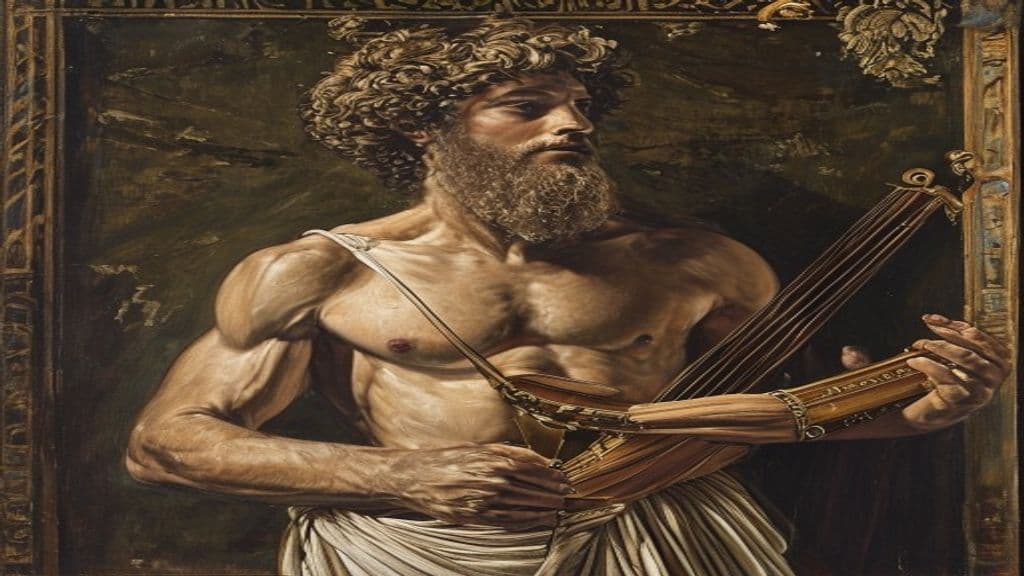
Olympian deity of ancient Greek religion associated with prophecy, healing, music, archery, purification, and civic order. Principal patron of the Delphic oracle, protector of youth and flocks, and ambivalently both healer and bringer of plague.

Mnemosyne
In ancient Greek myth and cult Mnemosyne (Μνημοσύνη) is a Titaness-personification of memory who functions as the ancestral source of the nine Muses and as a presiding power in poetic invocation and certain initiatory/oracular rites. In Hesiodic and classical practice she underwrites poetic authority; in Orphic and oracle contexts she is associated with waters of memory that contrast with Lethe.
Community Record
- [1]Muses — Wikipedia. Wikipedia contributors, 'Muses', Wikipedia, The Free Encyclopediawiki
- [2]Wikidata: Muses (Q110568218). Wikidata entry Q110568218wiki
- [3]May Day with the Muses — Project Gutenberg (Robert Bloomfield). Project Gutenberg edition of 'May Day with the Muses' by Robert Bloomfield (modern literary use cited in research notes)literary