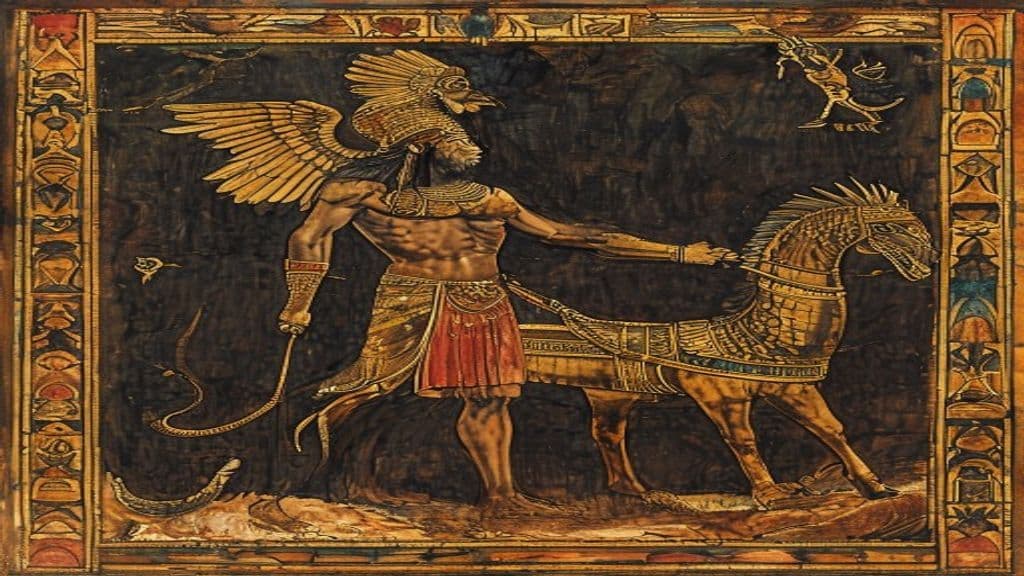
Ninurta is described in Mesopotamian tradition as a son of the chief god Enlil and functions as a principal member of the Anunnaki. In Sumerian and Akkadian compositions he appears as a culture-hero who, by slaying chaotic monsters (for example Asag in the Lugal-e poem and the Anzû bird in the Tablet of Destinies cycle), restores or enforces cosmic order and secures benefits such as irrigation and soil fertility for human communities. As Ninĝirsu he is the local lord of Girsu/Lagash and is celebrated in the inscriptions of rulers such as Gudea.
Surviving iconography and literary descriptions emphasize Ninurta’s attributes rather than a single fixed anthropomorphic portrait: he is depicted as a warrior with a chariot on which slain foes (for example the Dragon/Ušum) may be hung, armed with a named talking mace Sharur, and associated with agricultural implements (a plough appears on kudurrus and in Neo-Assyrian art). A perched bird symbol and scenes of him placing his foot upon a captured bird are also attested in myths and reliefs.
Across Sumerian and Akkadian sources Ninurta functions polyvalently: as a provider of agricultural bounty and irrigation (he is credited in Lugal-e with arranging stones to make the Tigris and Euphrates useful for irrigation); as an early healer and exorcist with power to cure illness and expel demons; as a judicial and scribal patron invoked in legal oaths and cult-legal procedures (e.g., penalties placed 'in the lap of Ninurta residing in Kalhu'); and as a martial champion who defeats monstrous beings (Asag, Anzû, the Dragon/Ušum) and retrieves cosmic instruments (Tablet of Destinies). He is also associated astronomically with the planet Saturn in Babylonian astrology.
Weaknesses
- otherMythic humiliation or mockery (narrative limitation)
- otherNo specific physical vulnerabilities recorded in the supplied sources
Wards
- ritualTemple cult and oath-sanctioning (invocation for protection and legal enforcement)
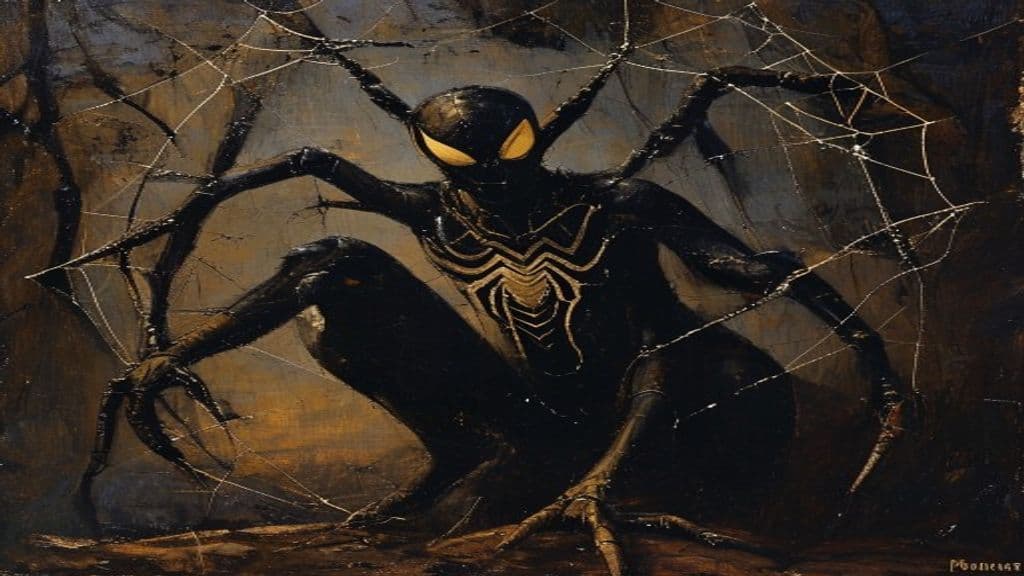
Anansi
The spider trickster god of Akan folklore — cunning, mischievous, and wise. Keeper of stories and teacher of human beings, brought through the slave trade into Caribbean and African-American tradition.

Enkidu
Enkidu is a legendary Mesopotamian 'wild man' figure from Sumerian and Akkadian Gilgamesh-cycle compositions, created to oppose Gilgamesh and later becoming his companion; his death and subsequent role as a shade shape Gilgamesh's reflections on mortality.
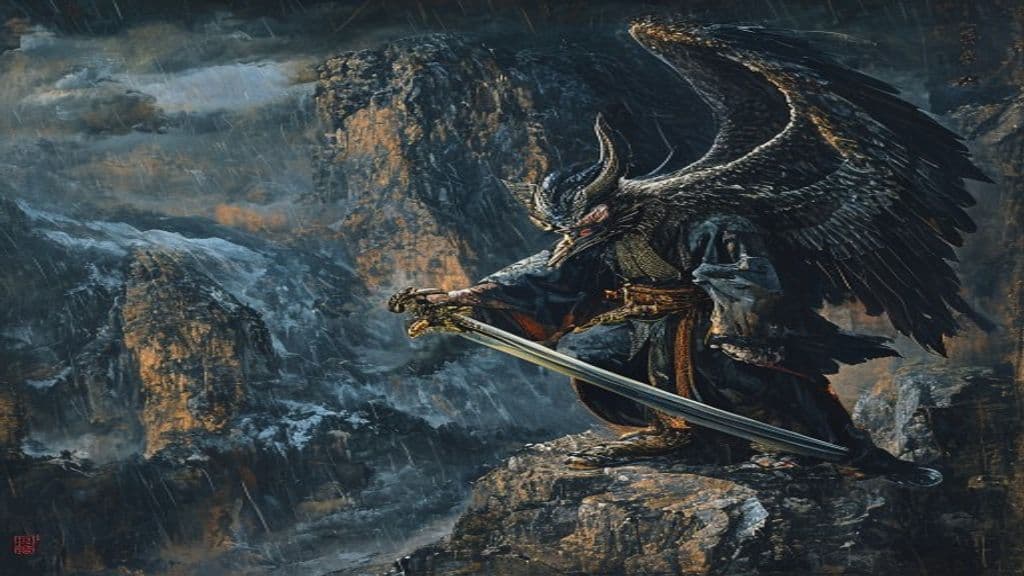
Tengu
Proud, warrior-like mountain spirits of Japan, associated with martial arts, pride, and the wild mountains. Neither fully good nor evil — they test and train warriors and monks, but punish the arrogant.

Dragon (Long)
Long (龍, "dragon") is a pervasive cultural and artistic motif that appears in Taoist sacred-geographical contexts, Chinese literature, and modern exhibitions; the provided sources treat it as part of the broader mythic imagery present around Taoist sites and ritual scenes rather than as a single, consistently described doctrinal entity.
Community Record
- [1]Ninurta - Wikipedia. Wikipedia article 'Ninurta' (accessed via provided research notes)wiki
- [2]Ninurta and the Turtle (translation). ETCSL translation 'Ninurta and the Turtle' (as cited in research notes)literary
- [3]Ninurta's journey to Eridug: a shirgida to Ninurta (Ninurta B). ETCSL (Ninurta B) translation (as cited in research notes)literary
- [4]The Exploits of Ninurta - Hymns to Ninurta (GatewaysToBabylon / Biblioteca Pleyades summaries). GatewaysToBabylon summary and Biblioteca Pleyades materials referenced in research notesother
- [5]Dragon (Ninurta) - Wikipedia. Wikipedia entry 'Dragon (Ninurta)' describing the Ušum and its defeat by Ninurtawiki