In the Genesis account Noah is presented as the tenth and final patriarch of the antediluvian line. God, displeased with humanity's wickedness, resolves to return the earth to a state of watery chaos and to remake it. God commands Noah to build an ark; Noah obediently constructs the vessel, gathers his family and representatives of land animals, and thus preserves the continuance of life. After the Flood God accepts Noah's burnt offering, establishes a covenant with Noah and through him with all humanity promising never again to destroy the earth by a flood, and gives the rainbow as a sign of that covenant. Rabbinic tradition later associates with Noah a set of universal moral precepts (the Seven Laws of Noah) binding on all humankind.
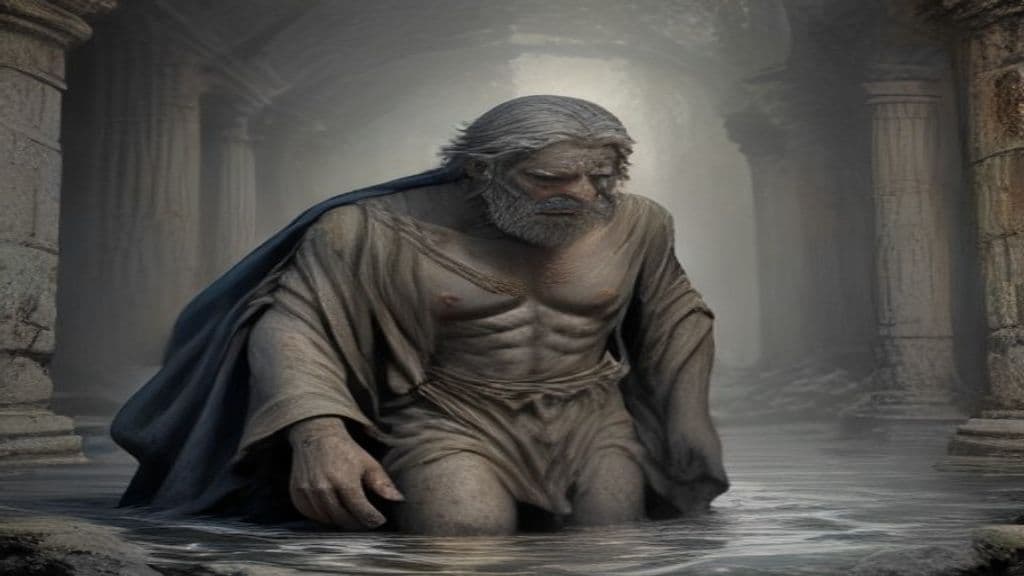
The supplied sources do not provide a descriptive account of Noah's physical appearance or attire. He is identified genealogically (son of Lamech; father of Shem, Ham, and Japheth) and by ages recorded in Genesis (Lamech 182 at Noah's birth; Noah 500 when his sons are born; Noah dies at age 950, 350 years after the Flood). Narrative details include his post‑Flood activity as a farmer who plants a vineyard and becomes intoxicated, but no iconographic or bodily description is supplied in the cited excerpts.
The sources attribute no innate supernatural powers to Noah; his notable capacities are his faithful obedience to divine command and his human actions: building the Ark at God's instruction, gathering animal representatives and his family, offering burnt offerings after the Flood, and cultivating the vine. Biblical and later traditions portray these actions as undertaken under divine mandate and as pivotal to the preservation and reconstitution of the created order.
Community Record
- [1]Noah - Wikipedia. Wikipedia contributors, 'Noah,' Wikipedia, The Free Encyclopedia.wiki
- [2]Noah - Wikidata. Wikidata entry Q19819780, label 'Noah'.wiki