In Greek mythological and religious tradition the Olympian gods form a close-knit group of principal deities who occupy the highest tier of the Greek pantheon. They are called Olympians because, according to tradition, they resided on Mount Olympus, which functions as their residential and symbolic royal locus. Classical lists identify twelve major deities — commonly Zeus, Hera, Poseidon, Demeter, Aphrodite, Athena, Artemis, Apollo, Ares, Hephaestus, Hermes, and either Hestia or Dionysus — who together constitute the central actors of many Greek myths and the focus of major cult identity in the surviving summaries of the tradition (Source 1).
The supplied sources do not provide a systematic, unified physical description of the Olympian gods as a group; instead they are presented as individual anthropomorphic deities named in the pantheon. One source highlights Zeus as an adult male deity associated with thunder and lightning, implying an anthropomorphic royal figure with control over thunderbolts (Source 13). Beyond individual glimpses in later iconography and modern media adaptations, the provided material does not supply a collective iconography or set of physical traits for all Olympians (Source 1).
As the major deities of the Greek pantheon the Olympians are depicted as powerful divine agents whose roles and powers vary by individual deity (Source 1). The supplied notes specifically identify Zeus as the most powerful among them in the received summaries and associate him with the ability to generate lightning bolts and thunder (Source 13). Modern media and contemporary adaptations often portray the Olympians as combat-capable, high-powered figures (for example in God of War II and DC comics/video games), but those portrayals are explicitly modern fictionalizations and not presented in the sources as ancient cult claims (Sources 4, 6).
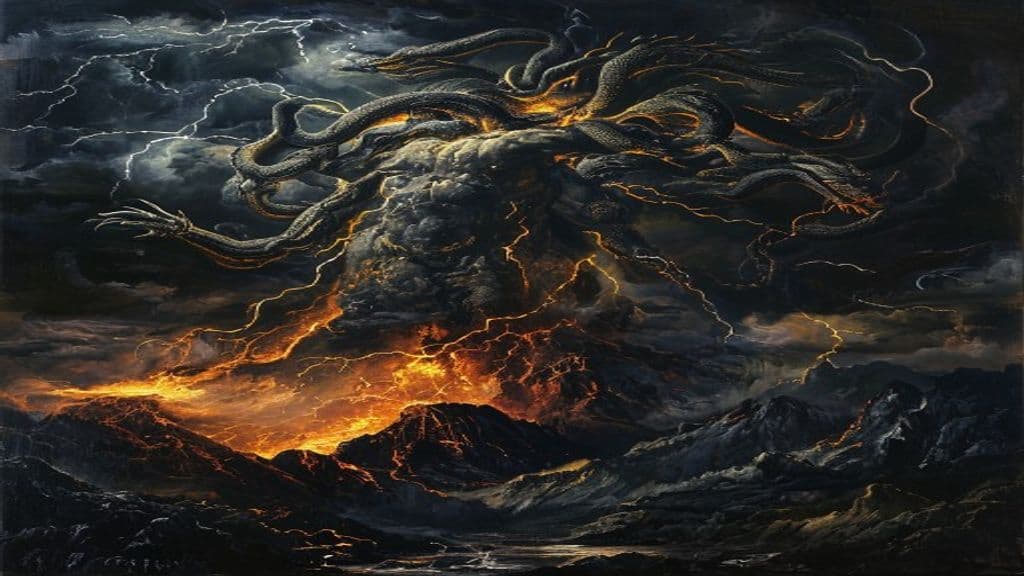
Typhon
The last great monster of Greek mythology — a vast, fire-breathing giant whose shoulders sprouted a hundred serpent heads, nearly toppling Zeus from Olympus.
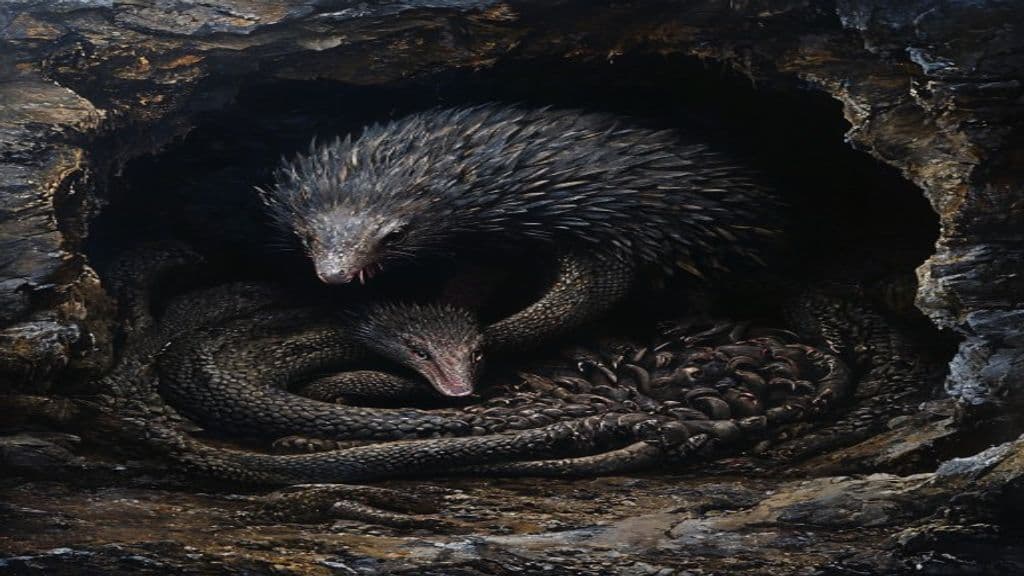
Echidna
The 'Mother of Monsters' — half beautiful woman, half enormous serpent — who with Typhon gave birth to nearly every great monster of Greek mythology.
Community Record
- [1]Twelve Olympians (Wikipedia). "In ancient Greek religion and mythology, the twelve Olympians are the major deities of the Greek pantheon, commonly considered to be Zeus, Poseidon, Hera, Demeter, Aphrodite, Athena, Artemis, Apollo, Ares, Hephaestus, Hermes, and either Hestia or Dionysus. They were called Olympians because, according to tradition, they resided on Mount Olympus."wiki
- [2]Zeus (summary reference). "Zeus, as an adult, was the most powerful of all the Olympian gods. He is best known for his ability to generate tremendous amounts of electricity in the form of lightning bolts, generally referred to as his thunderbolts..."other
- [3]God of War II | The Completionist (archive). Modern adaptation reference: God of War II uses Greek mythic figures and the conflict between Olympians and other mythic forces as narrative material (archive summary).other
- [4]Olympian Gods (DC Comics) (Wikipedia). Modern-media reference: The Olympian Gods appear as characters in DC Universe Online and other comic/game adaptations (Source notes).wiki
- [5]The Haunting Story of the Mother of Monsters (Archive clip on Echidna). Echidna described as mother of monsters and mate of Typhon; included here as a mythic figure appearing in the broader Greek mythic ecosystem alongside Olympian material.other