
In the corpus of early medieval Germanic literature Onela is presented as a son of Ongentheow and brother of Ohthere, a member of the Swedish royal dynasty (the Scylfings/Skjöldungs). Narrative sequences in Beowulf and Norse saga summaries depict a dynastic contest in which Onela seizes or asserts the Swedish throne following family conflict; his usurpation and the exile and killing of rival claimants (notably Eanmund) lead to retaliatory action by Eanmund's kinsman Eadgils (Aðils), who ultimately slays Onela with foreign assistance. The name is etymologically linked to Proto-Norse Anulā and to an appellative *anuz 'ancestor' or a diminutive derivative, situating Onela within onomastic lineage practices rather than as an epithet of supernatural status.
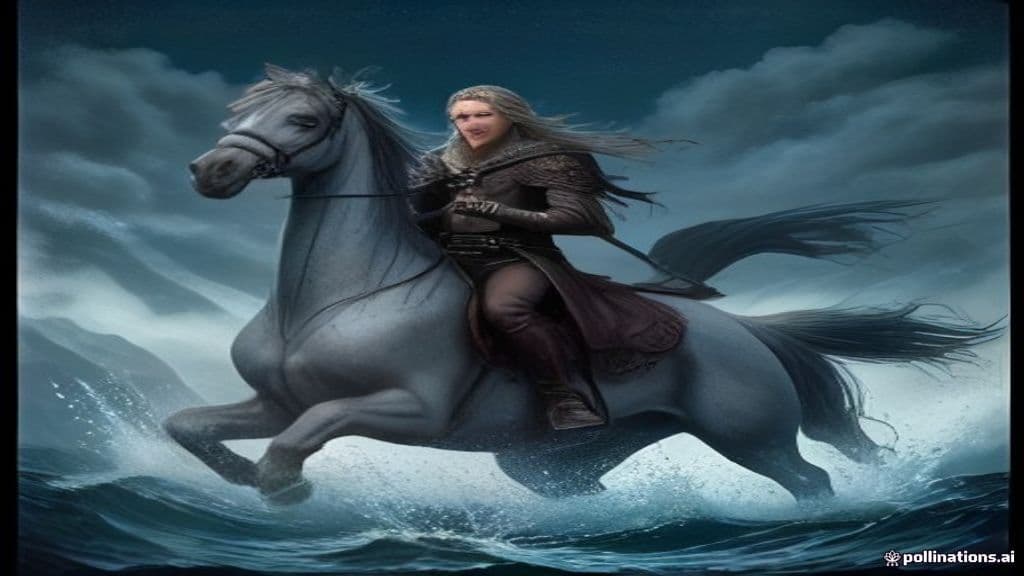
The surviving Old English and Old Norse sources supply no sustained physical or physiognomic description of Onela; he is characterized through titles (king), genealogy, and deeds. Norse saga summaries record that, following his death, his arms and horse (named Hrafn/Raven in some accounts) were taken as trophies, but the texts do not preserve a contemporary visual portrayal.
Sources attribute to Onela political and martial capacities rather than supernatural powers: he is described as a royal claimant who commands warriors, enforces his rule (interpreted as usurpation in Beowulf-derived narrative), orders or benefits from the killing of rival princes (Eanmund killed by Onela's retainer Weohstan), and conducts military action against the Geats. His defeat and killing by Eadgils (Aðils) in saga accounts culminate in the victor claiming Onela's helmet, mailcoat, and horse, reflecting the aristocratic economy of booty and status in the heroic tradition.
Eadgils (Aðils / Adils)
Eadgils is a semi-legendary 6th-century Swedish king of the Yngling/Skilfing dynasty attested in Old Norse skaldic poetry and sagas and in the Anglo-Saxon epic Beowulf. Sources present him as a dynastic figure whose exile, restoration, and conflicts (notably with Onela/Áli and later associations with Hrólfr Kraki) explain succession and inter-kingdom violence; he is treated as a mortal ruler rather than a supernatural being.

Eanmund
Eanmund is a semi-legendary Swedish prince of the Scylfing dynasty attested in the Old English epic Beowulf. Portrayed as a mortal claimant to the Swedish throne whose exile and death precipitate inter-kingdom conflict and later vengeance by his brother Eadgils, he functions as a genealogical and political figure within the Scandinavian heroic cycle rather than a supernatural being.
Community Record
- [1]Onela — Wikipedia. Wikipedia contributors, 'Onela,' Wikipedia, https://en.wikipedia.org/wiki/Onelawiki
- [2]Onela — Wikidata. Wikidata entry Q2293179, http://www.wikidata.org/entity/Q2293179wiki
- [3]Beowulf by Anonymous (Project Gutenberg). Anonymous, Beowulf (Project Gutenberg edition), https://gutenberg.org/cache/epub/981/pg981-images.htmlliterary
- [4]Weohstan — Wikipedia (for association with Onela). Wikipedia contributors, 'Weohstan,' Wikipedia, https://en.wikipedia.org/wiki/Weohstanwiki
- [5]Summary accounts of Norse saga material (Snorri / Skjöldunga saga summaries) — as reported in modern summaries. Synopsis in modern reference summarizing Snorri and Skjöldunga saga material (see 'Onela' Wikipedia entry), https://en.wikipedia.org/wiki/Onelaliterary
- [6]Etymology note (Proto-Norse Anulā; spear shaft SJy 68 from Nydam Mose) — summary in Wikipedia article. Etymology summary in 'Onela' (Wikipedia), citing the Proto-Norse attestation on spear shaft SJy 68 from Nydam Mose, https://en.wikipedia.org/wiki/Onelawiki