Para Brahman is presented in Upaniṣadic and Vedantic sources as the eternal causative ground of reality — sat‑cit‑ānanda (existence, consciousness, bliss) — from which manifestation issues. In some tantric cosmological summaries Para Brahman (the Unlimited) becomes Apara Brahman (the Limited) in the process of manifestation; in Vedanta schools the concept is developed philosophically rather than as a mythic biography. Different sampradāyas identify a particular deity as Para Brahman to assert theological primacy (e.g., Viṣṇu, Śiva, Devī), but the core designation originates as an ontological category in Upaniṣads and Vedantic commentary.
As a metaphysical principle, Para Brahman is not ascribed a determinate physical appearance in doctrinal sources. In Advaita it is explicitly nirguṇa — attributeless and formless, beyond all descriptions. Where sectarian traditions identify a personal Para Brahman, the iconography and appearance are those of the identified deity (for example Viṣṇu/Nārāyaṇa, Śiva/Paraśiva, Adi Parāśakti, Mahāganapati, Kartikeya) rather than a distinct, uniform form of Para Brahman itself. Sources stress that the term can refer either to the formless Absolute or to a supreme personal deity depending on context.
Doctrinally Para Brahman is credited with ontological attributes such as eternality, omniscience, infinitude and being the ground of bliss (sat‑cit‑ānanda). In Advaita realization of Para Brahman effects non‑dual knowledge in which distinctions between self (ātman) and Brahman are obliterated; in devotional schools the Para Brahman is the supreme object of worship whose grace is the means of deliverance. Tantric summaries present Para Brahman as the Unlimited that issues a limited manifestation (Apara Brahman). Para Brahman is not described as an agent with hostile intentions; rather it is the ultimate reality to be known (Para Vidyā), realized through practices like sravana (listening), manana (reflection) and nididhyāsana (meditation), or approached through bhakti in sectarian practice.
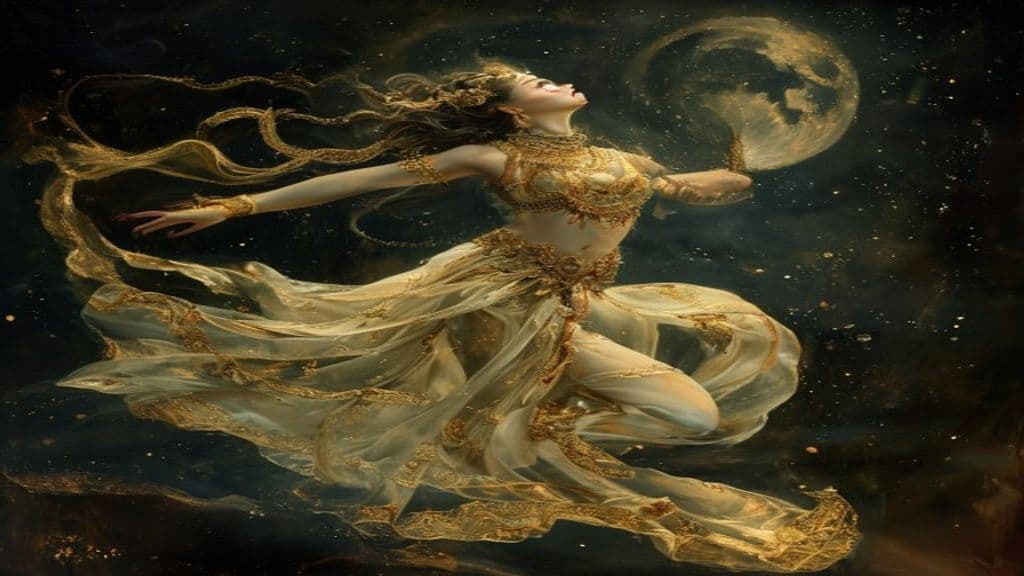
Apsara
Celestial dancers and water nymphs of Hindu cosmology — beautiful semi-divine beings who dance at the court of Indra and, by his command, descend to earth to distract sages from excessive asceticism.
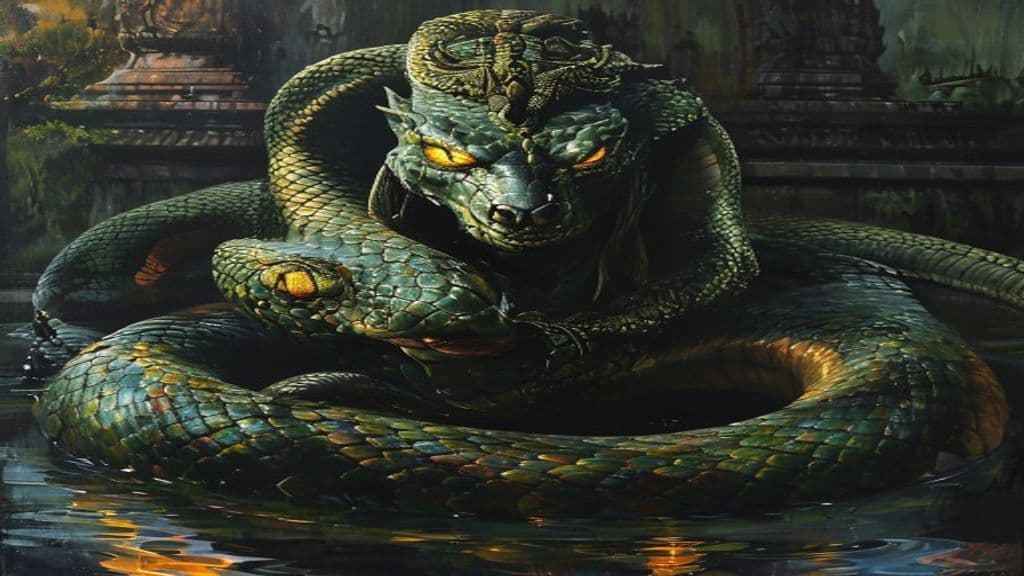
Naga
Divine serpent beings of Hindu, Buddhist, and Jain cosmology — powerful guardians of water, earth, and underground treasures. Revered as deities in South and Southeast Asia.
Community Record
- [1]Para Brahman — Wikipedia. Wikipedia: Para Brahman (summary of philosophical uses and sectarian identifications).wiki
- [2]Para Vidyā — Wikipedia. Wikipedia: Para Vidyā (description of higher knowledge and method: sravana, manana, nididhyāsana).wiki
- [3]Wikidata: Para Brahman. Wikidata entry labeling Para Brahman as a metaphysical concept.wiki
- [4]Tantra Cosmology (House of the Sun). Secondary summary describing Para→Apara cosmological formulation in tantric outlines.other
- [5]Tantra Cosmology (PDF). Secondary PDF summarizing cosmogonic use of Para Brahman as 'Unlimited' transforming into 'Limited'.other
- [6]Akshar Purushottam Upasana — Wikipedia. Example of sectarian identifications of supreme categories (used in sources to illustrate sectarian claims about Para Brahman).wiki
- [7]Archive: Los cimientos de la espiritualidad - Quien es Sri Diksa Guru. Audio/archive referencing the role of an initiating guru in spiritual perfection (used to contextualize the role of guru in realization practices).other
- [8]Taittiriya Upanishad summary (as cited). Summarized Upanishadic claim: the Supreme Brahma is Eternal, Conscious, and Blissful (sat‑cit‑ānanda) as cited in the source notes.other