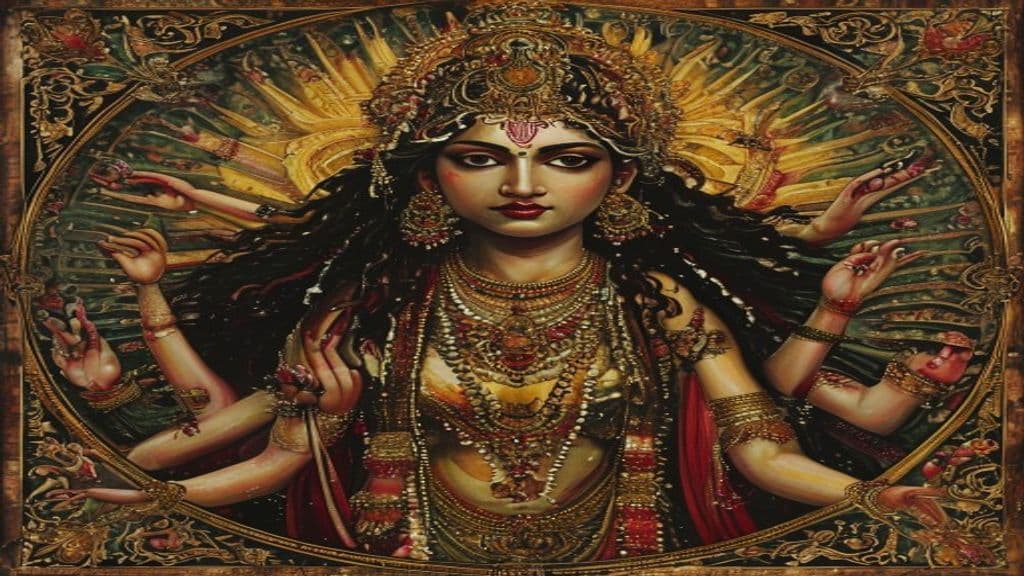
In Puranic and later epic narratives Parvati is described as the daughter of the mountain-king Himavan (Himavata/Parvata) and Menavati; her name Parvatī literally means "she of the mountain." She is also narrated as the reincarnation of Sati, Shiva's first wife, who had self-immolated — Parvati is thus born to reunite with Shiva and restore the householder connection. Textual history indicates the specific name Parvati emerges in the epic period (c. 400 BCE–400 CE), while related goddess-names such as Ambika and Rudrani occur earlier in the Rigveda.
The supplied sources do not provide a single fixed iconographic description and emphasize that Parvati's appearance varies with her aspects. Epithets indicate contrasting appearances: as Gauri she is associated with a fair/golden (yellow) complexion linked to fertility and harvest; in her Mahākālī/Mahakali aspect she is described as ferocious, wielding a sword and (in that terrifying form) wearing a garland of severed heads. The excerpts note that her iconography and attributes differ across manifestations and regional cults rather than prescribing a single standard dress or set of attributes.
Doctrinally Parvati functions as Shiva's shakti — the personified creative, sustaining energy of the cosmos; within Shaiva and Shakta theological frames she is said to energise Shiva and thereby animate the world. She governs love, devotion, motherhood, fertility, nourishment, beauty, and abundance, and in her martial or terrifying manifestations (Durga, Kali, Bhairavi, Mahakali) she protects devotees and destroys evil. Some Upanishadic and Puranic contexts ascribe to her a mediatorial role in revealing spiritual knowledge (e.g., Uma-Haimavatī in the Kena Upanishad). These are theological portrayals recorded in the sourced tradition rather than empirical claims.
Weaknesses
- otherNo documented weaknesses in provided sources
Wards
- otherNo documented wards or apotropaic measures against Parvati in the supplied material; the sources indicate she is propitiated rather than warded against.
Durga
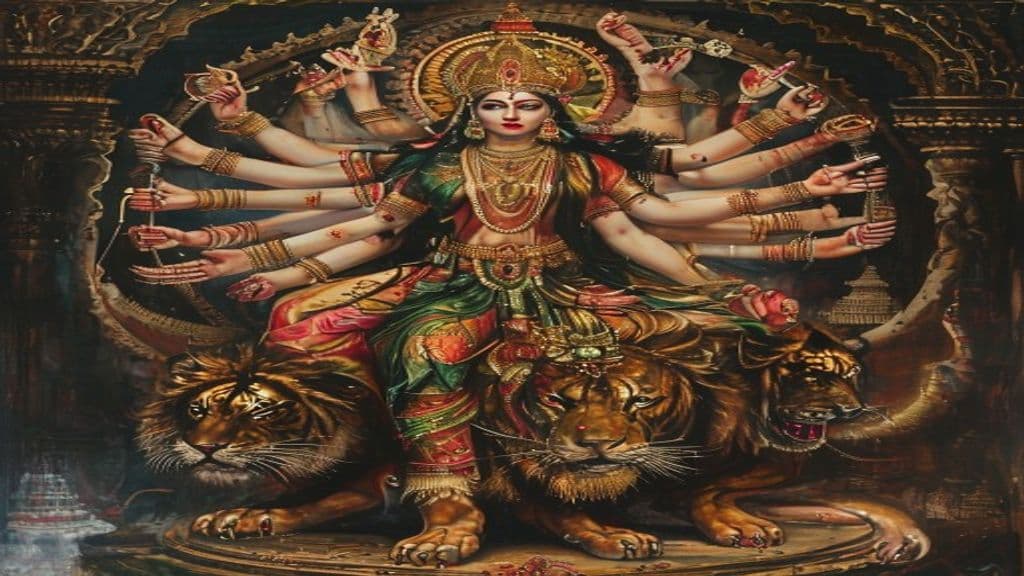
Durga is a major Hindu goddess, central to the Shakta tradition as an aspect of the Divine Feminine (Mahadevi). She is venerated as a protective, martial mother-goddess who combats demonic forces (notably Mahishasura) to uphold dharma, and is celebrated in major festival cycles such as Navaratri and Durga Puja.
Kali
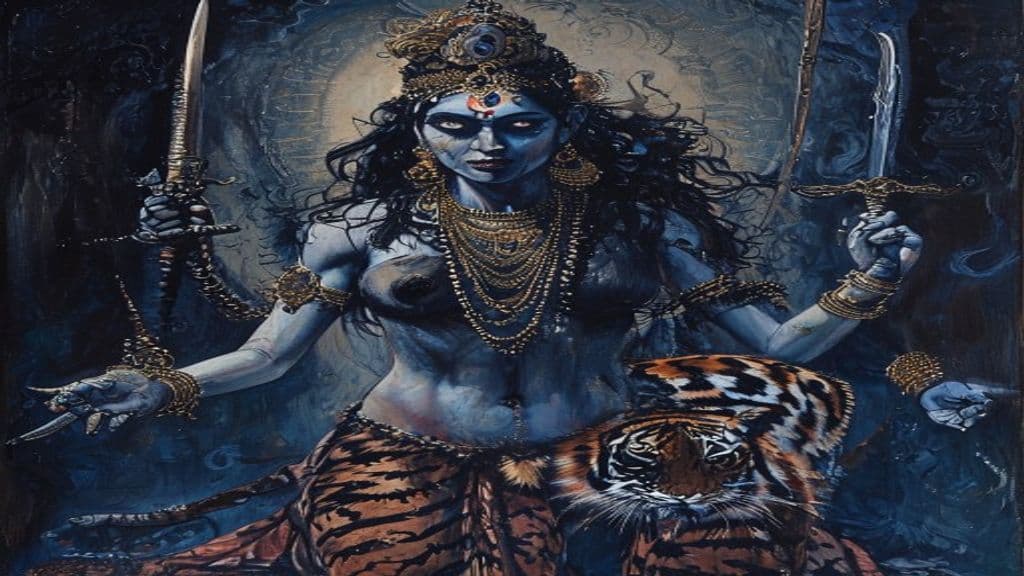
Kali is a major Hindu goddess associated with time (kāla), death, destruction, and also with liberating knowledge; she appears in Puranic and Tantric texts as a fierce battlefield power and as a protective Divine Mother (Kali Mātā).
Čuma
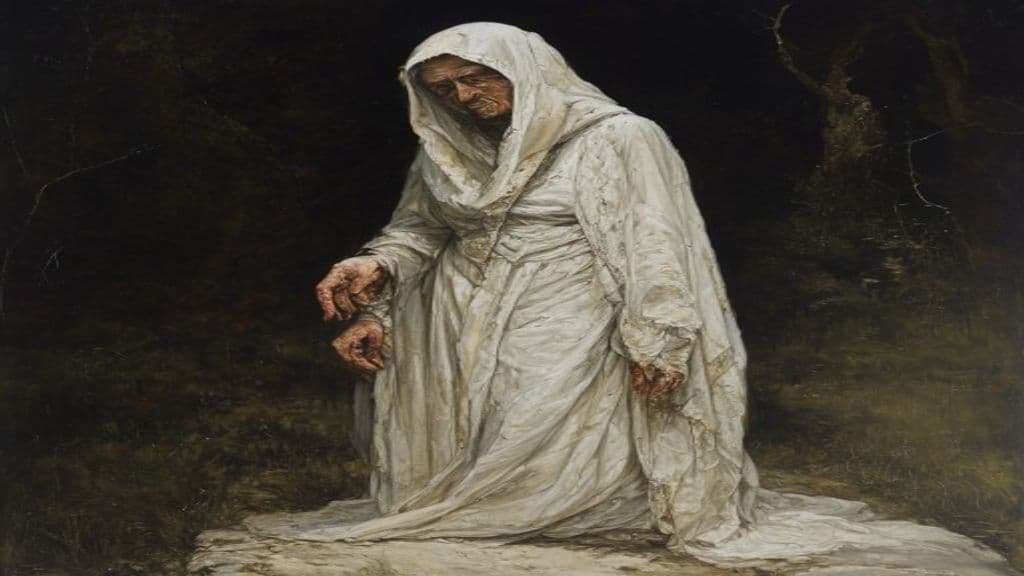
Čuma (also kuga) is the personification of plague in Serbian folk belief, imagined as a woman who travels from a far land to infect people and homes. She is feared and placated through household cleanliness, avoidance of her name, and small offerings.
Adi (asura)
Adi is attested in modern reference works as the name of an Asura who 'appears in the Matsya Purāṇa.' Beyond this single-line citation in secondary sources, no descriptive material about the figure is provided in the supplied research notes.
Adi Shakti
Adi Shakti (also Adi Parashakti, Mahadevi, Adya Shakti) is the primordial feminine power in Hindu/Shakta theology, regarded as the ultimate reality (Para Brahman) and the source from which all goddesses and gods manifest. She is both an impersonal cosmic principle (Mulaprakriti) and a focus of devotional invocation in temples, mantras, and pilgrimage sites such as Shakti Peethas.
Adi Vinayaka
Adi Vinayaka (Ādi Vināyaka; also called Nara Mukha Vinayaka) is a named iconographic and devotional form of the Hindu god Ganesha portraying the deity with a human head, described in sources as the form before the episode of decapitation by Shiva. It is rarely worshipped and appears in a small number of South Indian shrines and in devotional/musical repertoires.
Aditi
Aditi is a major Vedic goddess in Hindu tradition who personifies the boundless, infinite cosmic principle and functions as the maternal matrix from which many celestial deities (the Ādityas and other groups) are born. In the Vedic hymns she is invoked as a protective liberator who guards petitioners, provides wealth and safety, and frees devotees from hindrances such as sin and sickness.
Agni
Agni is the Vedic personification of fire in Hindu tradition: a sacred, mediating principle that manifests as terrestrial fire, atmospheric lightning, and celestial sun, and that receives and conveys sacrificial offerings. Prominent in the Rigvedic corpus, Agni functions as sanctifier, witness of rites of passage, and a transformational inner principle in later Upanishadic literature.
Ahalya
Ahalya is a mytho-legendary woman of South Asian (primarily Hindu) narrative tradition, described as created by the god Brahma, married to the sage Gautama, seduced (or tricked) by Indra, cursed by her husband, and ultimately redeemed by Rama. Her tale is a locus for themes of creation, desire, curse/penance, and redemption and she is counted among the ritual-mnemonic panchakanya.
Aindri (Indrani / Shachi / Paulomi)
Aindri (commonly rendered in sources as Indrani, also called Shachi or Paulomi) is a Hindu goddess presented as the queen-consort of Indra. She is depicted in the available material as a courtly queen associated with beauty, pride and kindness who also appears in at least one account as an active martial participant in the devas' battles with asuras.
Akhilandeswari
Akhilandeswari (Akhilandeshwari) is a major South Indian manifestation of the Hindu Goddess Adi Parashakti/Parvati, venerated as the presiding goddess of the Jambukeswarar Temple in Thiruvanaikaval. In temple tradition she is portrayed as a penitent/student of Shiva and figures in local legends, ritual schedules, and festivals that emphasize both maternal and fierce aspects.
Akshayavata
In Hindu mythology, Akshayavata is a sacred banyan tree and/or lake that symbolizes eternal life. It is mentioned in both Hindu and Jain traditions and associated with the Puranas. (Note: - The power tier should be "Greater" or at least "Ancient", as it is associated with the Puranas, which are considered ancient texts. - No specific physical description is provided, but that doesn't m)
Alakh Niranjan
A doctrinal and devotional formula in the Nath-yogi tradition denoting the unseen, unblemished ultimate reality (Nirguna Brahman/Atman). Used as a salutational invocation, theological name, and signifier of realised Self rather than a personified supernatural being.
Alakshmi
Alakshmi is an inauspicious female supernatural figure in Hindu tradition, presented as the negation or shadow-counterpart of the prosperity-goddess Lakshmi. She personifies poverty, grief, jealousy and social discord and is managed in domestic ritual and festival practice.
Alamelu
Alamelu (also Alamelu Manga / Alarmel Mangai) is a South Indian devotional name for the goddess Padmavati, identified in sources as an avatar of Lakshmi and the consort of Venkateswara; the name is also used widely as a female personal name and in titles of cultural works in Tamil and Telugu contexts.
Community Record
- [1]Parvati - Wikipedia. Wikipedia entry 'Parvati' (access as provided in research notes).wiki
- [2]Parvati (Wikidata). Wikidata item for Parvati (linked in research notes).other
- [3]Where is Parvati Valley? A Complete Travel Guide to Himachal’s Paradise. Travel guide (archive) documenting toponymic use of Parvati/Parvati Valley as cited in research notes.other
- [4]Bombay High Court - HCBM010298392006 (2006-09-13). Archive court document containing incidental mentions of the personal name Parvati (cited in research notes).other