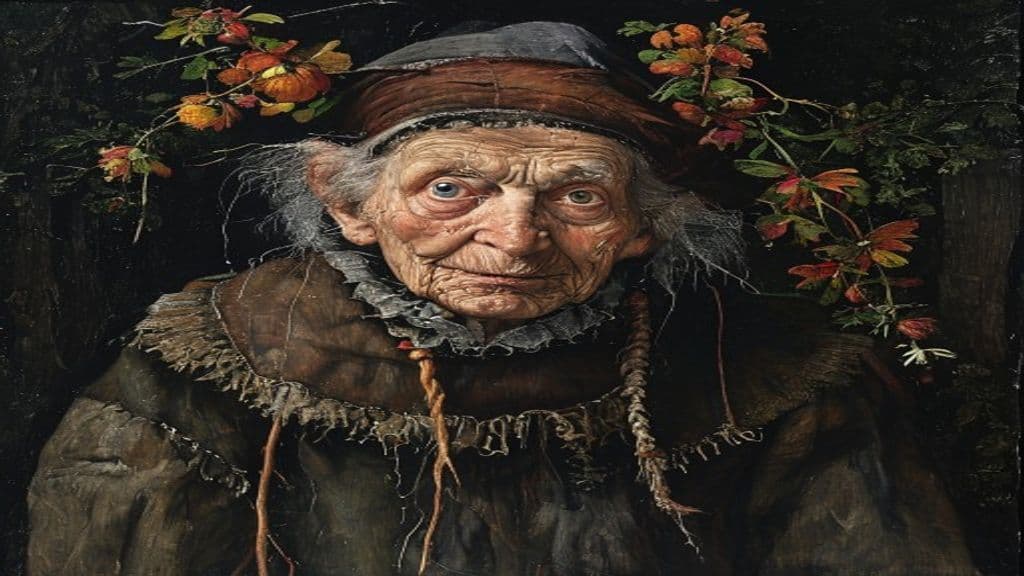
Perchta appears in medieval and post-medieval sources as a liminal midwinter figure; earliest formal attestation appears c. 13th century as 'Domina Perchta'. Scholars have proposed multiple etymologies: a link to Old High German giberaht naht ('Epiphany night') tying the name to the festival period; Jacob Grimm's proposal of Old High German Perahta from beraht ('the bright one' / Proto-Germanic *berhtaz) — though sources note lack of firm evidence for this; and Eugen Mogk's suggestion deriving the name from Old High German pergan ('hidden' or 'covered'). These proposals are scholarly reconstructions rather than a single agreed origin. In popular tradition Perchta functions simultaneously as a personified supernatural woman, a named ritual season, and a motif enacted by masked Perchten.
Perchta is described with two principal aspects: a beautiful aspect and an ugly, terrifying aspect. Local descriptions vary. In Tyrol she is called a 'little old woman with a very wrinkled face, bright lively eyes, and a long hooked nose' with dishevelled hair and tattered garments. In masquerade (Perchtenlauf) the 'beautiful' Perchten wear dresses decorated with ribbons and galloons, while the 'ugly' Perchten appear hideous, sometimes with bells, chains, and animals attached to their costumes. Older accounts recurrently report one large distinctive foot (variously described as a 'goose foot' or 'swan foot'). In some Czech/Bohemian localities Perchta masks are dressed in furs and may be depicted holding a knife or bloody hand as a device to frighten children (a localized variant).
Perchta's primary cultural role is supervisory and punitive: she inspects households during the twelve days between Christmas and Epiphany (especially Twelfth Night and Epiphany Eve) and enforces proper completion of spinning and the observance of fast-day dietary rules. Narrative accounts attribute to her the power to punish transgressors—examples recorded in the sources include scratching a lazy spinstress's face and smacking her fingers (leaving scars), or more violent penalties such as slitting the belly and stuffing it with flax, straw, or stone and sewing it up. She is described as roaming countryside and entering homes during the Rauhnächte. The Perchtenlauf communal masquerade dramatizes motifs associated with Perchta (fear, inspection, ambivalence) but sources treat the masquerade as a social enactment rather than literal documentation of supernatural action.
Weaknesses
- conditionCompliance with domestic obligations (spinning completed)
- conditionObservance of fast-day dietary rules (eating only permitted fish and gruel)
Wards
- ritualPerchtenlauf (communal masquerade)
- conditionDomestic compliance (spinning completed; fasting observed)
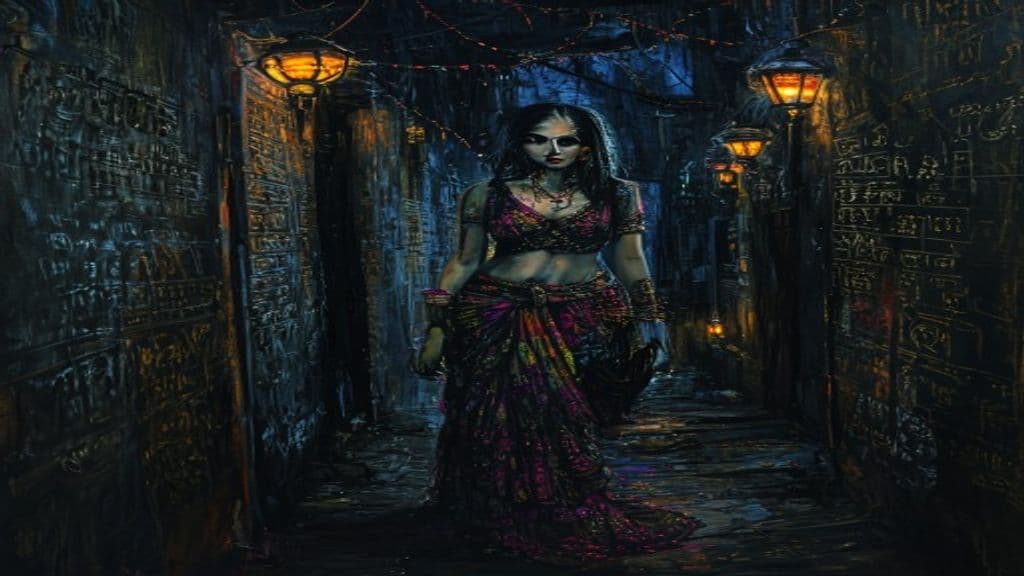
Stree
A vengeful female spirit from Chanderi who abducts men during festival nights. Warded off by the inscription 'O Stree, kal aana' — her legend, still practised on walls across Madhya Pradesh, inspired the 2018 Bollywood horror-comedy.
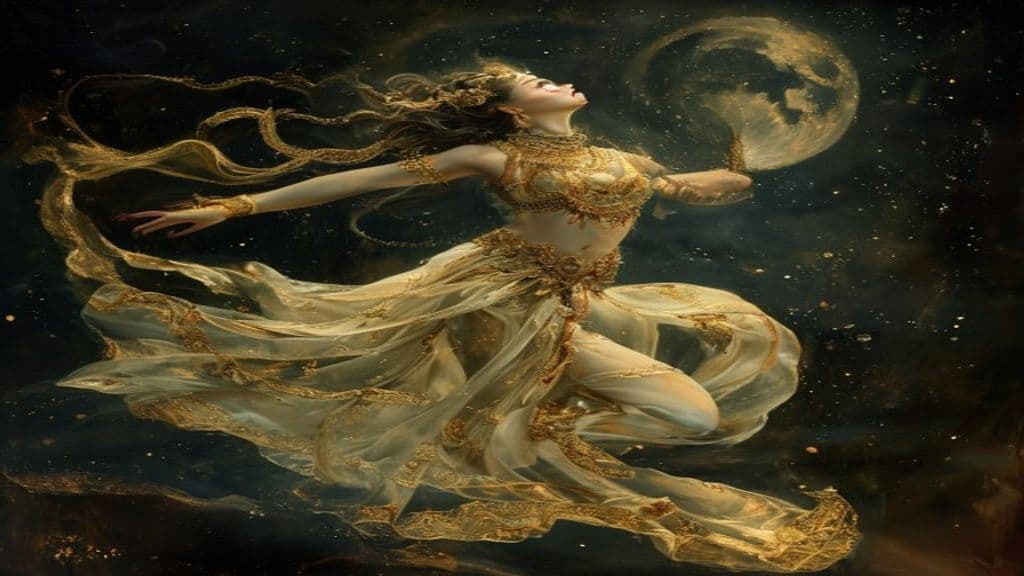
Apsara
Celestial dancers and water nymphs of Hindu cosmology — beautiful semi-divine beings who dance at the court of Indra and, by his command, descend to earth to distract sages from excessive asceticism.
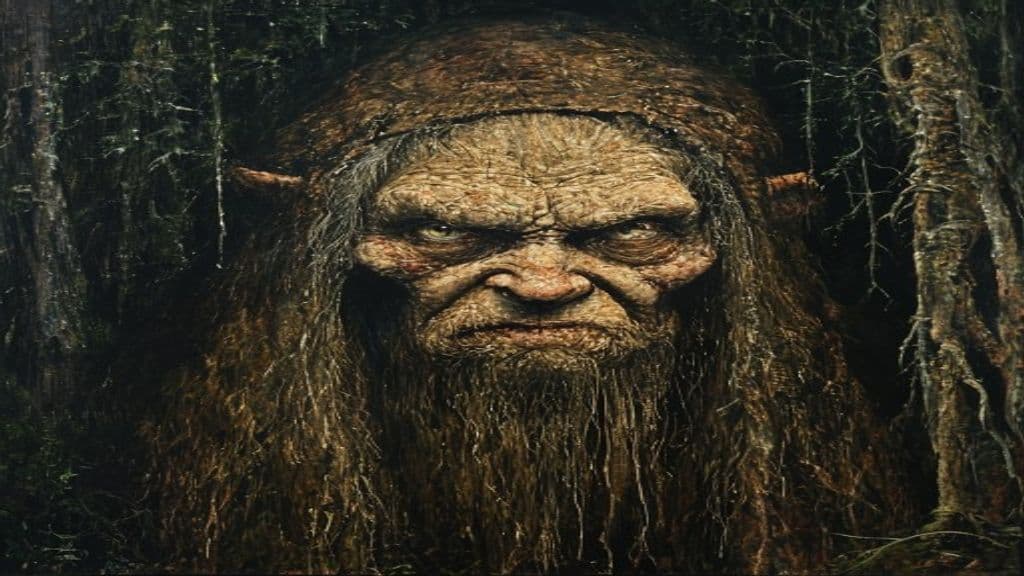
Baba Yaga
Baba Yaga is an ambivalent female figure of East Slavic folktale tradition, depicted variously as a fearsome, child-eating crone or as a helpful, maternal donor. She is associated with the deep forest, a hut described as standing on chicken legs, and the motific accoutrements of a mortar and pestle.
Penanggalan
A Malay vampire consisting of a detached human head with dangling organs that flies at night to feed on the blood of infants and new mothers, then soaks its organs in vinegar to reattach.
Penates (Di Penates)
The Penates are Roman household deities (dii familiares) who inhabit the domestic sphere of the domus. They are cultic presences maintained by routine family ritual—most notably the practice of casting a morsel into the hearth fire at meals—and are associated with Vesta, the Lares, and the Genius of the pater familias.
Peneleos
Peneleos (Ancient Greek: Πηνελέως), sometimes spelled Peneleus, is an Archaic Greek heroic figure from Boeotia presented in epic and post‑epic traditions as an Achaean leader. He is named among the Argonautic traditions in some accounts, appears as a suitor of Helen and commander of twelve ships at Troy, and functions primarily as a mortal genealogical and martial exemplar within the Greek heroic cycle.
Penelope
Penelope is a legendary mortal queen of Ithaca in the Homeric epic tradition, famed for her marital fidelity to Odysseus and for using weaving as a stratagem to delay remarriage. Later commentators record etiological and folk-etymological tales linking her name to certain birds (pēnelopes) and to motifs of disappearance and return.
Penthesilea
An Amazonian queen in Greek epic tradition famed for martial excellence and a heroic death at Troy; depicted as a leading Amazon warrior who arrives to aid the Trojans and is slain in the post‑Homeric cycle, provoking tragic recognition in her slayer.
Peraethus
Peraethus is an otherwise sparsely attested Arcadian eponymous figure listed as one of the many sons of King Lycaon in Greek genealogical tradition. His primary role in the surviving sources is etiological: he is named as the ancestral founder who gives his name to the people or town called Peraethenses / Peraetheis.
Peret (Nile-drought spirits — Coptic)
No evidence for a Coptic spirit named 'Peret' or for spirits specifically associated with the Nile's droughts appears in the supplied source corpus. The available materials that mention the string 'Peret' refer to an unrelated modern Catalan musician and a Wikidata label; no mythological descriptions, rituals, or etymologies for a Coptic supernatural 'Peret' are present.
Pereus
Pereus (Ancient Greek: Περέος) is an Arcadian prince in Greek myth attested in genealogical sources as a son of King Elatus and Laodice and father of Neaera. He functions as a mortal node in local dynastic myth rather than as a supernatural being.
Peri (Parī / Pari)
A class of supernatural beings from Persian tale literature and wider Asian folklore, the parī (also spelled peri or pari) commonly appear in narratives involving the supernatural and are often described in sources as winged and immensely beautiful, living in societies likened to human social organization.
Periboea (daughter of Alcathous)
Periboea is a personal name borne by several distinct women in Greek mythic tradition; one attested bearer is named as a daughter of Alcathous (or alternatively of Cychreus of Salamis) who is involved in the Telamon/Ajax cycle and appears in variant accounts that connect her to sacrificial-maiden lists and to Theseus. The name also occurs for Oceanid and Naiad figures and for a foster-mother of Oedipus in other traditions.
Periclymene
Periclymene (Ancient Greek: Περικλύμενη, 'renowned') is a personal name attested in Greek mythic sources for two distinct mortal figures: a Minyan princess appearing in genealogical traditions (mother of several notable offspring in variant accounts) and, separately, as the name of a maenad preserved in vase-painting iconography. The attestations are genealogical and iconographic; no supernatural powers or ritual cult specific to her are recorded in the provided sources.
Perileos
Perileos (Ancient Greek Περίλεως or Περίλᾱος) is not a single supernatural being but a personal name borne by several distinct mortal characters in Greek mythic and epic tradition. The name appears in genealogical lists and episodic narratives as a son of Icarius, a son of Ancaeus of Samos, a defender of Troy, and (as Perilaus) an alleged inventor of the brazen bull.
Community Record
- [1]Perchta — Wikipedia. Wikipedia entry 'Perchta'.wiki
- [2]Perchta — Wikidata Q258927. Wikidata item Q258927.other
- [3]Archive: Lore of the Lutzelfrau / St. Lucy (related midwinter materials). Archive item cited in research notes (used only to confirm presence of Perchta in contemporary media/performances).other
- [4]Archive: M&S #1: Wyrd Sisters (related folkloric audio). Archive item cited in research notes (not used for primary folkloric detail beyond contemporary references).other
- [5]Archive: NoSleep Podcast S17E21 (modern media reference). Archive item cited in research notes (modern/popular culture reference).other
- [6]LA GRANDE DEA (Archive video with Italian subtitles/notes). Archive.org: 'LA GRANDE DEA' (documentary), Italian-language description/notes identifying 'Berchta (o Perchta) è una divinità del paganesimo alpino, "la brillante"' and commenting that she is identified by commentators as derivational from Holda and Freia/Frigg.other
- [7]The Krampus | The Grimm Archives (contextual archival material). Archive.org: 'The Krampus | The Grimm Archives' (included among source materials to indicate broader Alpine folkloric context; does not itself provide specific claims about Perchta in the supplied excerpt).other