In classical Greek intellectual and literary contexts the morning appearance of the planet Venus was given a personal name and role: Phōsphoros (Φωσφόρος, 'light-bearer') or Eosphoros/Heosphoros ('dawn-bringer'), conceived as the bright herald who appears before sunrise. In the ancient observational tradition Greeks often treated the morning and evening appearances of bright celestial points as distinct phenomena with distinct names (Phōsphoros for the morning, Hesperus/Hesperos for the evening) until later astronomical understanding established that both were appearances of the same planet Venus. The name and figure occupy a borderline between observational astronomy, poetic personification, and deity-name, and in later eras (not in the classical sources) the Latin equivalent 'Lucifer' was taken up in Christian theological discourse and associated with devilological themes.
Phosphorus is primarily reported as the bright point of light in the eastern sky shortly before dawn — the morning aspect of Venus. Classical references treat Phōsphoros/Eosphoros as a named celestial presence or 'god' of that luminous appearance rather than supplying consistent anthropomorphic physical description; the figure exists chiefly as a personified astronomical phenomenon and poetic emblem of the coming day.
Functionally and conceptually Phosphorus 'brings' or heralds the morning light: its primary behavior is to appear shortly before sunrise and signal daybreak. Historically the entity's most notable 'ability' is semantic and observational — being one face of Venus observable at a particular time (the morning) as distinct from its evening aspect — rather than exhibiting mythic feats. Later cultural reception added moral-theological associations (e.g., medieval Christians linking the Latin Lucifer to the figure), but the classical tradition does not attribute aggressive supernatural powers or cosmic-altering capacities to Phosphorus.
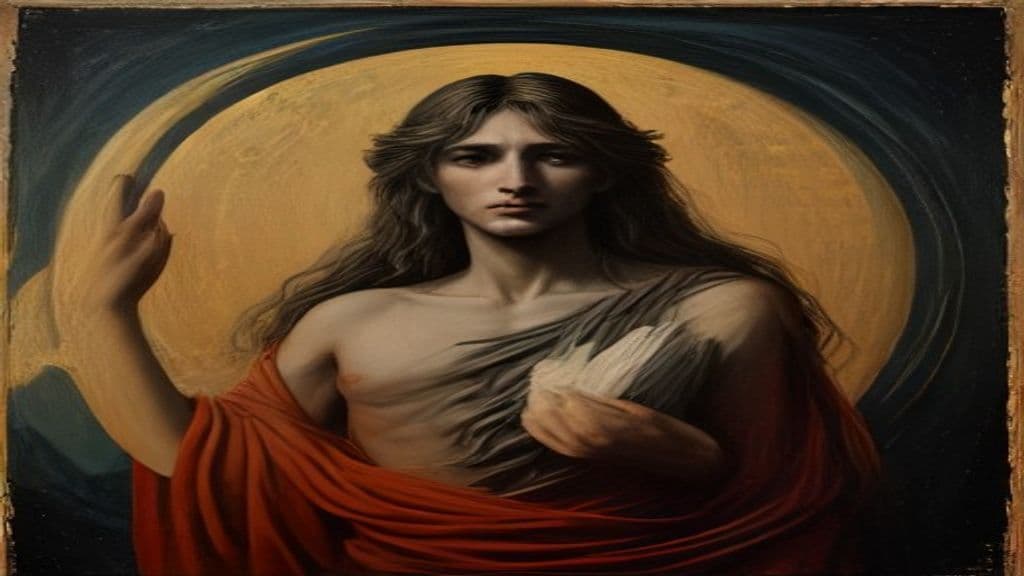
Hesperus
Hesperus is the Greek personification of the Evening Star—the planet Venus as seen after sunset. Treated in mythic genealogies as a child of Dawn and related to other celestial personifications, Hesperus figures in literary and philosophical discussion about the identity of the evening and morning appearances of Venus.

Lucifer
A multilayered figure whose core identity in the cited sources is the planet Venus as the brilliant morning star (Latin lucifer, 'light-bringer' / Hebrew hêlêl, 'shining one'). In later Jewish and especially Christian exegesis the Isaiah image Helel ben Shachar is reinterpreted as a mythic fall motif and becomes associated with a rebellious heavenly being identified with the adversary; this development overlays the earlier astronomical and poetic personification.
Community Record
- [1]Phosphorus (morning star) - Wikipedia. Wikipedia contributors. 'Phosphorus (morning star).' Wikipedia, The Free Encyclopedia.wiki
- [2]Phosphorus (element) — etymology referencing mythic Phōsphoros. Wikipedia contributors. 'Phosphorus.' Wikipedia, The Free Encyclopedia.wiki
- [3]Morning Star - Universe Today. Universe Today. 'Morning Star.'other
- [4]Frege's puzzles (discussion of Hesperus and Phosphorus). Wikipedia contributors. 'Frege's puzzles.' Wikipedia, The Free Encyclopedia.wiki
- [5]How did Babylonians figure out that the evening star is the morning star?. StackExchange: History of Science and Math. 'How did Babylonians figure out that the evening star is the morning star?'other
- [6]Who is Lucifer? (receptional commentary). Biblioteca Pleyades. 'Who is Lucifer?' (discussion of medieval Christian identification).other