In the provided material Phthia appears as a Homeric homeland: a city or district in ancient Thessaly associated with Achilles, Peleus and the Myrmidons. The sources supplied do not present an origin story that makes Phthia into a person; rather, Phthia functions as mythic geography anchoring epic identities. The corpus also contains references to the Amyntor–Phoenix household motif (a later version in which Phoenix is falsely accused by Amyntor's mistress), but it does not supply any primary-source origin narrative that names Phthia as Amyntor's mistress or gives a personal origin for a mistress called Phthia.
The supplied texts describe Phthia as fertile plains and a Homeric homeland (references to 'rich plains of Phthia' and cultic topography such as the area around the Spercheios valley/Phthiotis). No source in the provided corpus gives a personal physical description of an individual named Phthia or treats Phthia as a person; a Platonic dream citation mentioning 'a beautiful and comely woman dressed in white' invokes 'fertile Phthia' but does not identify that woman as Phthia herself. Therefore there is no attested human appearance for 'Phthia' as Amyntor's mistress in the supplied material.
No supernatural powers or distinct abilities are attributed to Phthia in the provided sources. As a place-name, Phthia's role is geographic and genealogical—home of Achilles and the Myrmidons in Homeric epic. The only near-parallel behaviour in the corpus is the narrative motif where an unnamed or variably named mistress in Amyntor's household falsely accuses Phoenix, precipitating his punishment; that mistress-figure's actions (false accusation leading to filial punishment or blinding/exile of Phoenix) are attested in the Phoenix/Amyntor tradition but are not linked in the provided texts to the toponym Phthia.
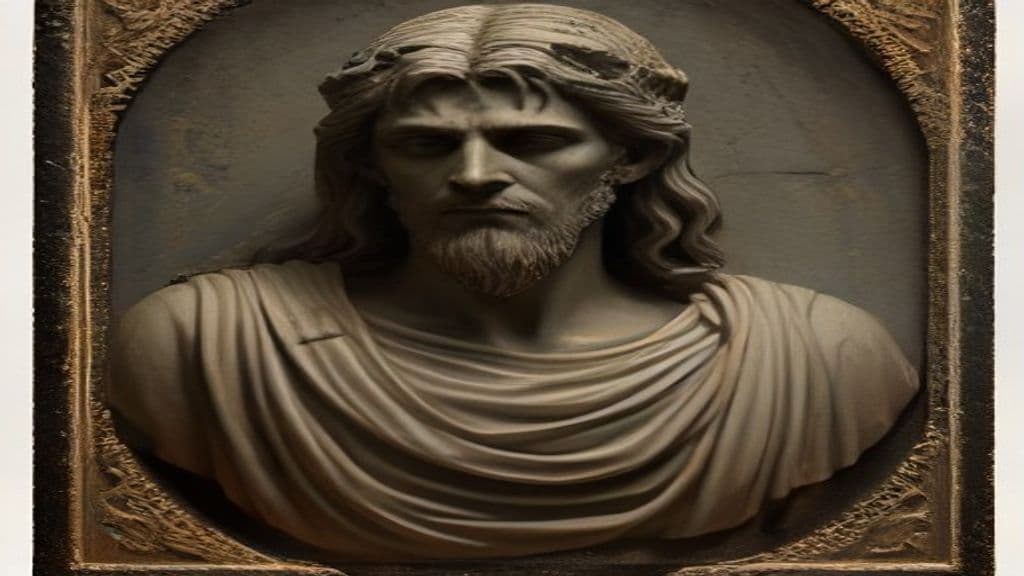
Peleus
Peleus (Ancient Greek Πηλεύς) is a mortal heroic king of the Greek heroic age—son of Aeacus and an oread, husband of the sea-nymph Thetis, and father of Achilles—figuring as a founder-ancestor and culted hero in later local practice. He is portrayed in epic narrative as a warrior-king, Argonaut, and participant in the web of marriages and purifications that link human rulership to divine beings.

Achilles
A legendary Greek heroic figure of epic poetry, son of the sea‑nymph Thetis and the mortal Peleus, celebrated as the greatest of the Greek warriors at Troy whose anger and fate shape events in the Trojan War cycle.
Community Record
- [1]Phthia — Wikipedia. Wikipedia, 'Phthia' (entry), accessed from supplied research notes.wiki
- [2]Amyntor (son of Ormenus) — Wikipedia. Wikipedia, 'Amyntor (son of Ormenus)' (entry), referenced in supplied notes concerning Amyntor and household motifs.wiki
- [3]The Iliad — Homer (online editions and indexes referenced). Homer, The Iliad — passages and indices cited in supplied notes linking Phthia as Homeric homeland and references to Amyntor.literary
- [4]The Iliad, Book IX — online translation/index. Iliad Book IX references cited in supplied research notes concerning Phthia and Homeric context.literary
- [5]Amyntor / Phoenix household motif — assorted mythographic notes (archive links in supplied notes). Secondary mythographic account referenced in supplied notes describing a version where Phoenix is falsely accused by Amyntor's mistress.other
- [6]Mackie (2002) on Phthia and phthisis — as cited in Wikipedia. Summary in supplied notes referencing Mackie's linguistic observation that Phthia may be associated with Greek φθίσις (phthisis) 'consumption, decline'.academic
- [7]Archive: Legendary Greece / Grecian history references (provided in notes). Archive material listed in supplied research notes relating to legendary Greece and usages of Phthia in classical geography/myth.other