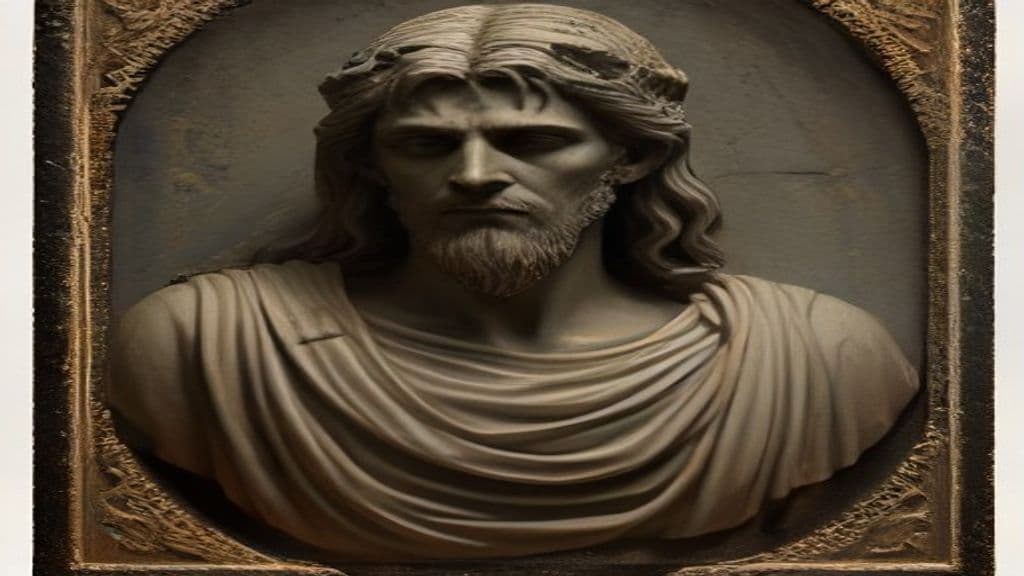
Peleus is presented as the son of Aeacus (king of Aegina) and the mountain-nymph Endeïs. In the mythic narratives he kills his half-brother Phocus (accounts vary on circumstances) and flees Aegina; he is purified in Phthia by that city's ruler (Eurytion). He later marries the sea-nymph Thetis; their wedding, attended by gods, produced the sequence of events that ultimately connects to the Trojan cycle. Narratives preserve several variants of his story: he is said to have accidentally killed Eurytion (accounts link this to the Calydonian boar hunt) and been purified at Iolcus by Acastus; in other episodes he is betrayed (Astydamia/Astydameia), abandoned on Mount Pelion and rescued by figures variously named (Chiron, Hermes, or Hephaestus), and later sacked Iolcus in revenge. These episodes are presented in the epic and mythographic tradition as part of his career as a mortal ruler whose life intersects with divine actors.
Textual sources give no fixed physical portrait; literary and cultic representations present Peleus as a conventional epic/kingly figure associated with Phthia. He appears in epic narrative contexts (Homeric poems, later tragic and Hellenistic references) and in visual art connected to his wedding to Thetis (scholars have proposed scenes on objects such as the Portland Vase). Such representations typically show him in the role of a heroic husband/king rather than as a supernatural apparition; no specific bodily measurements or a canonical descriptive formula is preserved in the cited texts.
Peleus is chiefly a mortal warrior-king and hero: participant in martial ventures (listed among the Argonauts in later summaries), leader of a polity (king of Phthia), and progenitor of Achilles. He is associated with martial prestige and the transmission of prized war-equipment and horses into Achilles' possession (sources cite divine gifts at his marriage—e.g., immortal horses from Poseidon in some accounts—and divine attendance at the wedding). He undergoes exile, purification for homicide, and violent acts of revenge (the sacking of Iolcus and punishment of Astydamia in certain traditions). The sources attribute no intrinsic supernatural powers to Peleus; his exceptional status arises from rank, heroic deeds, and his marriage into the divine (Thetis) rather than from inherent magic.
Weaknesses
- conditionmortality (vulnerable to death and normal human harms)
- ritualrequires ritual purification after homicide (as attested: purified by Eurytion in Phthia and by Acastus in Iolcus)
Wards
None recorded.
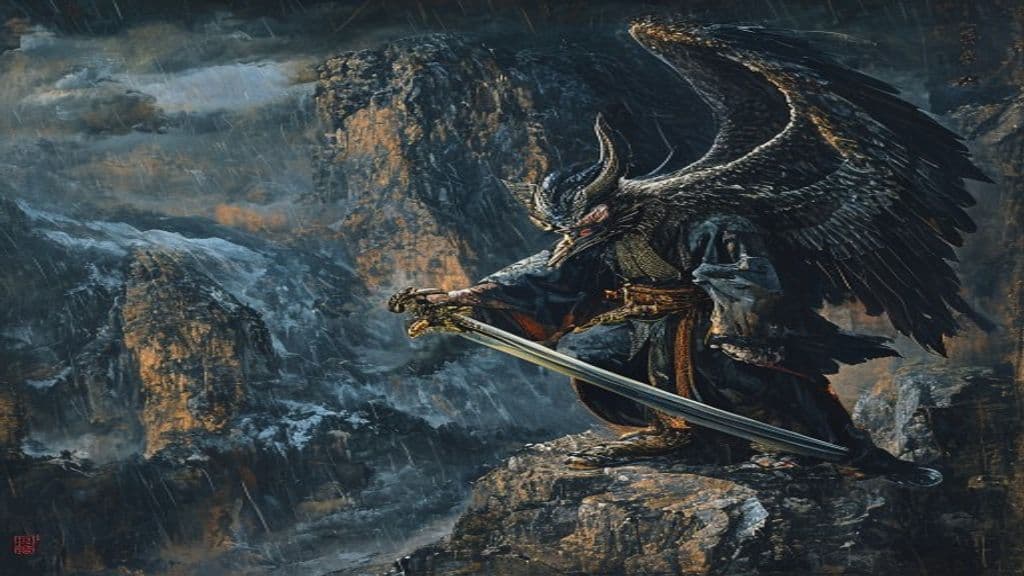
Tengu
Proud, warrior-like mountain spirits of Japan, associated with martial arts, pride, and the wild mountains. Neither fully good nor evil — they test and train warriors and monks, but punish the arrogant.

Kitsune
Fox spirits of Japanese mythology — intelligent, long-lived beings who gain additional tails (up to nine) as they age and grow in power. They serve as messengers of the god Inari and as powerful tricksters.
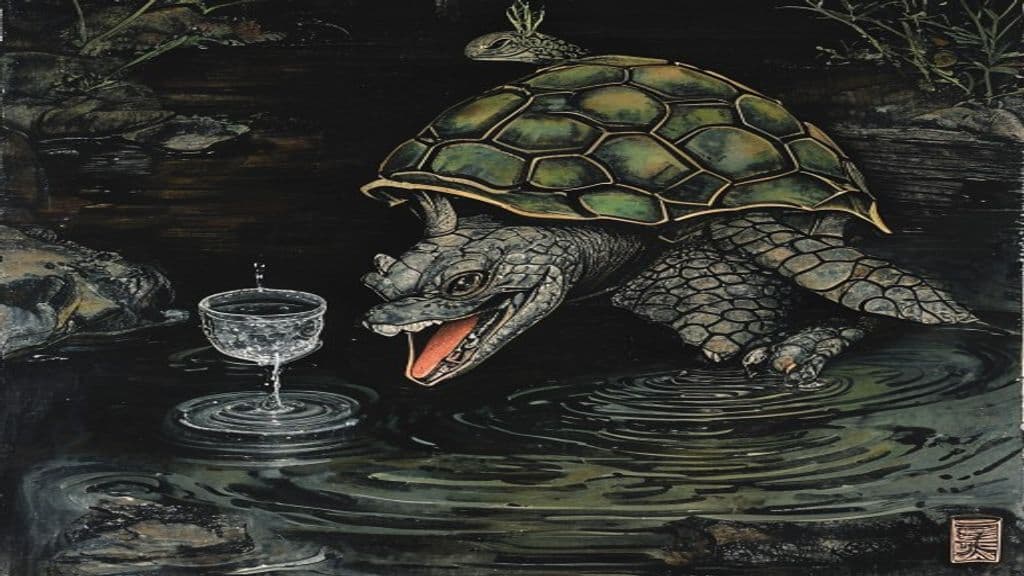
Kappa
A water-dwelling imp of Japanese folklore with a bowl of water on its head. Mischievous but bound by strict codes of politeness; dangerous near rivers.
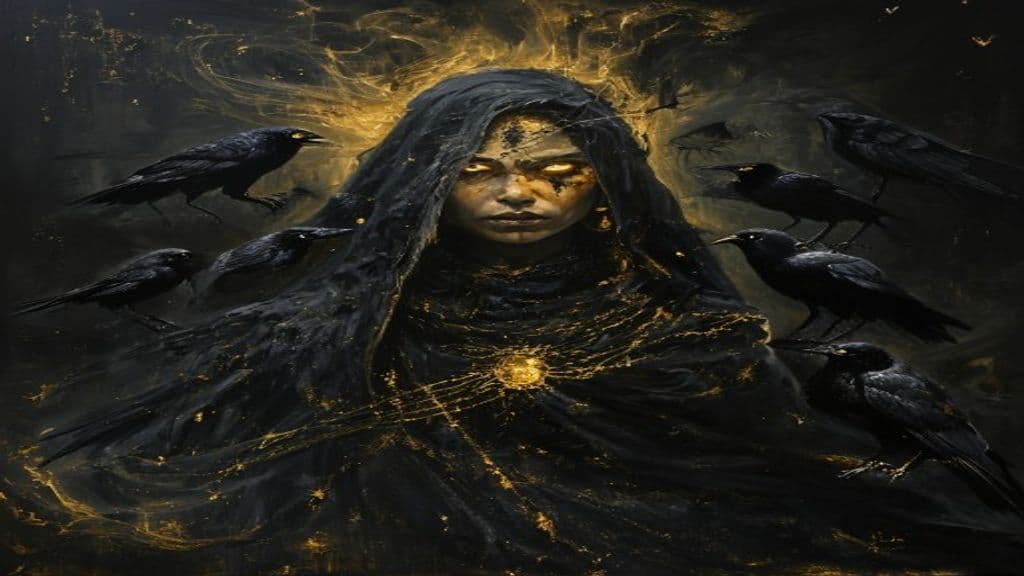
Chandalika
A Dayan witch who has reached approximately 1600 years of age — the final threshold, beyond which she has become more force than person, capable of destroying entire lineages and withstanding divine invocations.

Djinn
The class of supernatural beings created from smokeless fire in Islamic cosmology — a parallel civilization to humanity, capable of belief or unbelief, with their own prophets, society, and judgment before God.

Jann
The weakest class of djinn in Islamic tradition, associated with desert winds and taking the form of snakes or whirlwinds, dwelling in empty wilderness and posing little threat to those who know the proper invocations.
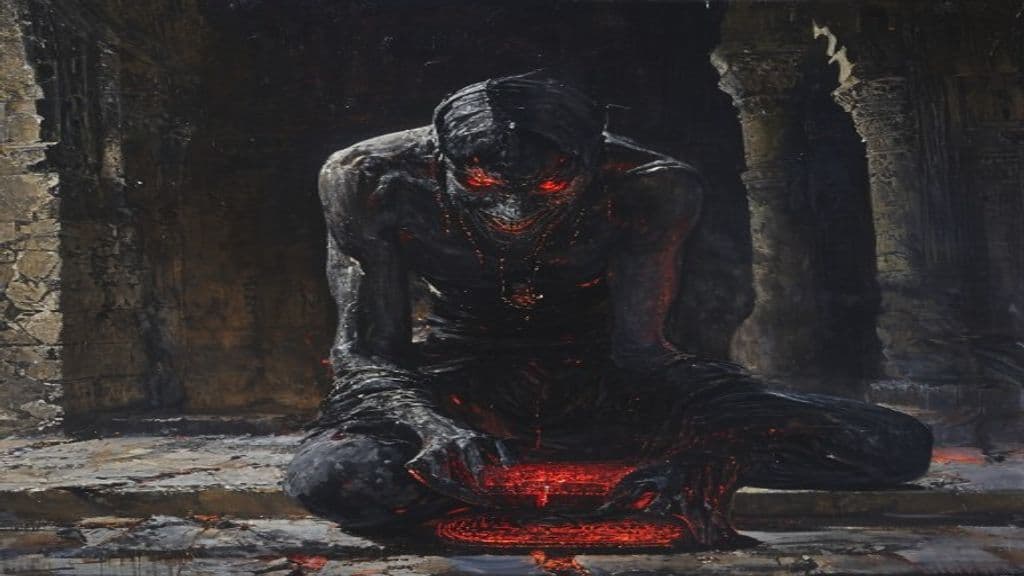
Shaitan
A class of corrupted djinn who follow Iblis and dedicate themselves to leading humans astray — distinct from Iblis himself, the Shayatin are a species of evil djinn who whisper doubts and temptations into the minds of the living.
Acessamenus
Acessamenus (Ancient Greek: Ἀκεσσάμενος, Akessamenos) is attested in Greek sources as a mortal king of Pieria and the eponymous founder of a Macedonian place called Akesamenai. He appears in Homeric genealogy as the father of Periboea, whose union with the river-god Axius links Acessamenus into the ancestry of the hero Asteropaios.
Achaeans (Homer)
In Homeric epic, 'the Achaeans' (Ancient Greek: Ἀχαιοί, Akhaioí) is a collective ethnonym used to refer to the Greek peoples as a single grouped human contingent—the army of Greeks in the Trojan War narratives such as the Iliad and the Odyssey. The term functions as a poetic designation for human actors within the moral, social, and military universe of Homeric poetry rather than as a supernatural class of beings.
Aegimius
Aegimius (Ancient Greek: Αἰγίμιος) is a legendary ancestral king and lawgiver of the Dorians in Greek tradition. He appears in mythic-historical narratives as the eponymous progenitor of Dorian subgroups, a military leader who enlisted Heracles' aid, and the adoptive guardian of Hyllas, linking the Dorians to the Heracleidae.
Aeolus
Aeolus is a name applied to multiple related figures in Greek myth: an eponymous son of Hellen (founder of the Aeolian people), a son of Poseidon who led colonial ventures to Tyrrhenian islands, and a son of Hippotes depicted in epic as a ruler or keeper of the winds. Ancient mythographers note confusion and overlap among these persons.
Agamemnon
Agamemnon is the legendary king of Mycenae (or Argos), head of the House of Atreus, and commander of the Achaean forces at Troy in Greek epic and tragedy. His story links dynastic guilt, ritual obligation, and political authority, culminating in the sacrifice-at-Aulis episode and his murder on return from Troy followed by juridical atonement in the Oresteia.
Agelaus
Agelaus (Ancient Greek: Ἀγέλαος) is not a single supernatural being but a personal name borne by multiple mortal figures in Greek myth, epic, and local history. Bearers include a herdsman who raised the exposed infant Paris, several minor warriors in the Trojan cycle, mythic princes (e.g., sons of Oeneus, Stymphalus, Temenus, and in some lists a son of Heracles), a suitor of Penelope, and a historical official of Naupactus in the Aetolian League.
Agenor of Argos
Agenor is a mythic royal figure in Greek heroic‑age genealogies who functions as a dynastic ancestor and narrative node. In different traditions he appears as an Argive king in the house of Phoroneus or as a son of Poseidon associated with Phoenicia and Libya; an Agenor also appears as a warrior in Homeric epic.
Aloeus
Aloeus (Ancient Greek: Ἀλωεύς), sometimes rendered Haloeus, is a mytho-historical/genealogical figure in Greek tradition. Two distinct personages appear in sources: a Thessalian prince (son of Poseidon and Canace) connected to the Aloadae, and a son of Helios associated with sovereignty in Asopia (Sicyon). He functions as an eponymous ancestor and local founder-figure rather than as a supernatural actor.
Amphimachus of Caria
A mortal Homeric leader: son of Nomion and co-captain (with his brother Nastes) of the Carian contingent allied with Troy in the Trojan War tradition. Attested in Homeric catalogue material and later commentary; sources record a variant tradition in which one of Nomion's sons was slain and stripped of gold by Achilles, with disagreement over whether that was Amphimachus or Nastes.
Amphion and Zethus
Amphion and Zethus are twin brothers of Greek myth who function as the culture‑founding heroes of Thebes: Amphion the musician and Zethus the hunter/herdsman who together conquer Thebes, build the Cadmea, and rule jointly. Their story links human founders with gods (commonly Zeus as father; Hermes, Apollo and Artemis as intervening deities) and ends in later family tragedy surrounding Niobe and divergent accounts of the brothers' deaths.
Arete
Arete is the queen of the Phaeacians (Scheria) in Greek epic tradition, wife of Alcinous and a leading household and civic figure noted for intelligence, hospitality, and influential mediation in matters of sanctuary, marriage, and domestic dispute. Though the people regard her with near-sacral reverence — they 'look upon her as upon a goddess' — the sources present her as an honored human ruler whose authority operates within social and political frameworks of the community.
Ate
Ate (Ancient Greek: Ἄτη, Átē) is the personified force of delusion, reckless folly, and ruin in ancient Greek poetic and mythic tradition. She functions both as an abstract condition—an aition for misguided action—and as an active agent who can blind the minds of gods and men and be sent, notably by Zeus, as a form of retribution.
Community Record
- [1]Peleus - Wikipedia. Wikipedia article 'Peleus'wiki
- [2]Wikidata: Peleus (Q178641). Wikidata entry Q178641other
- [3]The Iliad by Homer (selected books). Homer, Iliad (references to Peleus and Achilles' inheritance)literary
- [4]The Iliad, Book XVI and XIX (online translations). Translation of Iliad books (mentions of Peleus and his relation to Achilles' arms and horses)literary
- [5]Portland Vase (discussion / image archive). Image and scholarly discussion suggesting depiction of Peleus and Thetis' wedding scenesother
- [6]Callimachus fragment (as reported) / Greek Anthology summaries. Summary reporting a Callimachus fragment about Peleus' tomb at Ikos and annual 'return of the hero' celebrationwiki