Péh₂usōn is not an attested ancient name but a scholarly reconstruction proposed to explain shared features in later Indo‑European deities. The proposal for a prototypical god of ways and flocks dates in scholarly discussion to early- to mid‑20th‑century comparative philology (with significant formulation of the Graeco‑Aryan parallel by philologists such as Hermann Collitz and later authors like Martin L. West). It rests on the PIE root *peh₂- 'to protect' and on linguistic and functional parallels between Vedic Pūṣan and Greek Pan (and, in some respects, Hermes). The reconstruction is explicitly hypothetical: some scholars accept the Graeco‑Aryan reflex as reasonable, while others have raised doubts about the etymological and functional linkage (e.g., Manfred Mayrhofer), leaving the proposal contested rather than directly attested.
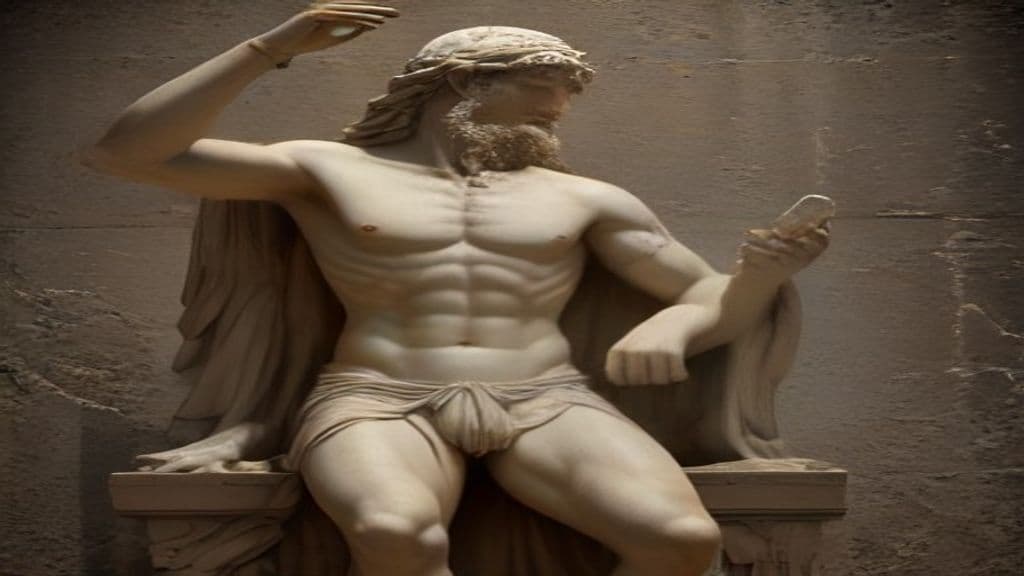
The reconstructed figure is attributed, by comparison with later deities, with a bushy beard, keen watchful eyes, and goat‑associated features. These visual and emblematic traits are inferred from Vedic descriptions of Pūṣan (whose chariot is drawn by goats and who is a watcher) and Greek depictions of Pan (goat's legs, rustic appearance, and a bearded visage). No direct ancient depiction of *Péh₂usōn exists; the described appearance is a scholarly synthesis of recurring motifs in the descendant traditions rather than an attested portrait.
Inferred abilities and functions include guarding cattle and flocks, protecting shepherds and travellers from natural and human dangers (wolves, brigands), guiding wayfarers and surveying routes, and aiding retrieval of lost or stolen goods. Mobility and surefootedness (the capacity to clamber slopes like a goat) and an expansive, watching gaze are also attributed by analogy with Pan and Pūṣan. Some aspects of finding hidden objects and boundary oversight are comparable to later functions taken on by Hermes in Greek tradition; scholars suggest that such functions may have shifted among deities over time, so the reconstruction aggregates overlapping competencies evident in the comparanda.
Weaknesses
- otherno weaknesses reconstructed — sources provide no attested vulnerabilities
Wards
- ritualsacrificial offerings before travel (comparative practice)
- ritualgoat sacrifice (attested to Pūṣan in Vedic contexts)
- symbolpath and boundary markers (herma / cairns)
Community Record
- [1]Péh₂usōn (Wikipedia). Wikipedia: entry on *Péh₂usōn summarising scholarly reconstruction and comparanda (Greek Pan, Vedic Pūṣan) and noting scholarly debate.wiki
- [2]Pehuson (Wikidata). Wikidata item summarising the reconstructed PIE deity *Péh₂usōn and linked data.wiki