
The pocong concept is rooted in vernacular responses to Islamic funerary practice: a dead body wrapped in the kain kafan (burial shroud) is believed, in local tradition, to animate if the knots of the shroud are not undone after placement in the grave. Narrative variants in localities rework that core: for example, the 'plastic pocong' story traces to a murdered pregnant woman whose body was wrapped in plastic as well as a shroud; the 'andong pocong' and 'pocong merah' (red shroud) are regionally specific narrative developments recorded in modern sources. The figure therefore combines concerns about proper burial procedure with localized tales of unresolved wrongs or vengeance.
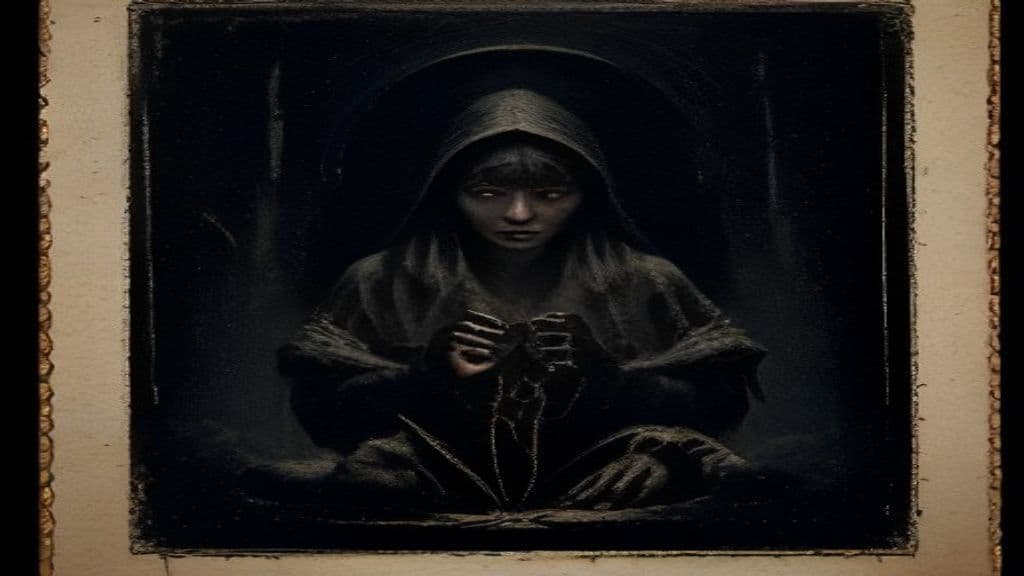
Typically described as a corpse fully wrapped in a white burial shroud, with knots over the head, under the feet, and around the neck. Appearance varies by reported state of decomposition: a 'fresh' pocong may resemble the recently dead with a pale face and wide-open eyes; older or decayed pocong are described as skeletal, dark-faced with glowing or white featureless eyes, or flat-faced with empty sockets. Because the shroud is tied under the feet, many accounts say pocong hop like rabbits, though some accounts describe them floating above the ground.
Reported abilities and behaviors are variable in accounts: pocong are said to appear at gravesites, former homes, near banana trees, and elsewhere; they are reported to sometimes move through solid objects and to 'teleport almost instantly' between locations. Socially they can appear singly or in colonies (accounts range from solitary encounters to large groups), and their temperament varies—some are said to show themselves to relay messages or ask for prayers, while others seek to frighten or, in certain variants like the red-shroud pocong, to attack the living. Named variants recorded in sources include the plastic pocong (tied to a body wrapped also in plastic), the andong pocong (depicted as knocking on doors and associated locally with later illness), and the Pocong Merah (red shroud), said to be more vengeful.
Weaknesses
- ritualundoing the knots of the burial shroud
Wards
- ritualundoing the knots of the burial shroud (kain kafan)
Community Record
- [1]Pocong. Wikipedia: 'Pocong' entry (summary of name, appearance, behavior, variants).wiki
- [2]Sumpah Pocong Di Sekolah [INDONESIAN NAV VCD BOOTLEG VER REDUMPER]. Archive.org: listing for film featuring pocong in Indonesian popular culture.other
- [3]EPS 02 - Lia Ganni & Khaira Nissa, Antara Wonder Woman, Salmon dan Pocong. Archive.org: podcast episode referencing pocong in contemporary discussion.other
- [4]Kung Fu Pocong Perawan. Wikipedia: film entry illustrating cinematic uses of the pocong motif.wiki
- [5]PAMALI: DUSUN POCONG - Horror In The Corpse Village (Indonesia, 2023). TheArtyDans commentary on Indonesian horror and the recurring use of pocong imagery.other
- [6]Pocong vs Kuntilanak - Alchetron, The Free Social Encyclopedia. Alchetron entry comparing pocong with other Indonesian supernatural figures in media.other
- [7]The Tourist’s Guide to Evil and Mischievous Spirits of Earth – The Search For Life After Death. Web article summarizing regional spirit figures including the pocong motif.other