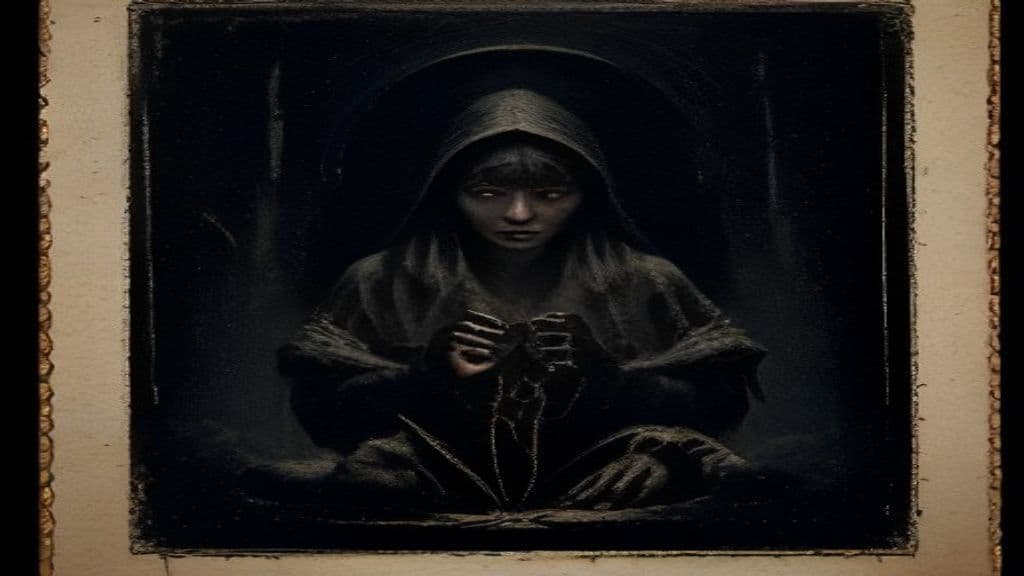
This rite is documented folklore, recorded for study — not instruction. It is presented here as part of the historical record of what practitioners in this tradition have done, not as guidance to perform it.
Belief holds that a dukun santet can direct affliction onto a named victim at any distance, given something of theirs to work with. Accounts describe the harm surfacing as sudden unexplained illness, wasting, madness, ruin, or death — and, in the most widely told form, as nails, wire, glass, hair or insects said to be drawn out of the victim's body.
Santet is the most widely known form of Indonesian black magic: harm commissioned from a dukun and sent to a named person at a distance. It sits at the malevolent end of a much larger body of practice — the same word dukun covers midwives, bone-setters, spirit mediums and custom experts, and only a minority are believed to work santet. Regional vocabulary varies: teluh and tenung name the same thing in Javanese and Sundanese usage, while guna-guna refers to the love-compulsion magic that runs alongside it.
The signature of santet in popular telling is physical intrusion. The victim falls ill without medical explanation, and a healer later produces nails, needles, wire, glass or hair said to have been sent into the body. Accounts collected across Java and Madura describe a personal token — hair, clothing, earth from a footprint — as the necessary link between practitioner and target.
The lethal part of santet is not the curse but the charge. In 1998 in East Java, following an outbreak of fear over sorcery, vigilantes in black killed people suspected of being dukun santet; the episode is remembered as the ninja scare and left scores dead. Suspicion of sorcery has repeatedly turned into lynching in the archipelago, which is why Indonesian law has addressed the claim to such powers rather than the powers themselves.
Within Muslim communities the recognised remedy is not a counter-curse but ruqyah — Qur'anic recitation and supplication performed by a raqi — which treats santet alongside sihr, jinn possession and the evil eye as a spiritual affliction to be lifted.
- 01A client approaches a dukun with a grievance rather than an ailment — this is what separates santet from the healing most dukun perform.
- 02Accounts describe the dukun requiring a personal token of the intended victim: hair, a nail paring, a scrap of worn clothing, earth from their footprint, or a photograph.
- 03A period of seclusion, fasting and recitation follows, in which the harm is said to be fixed upon the token and sent.
- 04The victim is said to sicken without medical cause. In the classic telling the affliction later manifests physically, as objects said to be extracted from the body by a healer.
- 05A counter-practitioner — commonly a raqi performing ruqyah, or a rival dukun — is engaged to identify the sender and lift the affliction.
- ⚠Not undertaken within Islamic practice at all: sihr is prohibited outright, and the recognised response to affliction is ruqyah — Qur'anic recitation to lift it — rather than a counter-curse.
- ⚠Ethnographers stress that the material danger is social rather than occult: to be believed a dukun santet is to be at risk of lynching, as in the 1998 East Java killings.

Kuntilanak (Pontianak)
A Malay‑world female revenant or vengeful spirit associated with women who died in childbirth or stillbirth; depicted as a pale, long‑haired woman in a blood‑stained white dress who preys on the living (men, pregnant women, women in childbirth, and in some variants virgins/young women). The figure appears across Indonesia, Malaysia, Singapore and neighboring areas and features in oral tradition and popular media.

Pocong
A revenant in Indonesian and Malay popular belief: the corpse wrapped in an Islamic burial shroud (kain kafan) that is said to animate when the burial knots remain tied. Pocong are described as unpredictable: some request prayers, others frighten or attack, and several local variants with distinct behaviors are attested in contemporary sources.
Community Record
- [1]Sihir hitam (santet) — Wikipedia (Indonesian). "Sihir hitam, ilmu hitam, santet, atau tenung secara umum biasanya merujuk pada penggunaan kekuatan gaib atau sihir untuk tujuan jahat dan egois."wiki
- [2]Dukun — Wikipedia. "Dukun is an Indonesian term for shaman. Their societal role is that of a traditional healer, spirit medium, custom and tradition experts and on occasion sorcerers and masters of black magic."wiki
- [3]1998 East Java ninja scare — Wikipedia. "The local population believed they were being targeted by sorcerers ... vigilantes, which people described as ninjas due to their all-black clothing, attacked and killed residents they suspected of sorcery."wiki