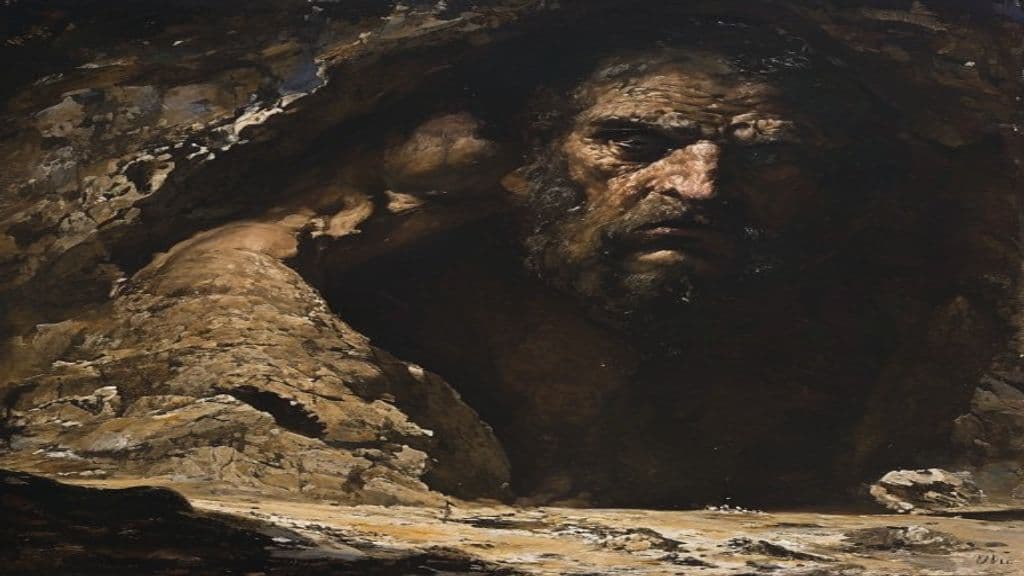
In Homeric epic Polyphemus is one of the Cyclopes and is presented as the son of Poseidon and the nymph Thoosa; he lives apart from human polis life as a cave‑dwelling shepherd. The Homeric episode places him as an interlocutor and antagonist in Odysseus's nostos: Odysseus and his men become guests in his cave, are refused the normal laws of xenia, and are partly eaten before Odysseus blinds him. Later authors (notably Euripides in his satyr play and Virgil in Roman epic) adapt and rework the character: Euripides makes him rhetorically sophisticated and comic, while other later poets depict him in erotic or musical contexts (e.g., as a suitor of the sea‑nymph Galatea). The name is also reused in other contexts (an Argonaut named Polyphemus, and in biological nomenclature), but those are distinct uses of the name rather than continuations of the Homeric monster's origin.
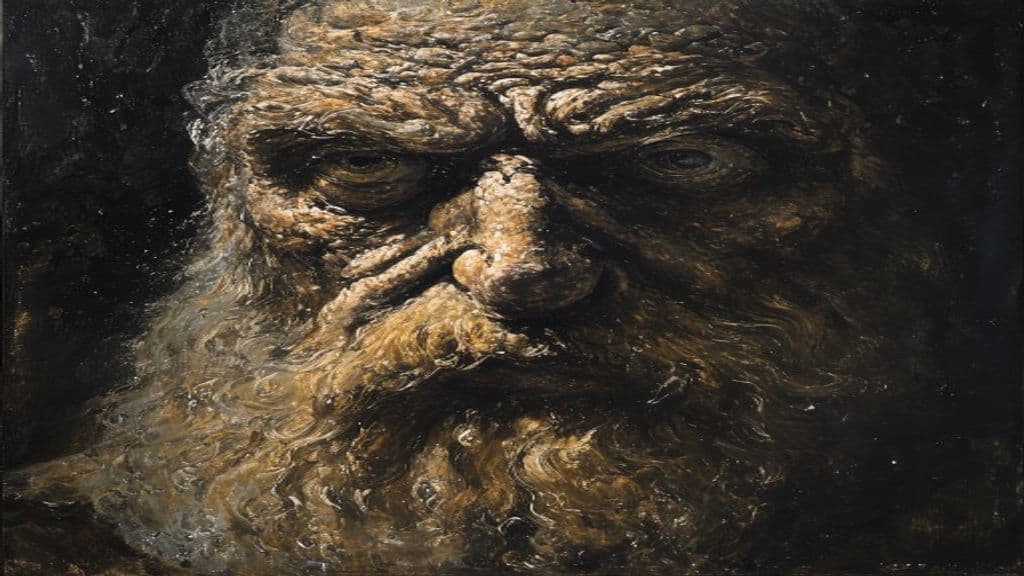
Homeric description presents Polyphemus as a very large, one‑eyed giant who lives in a cave and tends flocks; he is strong enough to roll or place a great stone to block his cave entrance and to hurl rocks at fleeing ships. Artistic convention depicts him with a single central eye in the forehead and, after his blinding, sometimes with two empty sockets and the damaged eye shown in the middle of the brow. In later epic (Virgil) he is described using a lopped pine tree as a walking staff while descending to the shore.
In the primary Homeric account Polyphemus is a superhumanly strong shepherd who kills and devours men, blocks his cave with a great stone, and later hurls boulders at ships. He is also able to invoke his divine parentage — he prays to Poseidon, and Poseidon's subsequent vengeance on Odysseus follows. Literary treatments vary his behaviors: Euripides' Cyclops presents him as capable of rhetorical speech and comic sexual desire, and some later poets portray him as musically inclined or lovesick. These latter traits are literary adaptations rather than consistent supernatural powers in the Homeric narrative.
Weaknesses
- substancestrong undiluted wine
- otherintoxication/vulnerability to being drugged
- othereye vulnerability (blinding by a fire‑hardened wooden stake heated until glowing)
- conditionmisidentification by neighbors (confusion caused by the name 'Nobody' / Οὖτις)
Wards
- conditionavoidance of Cyclopean cave or island
- otherdeception and stealth (tying men under sheep to escape detection)
- substanceuse of intoxicants strategically (offering strong wine)
- otherviolent countermeasure (fire‑hardened heated wooden stake used to blind)
Community Record
- [1]Polyphemus — Wikipedia. Wikipedia. "Polyphemus."wiki
- [2]Polyphemus (Argonaut) — Wikipedia. Wikipedia. "Polyphemus (Argonaut)."wiki
- [3]Polyphemus moth (Antheraea polyphemus) — Backyard Nature. BackyardNature.net. "Polyphemus Moth, ANTHERAEA POLYPHEMUS."other
- [4]Polyphemus moth caterpillar — Backyard Nature. BackyardNature.net. "POLYPHEMUS MOTH CATERPILLAR."other
- [5]Wikidata: Polyphemus. Wikidata entry for Polyphemus.other
- [6]Virgil and later literary reception (summarized). Summary of Virgilic and later portrayals in the referenced Wikipedia article.wiki