
The name Πρωτεύς (Prōteús) has been read as suggesting 'the first' (from Greek πρῶτος prōtos), though what the epithet originally signified is uncertain. In Greek mythic genealogies Proteus is presented as an elder sea-divinity and is often described as a son or subordinate of Poseidon; Homer and later authors treat him as one of the figures called the 'Old Man of the Sea.' Literary traditions vary and sometimes reuse the name for a king of Egypt in other contexts, but the core classical figure is the ancient prophetic sea-being encountered at coastal locales such as Pharos.
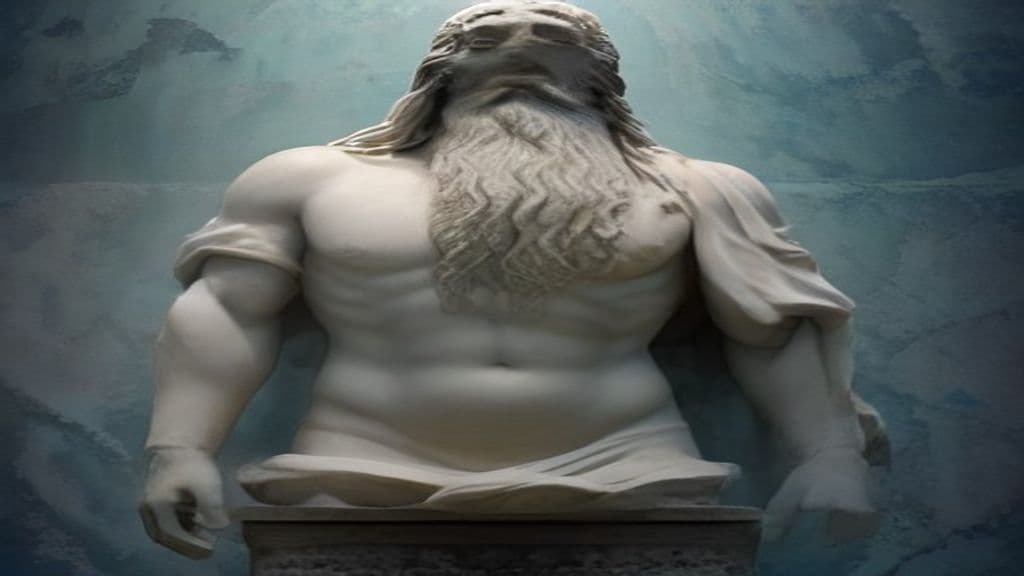
Accounts vary between an anthropomorphic 'old man of the sea' and a being that repeatedly alters visible form. Homeric description frames him as an aged sea-elder who emerges from the sea and sleeps among sea-animals (an episode-specific detail on Pharos), while narrative episodes emphasize his capacity to become animals (lion, serpent, leopard, pig), elements (water), or plants (tree). Stable, detailed corporeal descriptors beyond his apparent age and his protean transformations are not provided in the source material.
Proteus is classically credited with two linked capacities: prophetic knowledge of hidden causes and future events, and protean metamorphosis. In Homeric and later episodes he can foretell the future and reveal causes of misfortune, but he resists speaking and will change shape to escape disclosure. The canonical method for obtaining his truth is physical: a seeker must seize and hold him despite successive transformations (episodes include Menelaus in the Odyssey and Aristaeus in Virgil's Georgics). In some literary strands he is described as herdsman or guardian of sea-creatures; in Virgil the information he yields can include ritual prescriptions to repair harms.
Weaknesses
- conditionphysical restraint despite metamorphosis
- otherintermediary aid (e.g., Proteus's daughter Eidothea guiding a seeker)
Wards
- ritualseizure and holding
Community Record
- [1]Proteus. Wikipedia: Proteuswiki
- [2]Proteus (Wikidata). Wikidata entry Q132229other
- [3]Virgil, Georgics IV (summary of Aristaeus and Proteus episode). Summary in Proteus (Wikipedia) describing Georgics IV episodeliterary