In the Enūma Eliš Qingu appears in the primordial theogonic epoch as spouse/consort of the sea-goddess Tiamat. Tiamat appoints him leader of her monstrous army and affixes the Tablet of Destinies to his chest, a narrative elevation that confers legitimate authority to command and to "declare destinies." After the younger gods select Marduk to confront Tiamat, Marduk defeats Tiamat and Qingu; an assembly of gods judges and condemns Qingu, he is executed, and his blood is used by the god Ea (Enki) in the crafting of humankind. The text does not give Qingu a clear parentage, and compilers of the Enūma Eliš may have incorporated him from other, older or parallel traditions; later ritual and fragmentary sources treat him as one among a class of vanquished chthonic adversaries and sometimes equate him with figures like Enmešarra.
Primary literary sources (notably Enūma Eliš) do not preserve a consistent, detailed physical description of Qingu. He is described and characterized functionally—as Tiamat's consort, the appointed leader of her army, and bearer of the Tablet of Destinies—rather than by distinctive bodily features. Later summaries and encyclopedic treatments repeat his role as Tiamat's battle-leader and the defeated rival of Marduk, but the provided materials do not support any reliable iconographic attributes or consistent visual traits for Qingu.
Qingu's portrayed powers are primarily political and symbolic within the Enūma Eliš narrative: Tiamat's affixation of the Tablet of Destinies to his chest elevates him to a position of legitimate authority (da-nu-ti), and with the tablet he is said to "declare destinies" for Tiamat's offspring. He commands Tiamat's army in war against the younger gods. Narratively he functions as a vanquished primordial/chthonic opponent whose execution and the use of his blood explain human origins. In later ritual or hymnological contexts his name is sometimes reused as a title of Marduk or equated with other defeated beings (e.g., Enmešarra), indicating conceptual mobility rather than additional independent powers recorded in the cited sources.
Weaknesses
- otherJudgment and execution by the assembly of the gods (narrative defeat by Marduk)
Wards
None recorded.
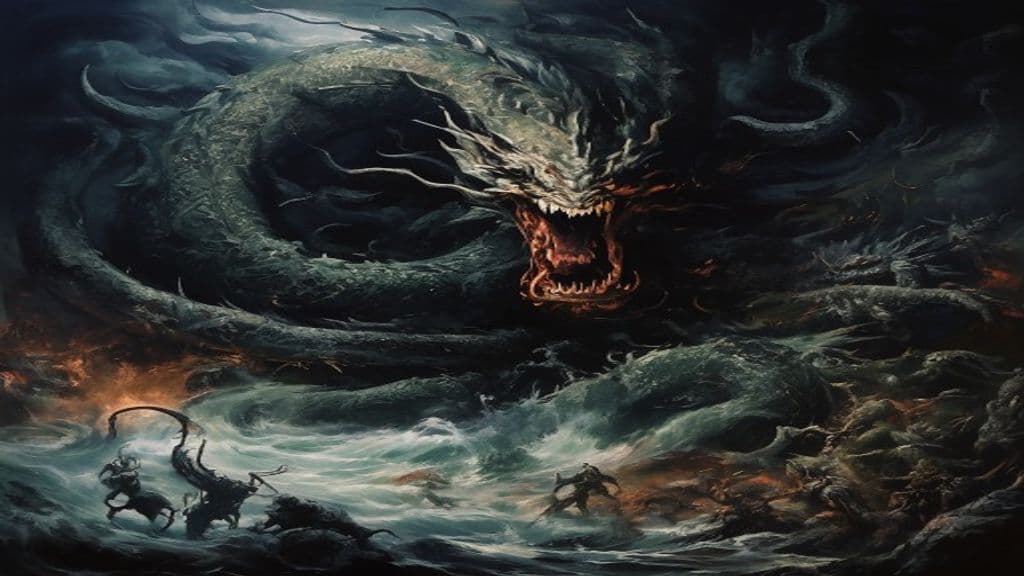
Tiamat
The primordial salt-sea dragon of Babylonian creation myth — the chaos-mother from whose slain body the universe was built, and whose blood became the first humans.

Enmesharra
Enmesharra is a Mesopotamian theogonic and ancestral deity, presented in texts as a member of an older generation of gods associated with the underworld and with earlier or superseded divine prerogatives summed up by the Sumerian term me.
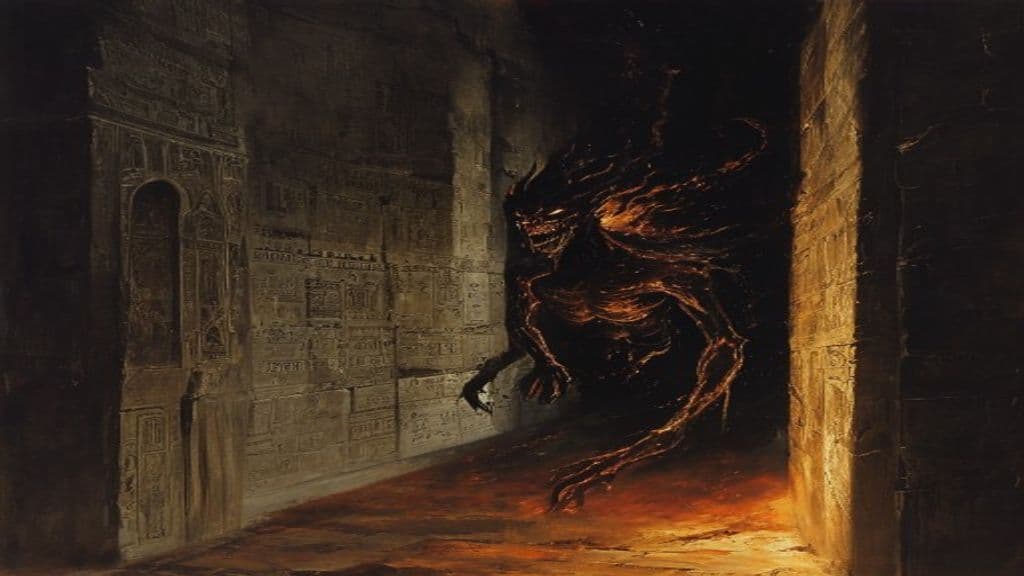
Asakku
A class of Sumerian disease-demons born from the union of heaven and earth, who lodged themselves in people's bodies and caused wasting fevers and convulsions.
Community Record
- [1]Qingu (Wikipedia). Wikipedia contributors, 'Qingu,' Wikipedia, The Free Encyclopediawiki
- [2]Tiamat (Wikipedia). Wikipedia contributors, 'Tiamat,' Wikipedia, The Free Encyclopediawiki
- [3]Babylonian Creation Myths (bibliographic listing). Archive.org listing for a collected volume of Babylonian creation myths (includes texts such as 'The Defeat of Enutila, Enmešarra, and Qingu')literary
- [4]Is Genesis 1 Just Reworked Babylonian Myth? (Creation.com summary). Creation.com, article summarizing parallels between Genesis and Babylonian creation traditions (summarizes Enūma Eliš motifs including Qingu's fate)other
- [5]Encyclopedic and web summaries (selected). Encyclo and related web summaries collating Enūma Eliš material on Qinguother