Rauni is attested only fragmentarily: the name appears in runic-song forms (noted variants Röönikkä/Ryönikkä) and is mentioned by the early modern writer Mikael Agricola in 1551. Scholarly summaries used in the supplied material present Rauni simply as "a name for a being in Finnish mythology," and emphasize that the surviving textual and oral traces are too limited to support a detailed origin narrative or clear identification with a specific domain (for example, earth, fertility, or sky). The modern overview situates Rauni among other named Finnish figures (such as Ukko and Akka) but does not establish a defined relationship to them in the cited sources (Wikipedia: Rauni; Ukko; AKKA).
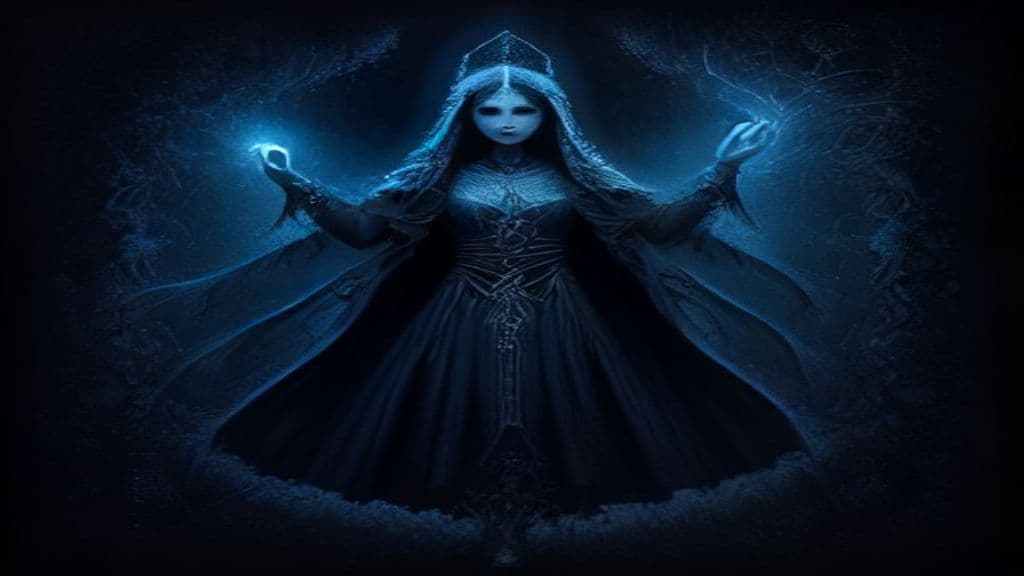
The supplied sources do not record any physical description or iconography for Rauni. Available summaries state only the name, its pronunciation, and variant runic-song forms; no corporeal, vestment, or emblematic details are preserved in the provided excerpts (Wikipedia: Rauni).
No powers, actions, or narrative behaviors are attributed to Rauni in the provided materials. The extant references amount to a name in runic-song contexts and an early modern mention; the sources do not record feats, domains, or folkloric functions for Rauni (Wikipedia: Rauni; related Ukko/AKKA entries supply context for better-attested deities but do not ascribe those functions to Rauni).
Ahtola (Kalevala) (tradition)
In the supplied sources, no supernatural entity named "Ahtola" is attested in the Kalevala or other Finnish mythic texts. The name Ahtola appears in the source set only as a modern Finnish surname and a place-name; the closely related mythic figure attested in the material is Ahti/Ahto, a Finnish water god associated with the sea.
Aitia (Baltic Finnic)
Primordial figure representing the creative power of the universe, associated with the creation of the world and emergence of life from chaos. (Note: 1. Power tier: Primordial is plausible, but it would be more accurate to indicate "Primordial" as a default power tier without specifying, since there's no further information about its abilities or b)
Haltija
In Finnish mythology, a Haltija is a supernatural guardian that protects specific locations and species, embodying a spirit of preservation within the natural world. (Note: * Power tier: should be "Lesser" instead of "Greater", as Haltijas are described as solitary creatures protecting specific places or species. * Abilities: added information about Haltijas being able t)
Hiiden Hirvi
Mythical moose from Finnish tradition that must be hunted by skiing. (Note: - Power tier: Greater (given its classification as a mythical entity that requires special skills to hunt, it's likely more powerful than a Minor Spirit) - Weaknesses: specify what the source material)
Iku-Turso
In Finnish mythology, Iku-Turso is a malevolent sea monster described in the Kalevala. (Note: - The power tier should be Primordial, given its classification as a "giant" and its association with the sea. - Add sensory cues: The source mentions that it's a malevolent entity, so potential senso)
Kalevi
Finnish giant and heroic figure, often associated with pre-human or archaic layer of existence. (Note: * Power tier is likely Greater (powerful regional) rather than Primordial due to Kalevi being a heroic figure that appears in runic songs. * Sensory cues are missing and should be included based on th)
Kokko
Kokko is an item name that appears in discussions of Finnish mythology but is not described in the single provided source. The available material situates Kokko within the broader corpus of Finnish pagan folklore without providing specific details about its nature, appearance, or associated practices.
Kuippana (Tapio)
Kuippana, also attested as Tapio or Hippa, is a Finnish forest spirit attested in Finnish tradition as the named sovereign or 'King of the Forest.' Hunters in the tradition addressed him ritually before hunts; he is represented as bodily merged with forest vegetation.
Kyöpelinvuori
A mythological location in Finnish culture where dead virgins gather after their death, marking the start of their afterlife. (Note: - Power tier: Lower to Greater (not Primordial), as it is a mythological location associated with the afterlife, but not a cosmic entity. - Abilities: Clarify that the article implies Kyöpelinvuori is)
Lemminkäinen
A young and good-looking hero in Finnish mythology, embodying the ideals and values of his culture. (Note: - Power tier should be changed to "Greater" since Lemminkäinen's abilities are not deity-level but rather that of a powerful regional hero. - Abilities section should be rewritten or removed, as it st)
Loviatar
Loviatar is a figure attested in modern reference works as part of Finnish mythic material associated with death and illness; one database entry describes her as a blind daughter of Tuoni. Source material in the supplied corpus also shows nearby or overlapping traditions (notably Louhi) linked to death, disease, and wolves, but the documents provided do not settle whether Loviatar and Louhi are identical, conflated, or distinct in older tradition.
Menninkäinen
A mischievous, goblin-like spirit in Finnish mythology that guards treasures and enjoys riddles and games of dominance. (Note: 1. Power tier: Lower to Primordial or Ancient, given the description of guarding treasures and enjoying games of dominance. 2. Origin story: Remove "originally described as spirits that lived in isola)
Community Record
- [1]Rauni (deity) - Wikipedia. Rauni (deity), Wikipedia — notes pronunciation, that Rauni "is a name for a being in Finnish mythology," connection to runic-song names Röönikkä/Ryönikkä, and mention by Mikael Agricola in 1551.wiki
- [2]Rauni — Wikidata entry. Wikidata item for Rauni (Q11890203) — linked identifier for the name as attested in secondary catalogs.other
- [3]Ukko - Wikipedia. Ukko (Wikipedia) — provided as contextual material showing a well-attested thunder and weather deity in Finnish mythology; cited here for cultural context only.wiki
- [4]AKKA - the Finnish Earth Goddess (summary). AKKA entry (Godchecker) — used in the supplied material as contextual reference to earth/fertility goddess types in Finnish tradition.other