Sources treat Ryūjin as a named sea kami within Japanese mythic and cultic practice rather than providing a single narrated origin. In some traditions he is treated as equivalent to the sea-god Ōwatatsumi; otherwise he appears as an established tutelary dragon-deity with genealogical relations (for example father of Otohime) and a palace under the sea (Ryūgū-jō). His presence and roles are given through linked myths (Urashima Tarō, the jellyfish episode, tales involving Empress Jingū and Tawara Tōda) rather than a unique cosmogonic origin account in the cited sources.
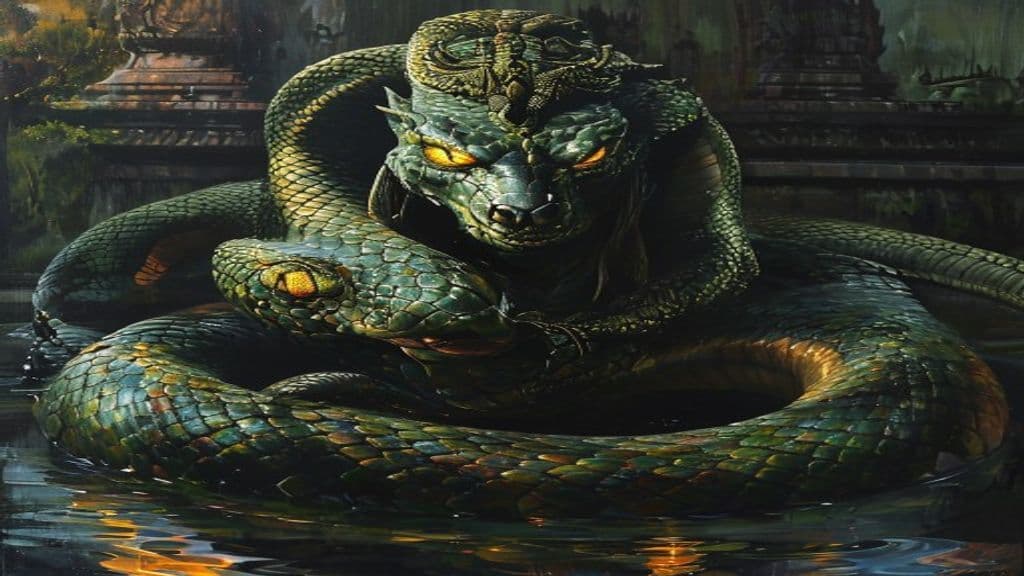
Described as a Japanese dragon symbolizing the power of the ocean, Ryūjin is portrayed in draconic form and is also said in many versions to be able to transform into human shape. He is associated with an undersea court: Ryūgū-jō, his palace of red and white coral, where sea turtles, fish, jellyfish, snakes and other sea creatures are represented as his servants.
Ryūjin is credited with control over tides using magical Tide jewels (Kanju 干珠, the tide-ebbing jewel, and Manju 満珠, the tide-flowing jewel). He is associated with bringing rain and thunder, is said to possess knowledge of medicine, and functions as a tutelary patron (ujigami) of some family groups and fishing/agricultural communities. Narratively he can intervene in human affairs—requesting human aid, rewarding service (gifts such as armour, swords, silk, inexhaustible rice bag, bell), punishing creatures (the jellyfish myth), and in some retellings is credited with generating storms or causing sinking of enemy fleets.
Weaknesses
- otherNo specific intrinsic weaknesses attested in provided sources
Wards
- ritualRyūjin shinkō (竜神信仰) — cultic worship and prayers
Community Record
- [1]Ryūjin — Wikipedia. Wikipedia contributors. "Ryūjin." Wikipedia, The Free Encyclopedia. https://en.wikipedia.org/wiki/Ry%C5%ABjinwiki
- [2]Ryūjin — Wikidata. Wikidata entry Q2458617: Ryūjin. http://www.wikidata.org/entity/Q2458617wiki