In Roman mythological tradition Salacia is presented as the saltwater personification who becomes the consort of Neptune. Several classical authors and later summaries relate a marriage narrative in which Neptune courts Salacia; she initially flees and hides in the Atlantic to preserve her virginity until a dolphin is sent to persuade her to return and marry Neptune. This union places her within the genealogies and household of the sea-god (sources cited in the provided material include Varro, Seneca, Augustine, Servius, and Aulus Gellius as attestations of aspects of her myth and cultic invocation).
Salacia is represented in mythic and iconographic accounts as a beautiful sea-nymph: crowned with seaweed, sometimes shown enthroned beside Neptune or riding with him in a pearl shell chariot drawn by dolphins, hippocamps, or other fabulous sea creatures, and attended by Tritons and Nereids. Descriptions also note queenly robes and nets in her hair; iconography varies across representations rather than presenting a single standardized portrait.
Sources characterize Salacia primarily by domain and relationship rather than enumerating discrete magical acts. She personifies the calm, sunlit salt sea and is invoked as an aspect or attribute of Neptune (for example, the cultic formulaic invocation "Salacia Neptuni"). Some accounts also associate an alternate form (Salachia) with heavily mineralized springs. Mythic behavior in the marriage tale highlights fluidity and evasive movement (gliding and concealment in the sea) rather than aggressive or sorcerous powers; she is mother to marine offspring such as Triton.
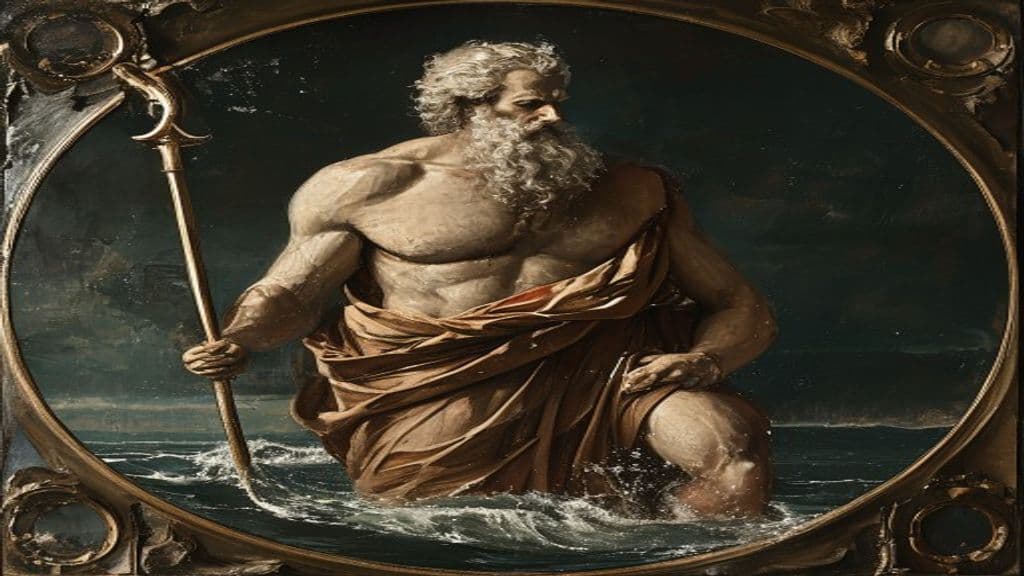
Neptune
Neptune (Latin: Neptūnus) is the Roman god of freshwater and the sea, often treated in Roman religion as the counterpart of the Greek Poseidon and placed in a fraternal relationship with Jupiter and Pluto. The classical deity's name was later adopted in modern astronomy for the eighth planet of the Solar System, a cultural reuse noted in scientific sources.
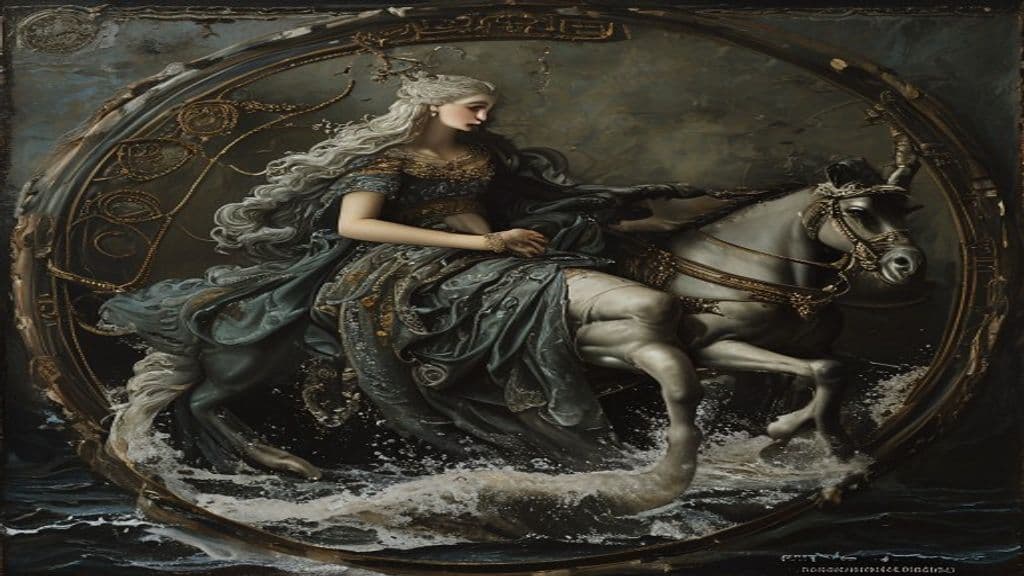
Amphitrite
Amphitrite is an ancient Greek sea-divinity, queen of the sea and consort of the sea-god Poseidon; in poetry her name is often used metonymically for the sea itself. She is counted among the daughters of Nereus and Doris in Hesiod and in some accounts is also listed among the Oceanids, and appears chiefly in mythic narrative and iconography rather than as an independent civic cult figure.
Community Record
- [1]Salacia - Wikipedia. Wikipedia, 'Salacia' (summary of classical attestations and modern usages)wiki
- [2]Salacia (Wikidata). Wikidata entry for Salaciaother
- [3]Symbolic and ritual phrase citation (Aulus Gellius reference as reported). Aulus Gellius cited in secondary summaries noting invocation lists such as 'maia Volcani, Salacia Neptuni, hora Quirini, nerio Martis' (as reported in the provided notes)literary
- [4]Modern namings and cultural reuse (trans-Neptunian object, plant genus). Wikipedia entry for the plant genus Salacia; modern astronomical namings cited in provided notesother