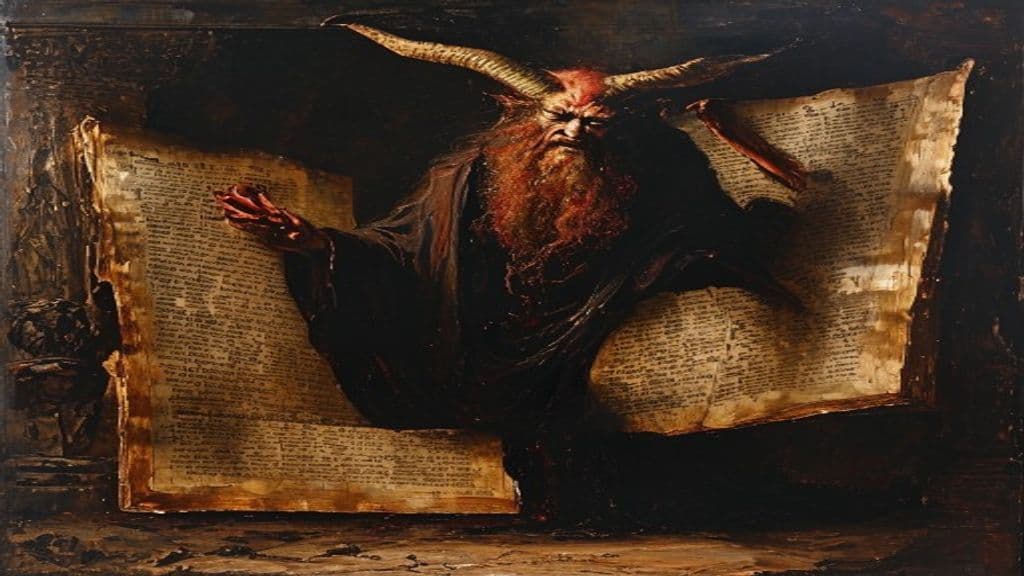
The figure emerges from Hebrew scriptural language: the noun śāṭān (שָׂטָן) originally denotes an accuser or adversary and appears in the Masoretic Text both as a generic term and in the definite form ha-satan as a member of the divine court acting under Yahweh's authority. During the intertestamental period the role-title develops in some literature into a more malevolent, oppositional figure (scholarship summarized in the sources characterizes this development as possibly influenced by external dualistic ideas such as those associated with Angra Mainyu, though the source frames that influence as a scholarly suggestion, not established fact). In Christian and Islamic accounts the figure is further developed as a rebellious heavenly being cast out of Heaven (a fallen angel in later Christian narrative; in the Qur'anic frame Iblis refuses God's command regarding Adam and is cast out), after which he exerts influence in the fallen world and leads other hostile spirits.
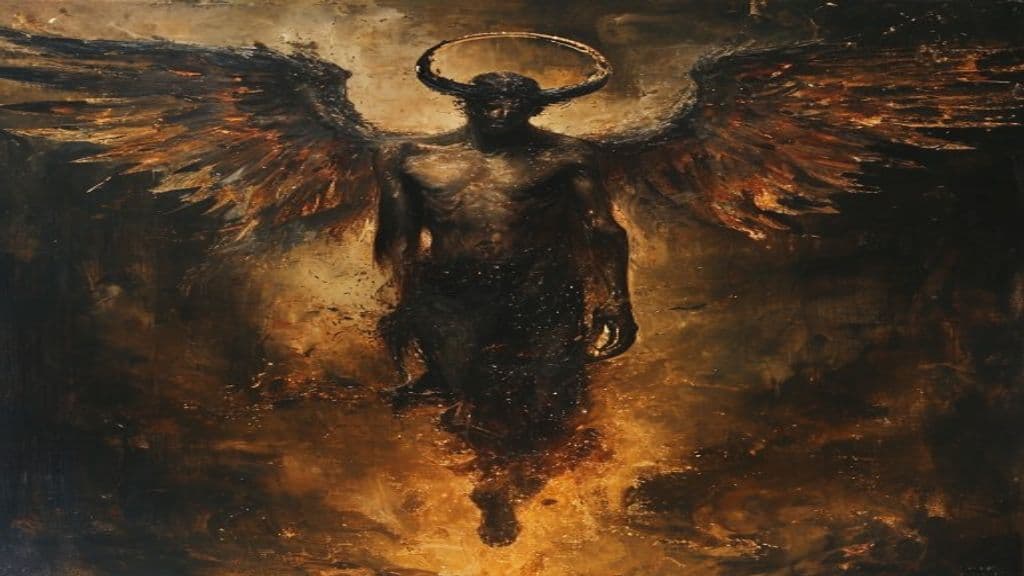
Canonical Hebrew Bible and New Testament texts summarized in the sources do not provide a physical description of the figure; the tertiary summary notes that 'Satan's appearance is never described in the Bible.' Later Christian artistic conventions (from about the ninth century onward) commonly depict him with horns, cloven hooves, hairy legs and a tail—an iconographic synthesis influenced by various pre-Christian imagery—but these visual traits are post-biblical artistic developments reported in the sources rather than scriptural descriptions.
Across the traditions summarized, Satan functions as heavenly accuser/prosecutor (presenting charges in a divine assembly and acting as a tester, as in the Book of Job and Zechariah), as tempter and inciter to sin (New Testament and Islamic summaries describe temptation episodes, including the temptation of Jesus and the Qur'anic account of Iblis's incitement), and as a rebellious leader of demons in later Christian and Islamic narratives (the Book of Revelation imagery casts him as a Great Red Dragon opposed by Michael). The sources attribute to him persuasive mental influence (Islamic concept of waswās, 'evil suggestions'), the capacity to inspire falsehood and illness in some Gospel passages, and leadership over other evil spirits. In earlier biblical layers he functions under divine permission or within God's court rather than as an independent sovereign of evil.
Weaknesses
- conditionlimited authority / operates under divine permission or within divine limits
- conditiondefeat and final judgment (depicted in Revelation as bound for a time and ultimately consigned to final punishment)
Wards
- otherresistance to temptation and scriptural/theological admonition (the sources note scriptural emphasis on resisting temptation rather than prescribing folk wards)
- otherexorcism and denunciation practices (historical Christian development: the sources report that exorcistic practices and concern about possession increased historically, but do not supply detailed rites)
Community Record
- [1]Satan — Wikipedia. Wikipedia contributors. 'Satan.' Wikipedia, The Free Encyclopedia. https://en.wikipedia.org/wiki/Satanwiki
- [2]Satan — Wikidata (entry noted but not used for religious material). Wikidata entry Q20081344 (not used for religious/folkloric claims in the supplied notes). http://www.wikidata.org/entity/Q20081344other
- [3]Rescue Radio: 'Reasonable Doubt?' with Marjorie Cole (audio). Rescue Radio. 'Reasonable Doubt?' with Marjorie Cole. Archive.org. https://archive.org/details/ly8es85pujx4chtnckkglzse8fbmkq2yamulcq14other
- [4]Responding to a Calvinist on Spiritual Deadness (audio). Archive broadcast 'Responding to a Calvinist on Spiritual Deadness.' Archive.org. https://archive.org/details/drxcdhuhr0utfubt6ex1a2lny3mausmbfp7talj2other