The provided sources do not supply a full mythic origin story. They record that the planet Saturn is named after a Roman god and that the astronomical symbol for the planet traces to a Greek abbreviation for Κρόνος (Cronus), indicating cross-cultural transmission of the name and symbol between Greek and Roman traditions. Beyond the naming link and the widely noted familial association with Jupiter (the planet article states Saturn is named after the Roman god who was the father of Jupiter), no further origin myths or narrative genealogy are recorded in the supplied material.
As an astronomical object, Saturn is described as a pale yellow planet with a bright and extensive system of rings composed mainly of ice particles with some rocky debris and dust. It is the second-largest planet in the Solar System after Jupiter and has a large retinue of moons, including Titan. The planetary atmosphere and appearance result from gaseous composition (ammonia crystals contributing to hue) and rapidly moving winds. In the supplied material, the Roman deity Saturn is identified only by name; no iconography or physical depiction of the god is provided.
The astronomical Saturn exhibits measurable physical behaviors: it radiates roughly 2.5 times more energy into space than it receives from the Sun; it has strong zonal winds (reported up to about 1,800 km/h); it possesses a complex internal structure including layers where metallic hydrogen may generate an electrical current and a magnetic field; and hypotheses cited include helium 'raining out' as an internal heat source and speculative suggestions such as diamond precipitation. The supplied mythological entry provides only the classification of Saturn as a god in ancient Roman mythology and does not enumerate divine powers, cult functions, or mythic deeds within the provided excerpts.
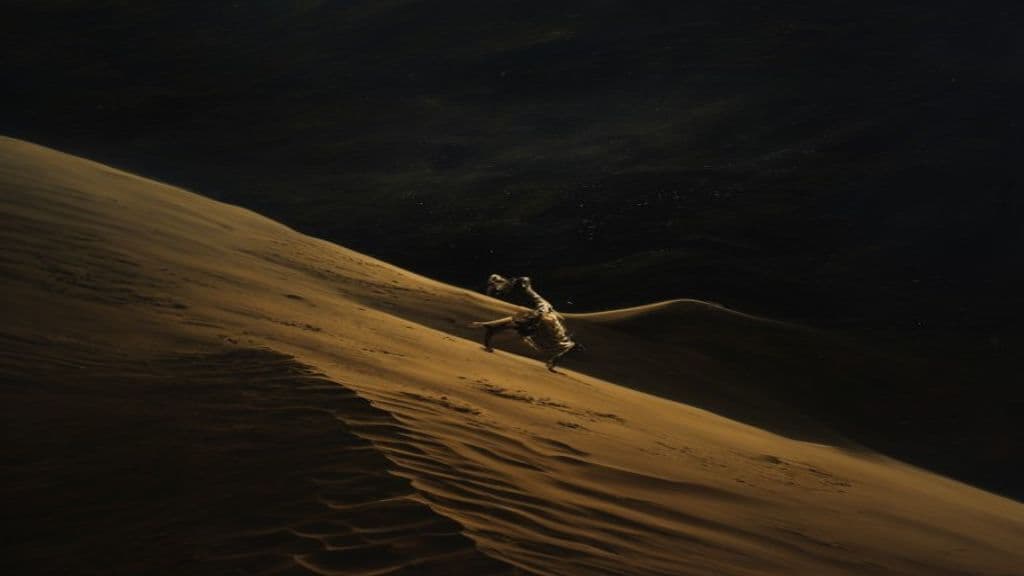
Jann
The weakest class of djinn in Islamic tradition, associated with desert winds and taking the form of snakes or whirlwinds, dwelling in empty wilderness and posing little threat to those who know the proper invocations.
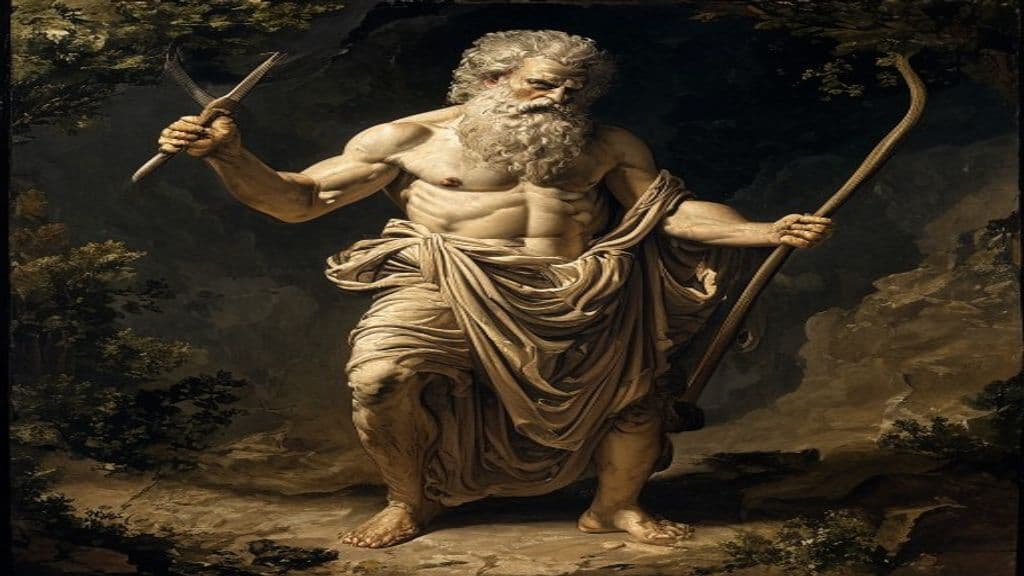
Cronus
A principal Titan in ancient Greek myth, Cronus (Κρόνος) is the youngest leader of the Titans who overthrew his father Uranus, ruled in the mythic Golden Age, devoured his newborn children to avert a prophecy, and was later overthrown by his son Zeus and confined to Tartarus. He is associated in some traditions with the harvest and is later equated with the Roman Saturn.
Community Record
- [1]Saturn - Wikipedia. Wikipedia contributors, "Saturn," Wikipedia, The Free Encyclopedia, https://en.wikipedia.org/wiki/Saturn (excerpted in research notes).wiki
- [2]Saturn (Q134388) - Wikidata. Wikidata entry Q134388, "god in ancient Roman mythology" (excerpted in research notes).wiki
- [3]TikTok archive: simp4moon video. Archived TikTok caption referenced in research notes (visual observation mention).other
- [4]Archive: Saturn Lauzon733 Favorites. Archived favorites collection referenced in research notes.other