The Sebitti are primarily a collective label meaning 'the seven' rather than a single origin narrative. Different textual traditions variously frame them as independent minor warrior-gods incorporated into the Neo-Assyrian state pantheon and invoked to assist kings; as attendants, creations, or weapons of major war deities (for example in Erra material); as astral counterparts identified with the Pleiades; or in at least one late mythic tradition as hostile sons of Enmešarra defeated by greater gods. These variant portrayals coexist across genres and periods rather than forming a single unified genealogy.
Textual and ritual descriptions depict the Sebitti as seven armed masculine figures. Ritual statue programs describe each figure armed with a hatchet (usually held in the right hand) and a dagger (left hand), wearing a bronze or copper girdle and headband, horned crowns (attested in descriptions), and a bow and quiver at the side; garments and a final coating of red paste are specified for statues mounted on tamarisk pedestals posed as if walking. Relief representations show similarly posed armed figures; sigils of seven dots in groupings are also associated with them. A separate older hymn describes a different heptad with animal attributes (fox, dog, raven, wolf, vulture, owl, shark) that some scholars propose relates to the Sebitti.
Across texts they are foremost martial beings who 'ride to battle' under or with underworld/war deities such as Nergal and Erra and who are invoked to smite enemies. In ritual contexts they function apotropaically: statues of the seven are installed (buried under gates or placed at bedsides) and activated by incantation to repel evil, disease, and hostile forces. In mythic narratives they may appear as subordinate servants or instruments of greater gods, or alternately as antagonistic opponents (e.g., sons of Enmešarra) who are defeated by deities like Marduk or Ninurta.
Weaknesses
- conditiondefeat or subjugation by greater gods (attested in specific myths where Marduk, Nergal, or Ninurta overthrow or subdue the heptad)
Wards
- ritualinstallation of seven armed statues (burial under gate)
- ritualplacement of seven statues at head of bed with accompanying protective figures
- ritualrecitation of incantations over the statues to activate protective power

Apkallu (Abgal)
Apkallu (Akkadian; Sumerian: Abgal) are polyvalent Mesopotamian wisdom figures attested as mythic/semi-divine sages (notably a group of seven), as professional human experts (ummânu), and as apotropaic images used in household and cultic ritual. They are closely associated with the god Ea (Nudimmud) as transmitters of secret knowledge and are represented in diverse iconography including fish-man and bird-headed types.
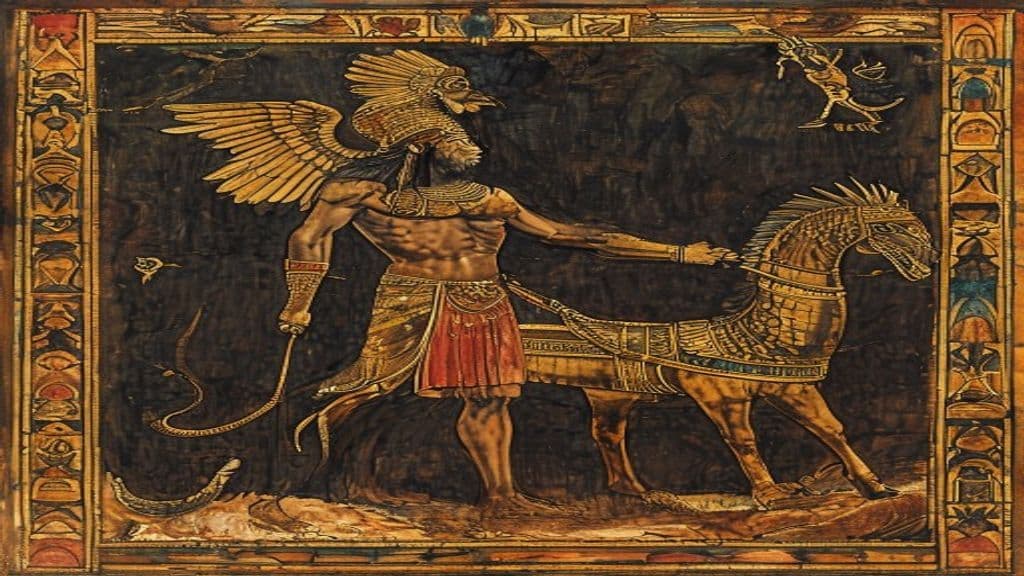
Ninurta
Ninurta is a major deity of ancient Mesopotamia (Sumerian–Akkadian–Assyrian–Babylonian) whose roles include agriculture, healing/exorcism, law and scribal authority, and martial champion of the gods. He is attested from the mid-third millennium BC onward and was venerated at city cult-centers such as Nippur (Eshumesha), Girsu/Lagash (as Ninĝirsu), and later in Assyrian Kalhu.
Community Record
- [1]Sebitti. Wikipedia entry 'Sebitti' — summary of scholarly positions and Neo-Assyrian ritual details relating to the Sebitti heptad.wiki
- [2]Mesopotamian pantheon summary (babylon.txt). Pantheon summary noting 'The Seven who ride to battle under Nergal' and related categorizations.other
- [3]Gods of Heaven and Earth (Sebitti discussion). Secondary web summary identifying the Sebitti with the Pleiades and associating them with Nergal/Erra.other
- [4]Nergal — GatewaysToBabylon summary. Summary linking the Sebitti to Nergal/Erra as underworld/war figures.other