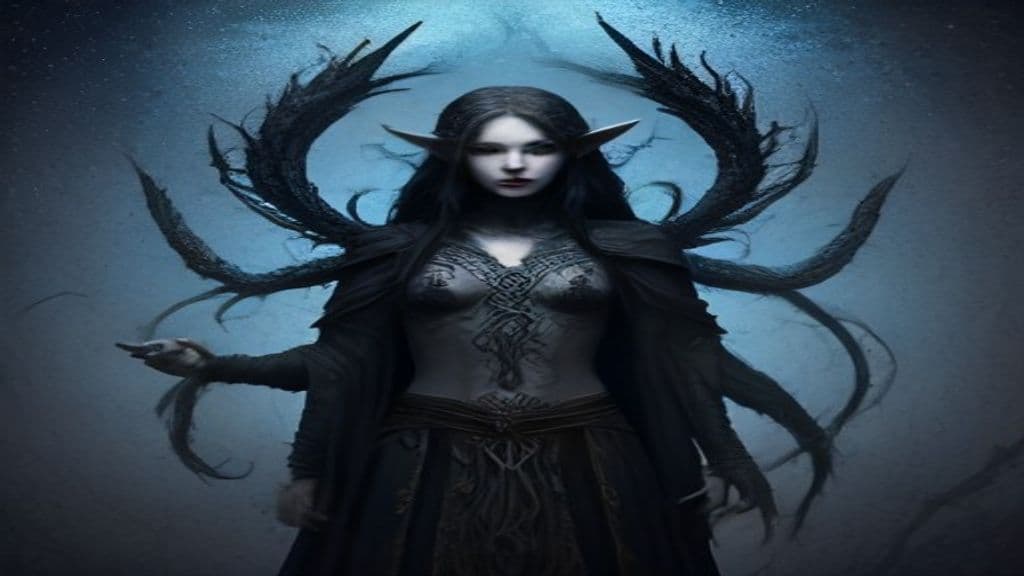
The term derives from Old Irish sidhe meaning 'hill' or 'mound' and the compound aos sí / aos sídhe literally frames them as the 'people of the mounds.' In later folkloric usage the Sidhe are identified with or said to descend from the Tuatha Dé Danann — the mythic pre-Christian gods or hero-people of Irish tradition — so that the Sidhe function as a continuity between the old deities and later local fairy belief.
Sources do not give a single fixed appearance. Traditional and scholarly summaries treat the Sidhe as a supernatural race comparable to 'elves' (implying humanoid otherworldliness), while some accounts equate them with the Tuatha Dé Danann and therefore allow for imagining them as powerful, sometimes beautiful or noble beings. Specific named types within the category (for example the leanan sídhe as a beautiful fairy woman, or the cat sídhe/Cat sith as a fairy cat) carry their own descriptive traits in folklore.
Folkloric and interpretive sources attribute longevity, an existence in an overlapping unseen realm, and occasional returns to the physical world for short periods. As descendants or equivalents of the Tuatha Dé Danann they are presented as superhuman in power and influence. Behavior is ambivalent: Sidhe can inspire or aid humans (the leanan sídhe inspiring artists) but also harm or take from mortals; they may be territorial and interact unpredictably with people according to local belief.
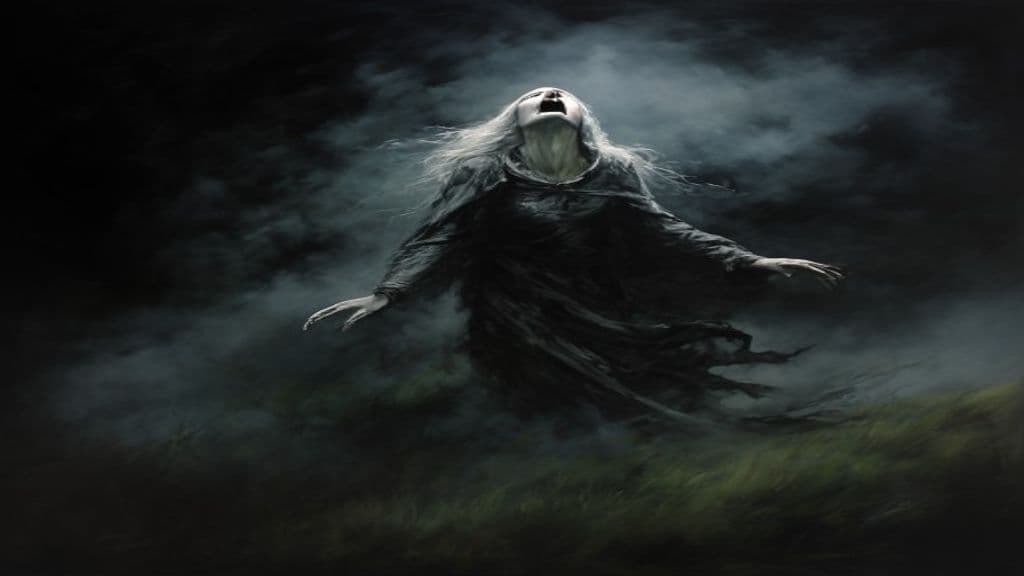
Banshee
A female spirit of Irish and Scottish folklore whose wail heralds an impending death in a family of Gaelic descent. Not a cause of death — a witness to it.

Cat Sídhe
A large black fairy cat of Irish and Scottish tradition with a white spot on its chest, who could steal a corpse's soul before burial if allowed to leap over it.
Shōgōrō
Shōgōrō is not a stable, well-attested yokai in the provided sources; the string “Shōgōrō / Shogoro” occurs widely as a personal, publisher, and stage name in modern and historical Japanese records. A single modern blog post (A-Yokai-A-Day) presents a speculative folkloric reading that treats Shōgōrō as an animate shōgō (a small Buddhist temple gong), but no corroborating classical, ethnographic, or academic sources for a yokai named Shōgōrō are present among the supplied materials.
Shōjō
A figure derived from the Chinese xing‑xing/shengsheng—an ape‑like marvelous creature—later adapted in Japanese culture as a red‑faced, sea‑associated spirit famed for its love of alcohol and its appearance in Noh drama.
Shōkera
A Japanese yōkai depicted in Edo-period emaki (illustrated scrolls) such as the Hyakkai Zukan and Toriyama Sekien's Gazu Hyakki Yagyō. In folk-religious contexts the shōkera is associated with the Kōshin-Machi custom and with the Three Corpses belief, functioning in tradition as a surveillant or harmful presence tied specifically to Kōshin night and to the moral cosmology of internal 'insects' that report misdeeds to heaven.
Si'lah
A female supernatural figure attested in Arabic poetic commentary, described in a scholion as "the most dangerous of the female demons called ghūl" and as an "enchantress of the Jinn." The term appears in classical poetry as a metaphor for perilous power, speed, or beguiling danger.
Sibylline Books
A collection of oracular utterances in Greek hexameter verses, consulted by the Romans at critical moments throughout history. (Note: - Power tier: Non-Spiritual Entity is incorrect; Sibylline Books are likely a Minor Spirit given their role in providing oracular guidance. - Origin story: Missing from draft, needs to be added based )
Sidaba Mapu
Sidaba Mapu (also cited as Salailel in the supplied source) is the supreme creator and sky god of the Meitei indigenous religion Sanamahism, presented in the sources as the origin-being responsible for creation of the universe. The deity is linked in the sources to Meitei mytho-philosophical frameworks named Leithak Leikharol Nongsemlon and Leisemlon.
Sieglinde
Sieglinde is a Germanic feminine given name formed from elements meaning 'victory' and 'soft/tender'. It appears in medieval Germanic literature (notably named as the mother of Siegfried in the Nibelungenlied) and as a central operatic character in Richard Wagner's Die Walküre; it also persists as a modern personal name and cultural label.
Sif
Sif is an Old Norse goddess of the Æsir attested in the Poetic and Prose Edda and in skaldic poetry, chiefly known as the wife of Thor and for her golden hair; she is used in kennings and in Snorri's Skáldskaparmál as a heiti for the earth.
Sigbin
A nocturnal, predatory creature of Philippine folklore, chiefly attested in Visayas and Mindanao accounts. In legend it is said to suck blood from victims' shadows, walk backwards with its head lowered between its hind legs, emit a nauseating odor, and be associated with families who command it and with the broader class of aswang.
Sigdi / Seetla’s Spirits (as referenced in request)
The supplied materials provided for this research task do not contain information about Sigdi, Seetla, or spirits associated with disease-and-healing rituals in Punjabi folk tradition. The available sources instead include an unrelated Hindi film page, a Wikidata language entry, a music archive listing, and a book description about Istanbul; none of these texts mention Sigdi/Seetla or relevant Punjabi ritual material.
Siggeir
Siggeir is a human king of Gautland in the Völsunga saga and related retellings. In the narrative he functions as an antagonistic royal whose wounded pride and treachery — inviting his in-laws as guests and then attacking and imprisoning them — set in motion a cycle of vengeance that shapes the fate of the Völsung family.
Sigi
Sigi is a mytho-historical ancestral figure in Old Norse tradition, presented in the Völsung cycle as a son of Odin and the progenitor of the Völsung lineage. His narrative in saga summaries records outlawry for murder, flight aided by Odin, raiding and kingship in Húnaland, and eventual assassination followed by his son's vengeance.
Community Record
- [1]Aos Sí. "Aos sí or aos sídhe is the Irish name for a supernatural race in Gaelic folklore, similar to elves. They are said to descend from the Tuatha Dé Danann or the gods of Irish mythology."wiki
- [2]Sidhe (Old Irish: Hill) — ancienttexts.org. "Sidhe SHEE Old Irish: Hill ... sidhe refers most specifically to the Tuatha De Danann, The Tribe of Danu, the hero-gods of Ireland"folk
- [3]Leanan sídhe. "The leanan sidhe ... is depicted as a beautiful woman of the Aos Si, people of the fairy mounds, who takes a human..."wiki
- [4]From The Deep Waters (archive listing of traditions). Archive listing referencing "traditional beliefs, customs and folklore regarding the Fairies/Aos Sídhe, Banshees, Leprechauns, etc."folk
- [5]Music of the Sidhe (interpretive essay citing W. Y. Evans Wentz). Interpretive material describing the Sidhe as able to "come back to the physical world for short amounts of time" and noting their otherworldly beauty in some accounts (citing W. Y. Evans Wentz).other
- [6]Unmasking The Sidhe (interpretive essay). Interpretive commentary on Sidhe nature and occasional physical returns (paraphrasing W. Y. Evans Wentz and folkloric motifs).other
- [7]Sidhe (disambiguation). Disambiguation and listing of related types (banshee, leanan sídhe, cat sídhe) and cultural references.wiki