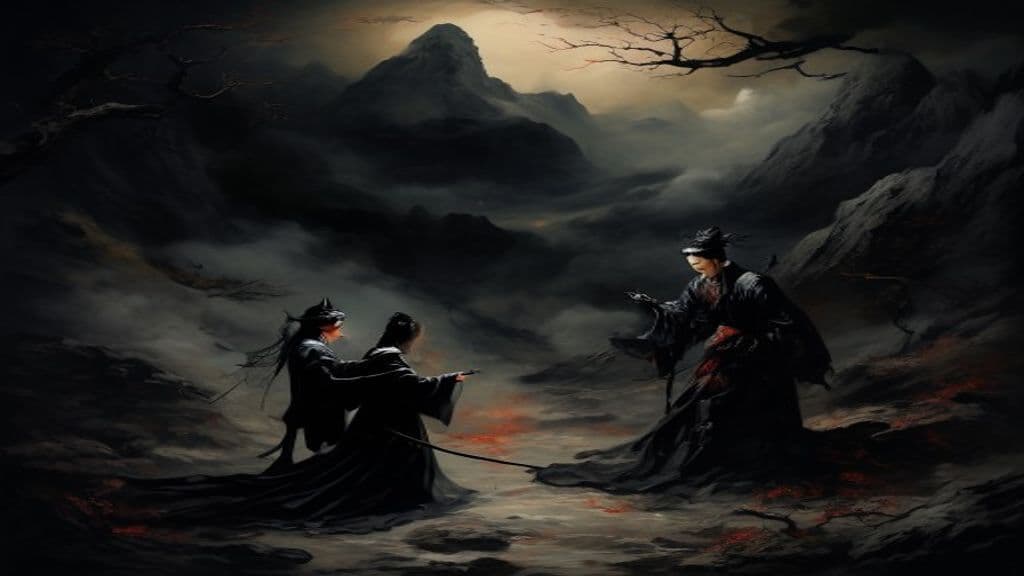
The Song of Dorang-seonbi and Cheongjeong-gaksi is a part of Korean folklore, passed down through oral tradition and used in the Mangmuk-gut funeral ceremony. The narrative reflects the importance of shamanism in traditional Korean culture.
No physical description is provided in the source material.
The entities' powers and behaviors are not explicitly stated in the provided source, but they are central figures in a shamanic story, suggesting spiritual significance within the ritual context.
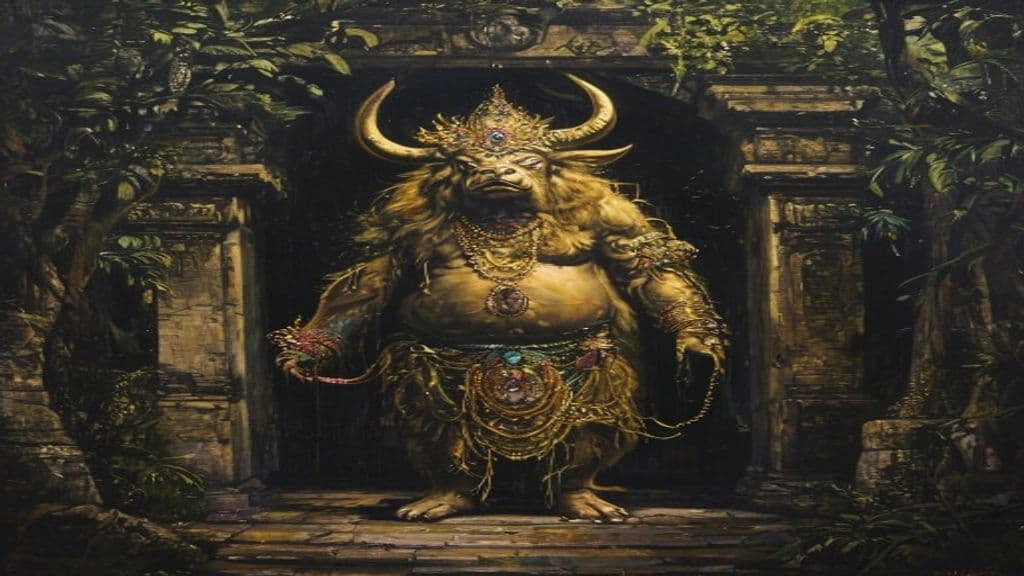
Yaksha
Nature spirits of Hindu, Buddhist, and Jain cosmology — guardians of forests, treasures, and wilderness. Ambivalent beings, capable of great benevolence to the respectful and terrible harm to the greedy.
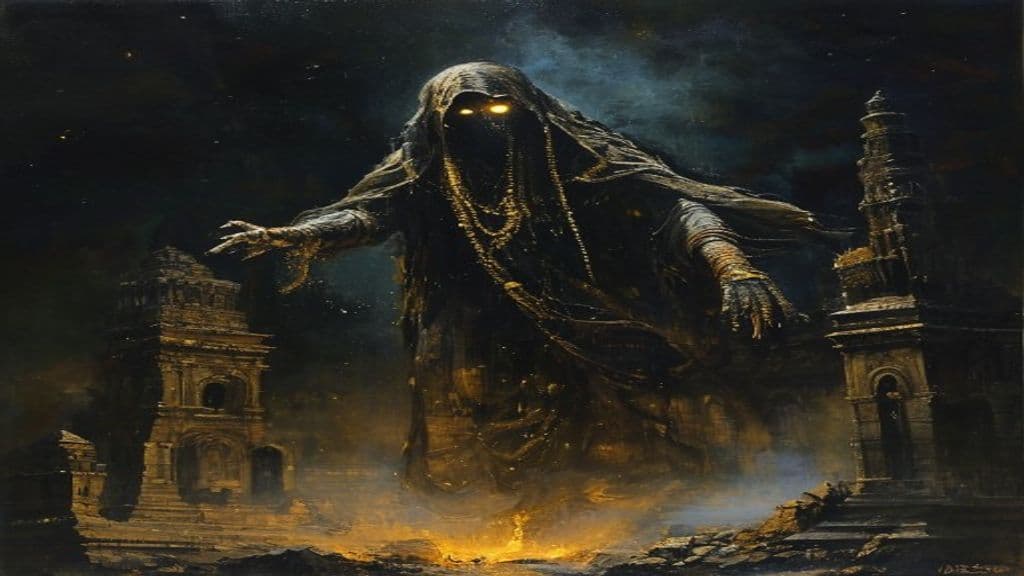
Brahmarakshas
The most learned and terrible of spirits — the ghost of a Brahmin who misused his scriptural knowledge in life and was condemned after death to be both demon and scholar, haunting places of learning.
Igong Maji (Korean tradition)
A god of flowers in Korean shamanism, associated with natural cycles and fertility. (Note: 1. Power tier should be Ancient (deity-level) instead of Primordial, since it's described as "the god of flowers" and has a significant role in specific rituals. 2. The origin story is too vague; the )
Korean Creation Narratives
A category of shamanic stories that recount the mythological beginnings of the universe, including tales from mainland Korea and Jeju Island. (Note: - Power tier should be Ancient (deity-level), as the creation narratives describe mythological beginnings of the universe. - Origin story is not entirely unclear; specific stories from various regions)
Semin-hwangje bon-puri
A shamanic narrative associated with funeral ceremonies on southern Jeju Island, classified as one of the special bon-puri in Korean tradition. (Note: - The power tier should be adjusted to Lesser (local spirit) based on the source material, which describes a narrative associated with a specific geographic location and ceremonial context, rather tha)
Solar Barque (Egyptian)
Divine vessel associated with the sun god Ra, carrying him through the sky during his daily journey. (Note: * Power tier should be Ancient (deity-level) since it's associated with the sun god Ra. * Appearance should note that no physical description exists in source material, but also acknowledge that Ra us)
Solar deity
A solar deity is a class of sky-associated divine figures whose identity or aspect is the Sun. Across many traditions the solar deity personifies solar phenomena (light, daily motion, power) and is integrated into myths of cosmology, kingship, and the afterlife.
Solomon's Shamir
A mysterious entity with the power to cut through or disintegrate stone, iron, and diamond. (Note: - Power tier should be Ancient (deity-level) instead of Primordial. - Weaknesses should not be listed as non-violent means of achieving goals; this seems unrelated to the source material's description)
Solomonari
Solomonari are weather-controlling magic-workers in Romanian folklore, described as human practitioners trained at a secret school who ride dragons (zmeu or balaur) and cause rain, thunder, or hail. They appear in 19th‑century ethnographic accounts from Transylvania, Bukovina, and adjacent Romanian regions and are associated with an institutionalized craft of magic (Scholomance/Şolomanţă) in several variants.
Solosmasthana (Buddhist tradition)
In the Buddhist tradition of Sri Lanka, Solosmasthana refers to 16 sacred places believed to have been visited by Gautama Buddha. (Note: 1. Power tier should be "Greater" or possibly even "Ancient" considering they are considered important religious locations and associated with deity-level events (Buddha's visits). 2. Origin story is )
Sons of Aegyptus
A group of fifty mortal princes in Greek myth, the sons of King Aegyptus of Egypt, who were intended to marry the fifty daughters of Danaus; in the most common version all were slain on their wedding night except Lynceus. They function as a dynastic collective in Argive/Egyptian genealogical narratives and as a formal chorus-like group in tragic performance traditions.
Sopdet
Sopdet is the ancient Egyptian personification of the star Sirius and a goddess whose roles connect celestial observation, the annual Nile inundation and fertility, and funerary guidance for deceased kings. Over time her identity becomes syncretized with major Egyptian mother and royal deities, especially Isis, and in Greco-Roman contexts she acquires dog-associated imagery.
Sopdu
Sopdu is an ancient Egyptian sky and border deity associated with stars (linked to Sah/Orion and Sopdet/Sirius) and with protection of the eastern border regions and frontier installations. He was culted at Per‑Sopdu (the easternmost nome of Lower Egypt) and had shrines at Sinai mining sites; in funerary texts a syncretic Horus‑Sopdu figure is invoked in royal protective contexts.
Sopona (Ṣọ̀pọ̀na, Shapona)
Sopona is the Yoruba orisha associated with smallpox and related illnesses; the deity is understood to be capable of causing outbreaks through divine displeasure and—in traditions that identify him with Ọbaluaye/Obaluaiye—exists within a wider power to both afflict and remove pestilence. Beliefs about Sopona traveled with Yoruba peoples to the Americas and were syncretized in Orisha-based religions (e.g., as Babalú-Ayé).
Community Record
- [1]