
Similar to the Greek Cyclops in Homer's Odyssey, suggesting a possible connection between Basque and Mediterranean mythologies.
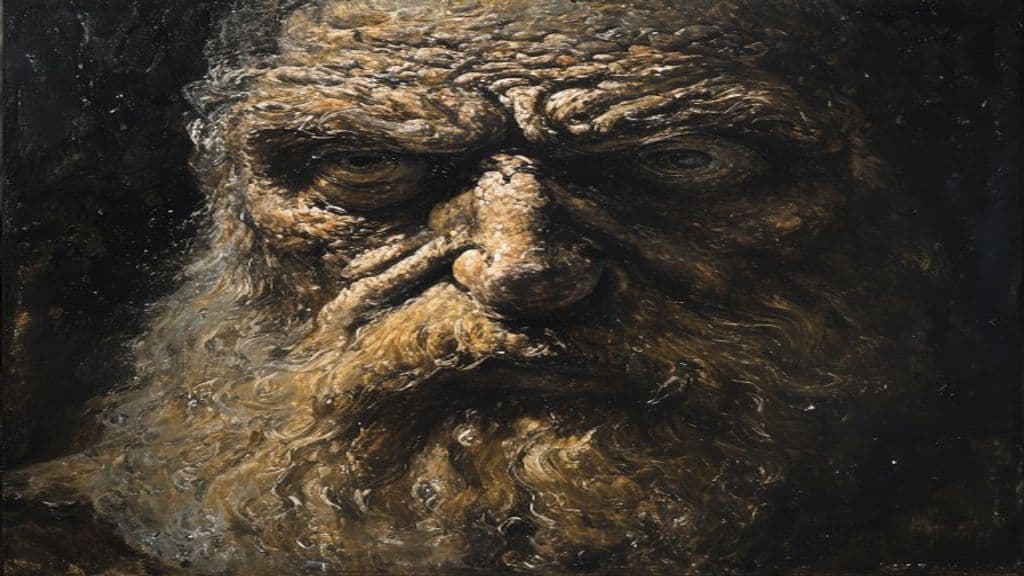
Physical description: A one-eyed giant living in caves in the mountains (Source 1).
Tartalo allegedly catches young people to eat them and also eats sheep in some accounts, utilizing his enormous strength (Source 1). His abilities and behaviors are limited to these physical actions.
Baian
A semi-divine water spirit or mermaid-like creature in Basque mythology, associated with fertility and aquatic phenomena. (Note: Power tier should be "Lesser" or possibly "Primordial", as the entity is described as semi-divine and associated with fertility and aquatic phenomena. Summary needs more detail, e.g., "Semi-divine wat)
Basajaun
A huge, hairy hominid in Basque mythology that protects flocks and teaches humans skills. (Note: * Power tier: should be "Greater" instead of "Ancient", as Basajaun's abilities suggest regional power but not deity-level. * Origin story: it is actually mentioned in the source that the origin story)
Eacus (God)
Weather god associated with forces of nature in Basque tradition. (Note: * Power tier should be Ancient, not Primordial, as Eacus is described as a specific god associated with a particular region (Iberian Spain) rather than a cosmic entity. * The article should indicate t)
Gaizkiñ (Basque Tradition)
In Basque mythology, Gaizkiñ is a malevolent entity believed to cause diseases and harm humans physically. (Note: * Power tier: Primordial seems too high given the limited scope of abilities (causing diseases and physical harm). A Greater power tier might be more fitting. * No sensory cues or weaknesses mentioned)
Herensuge
A mythical dragon in Basque mythology with seven heads and serpent-like appearance. (Note: - Remove "Primordial" as Power tier and replace with Lesser or Greater depending on further research (no specific mention of its powers in source material). - Add information about sensory cues, weakn)
Iratxoak
In Basque mythology, benevolent imps that assist with farm labor at night if treated kindly. (Note: - Power tier: Lesser (not Ancient), as Iratxoak assist with farm labor, but do not seem to have cosmic or deity-level abilities. - Appearance: The article contradicts itself by stating that the appear)
Jentil
In Basque mythology, the Jentil are a race of giants associated with pre-Christian civilizations and megalithic monument builders. (Note: - Power tier should be Primordial because the text suggests they are associated with pre-Christian civilizations and megalithic monument builders, but doesn't imply cosmic powers. - Summary should cla)
Mairu (Basque water spirits)
In Basque mythology, Mairu are a type of water spirit associated with the natural environment and regional folklore. (Note: * Power tier should be Lesser (as they are regional spirits associated with specific areas) * Appearance and Abilities sections need to be filled in based on more detailed source material * Weaknesses)
San Martin Txiki
A trickster figure from Basque mythology with a strong connection to the natural world, particularly agriculture. (Note: - Power tier should be Ancient (deity-level), as San Martin Txiki is a trickster figure who stole secrets from deities and is described as inventing new tools. - Sensory cues are not mentioned in the )
Sorginak (Basque mythology)
In Basque mythology, the Sorginak are assistants to the goddess Mari, having a sacred or spiritual role within the culture's cosmology. (Note: - Summary: Inaccurate. The summary should mention that Sorginak are associated with witches, priests, and priestesses as well as assistants to the goddess Mari. - Power tier: Unclear from source mater)
Tarqiup Inua
Tarqiup Inua (also Tatqim Iñua) is the lunar spirit or 'Master of the Moon' in Inuit thought, described as a man — a mighty hunter — who dwells in the skies and is associated with fertility, moral authority, and (for Alaskan Inuit) the animals.
Tartaruchi
Tartaruchi (singular tartaruchus) are a class of custodial agents in early Christian apocryphal visionary literature who are set over Tartarus (the place of torment) and charged with receiving, restraining, escorting, and torturing condemned souls. A named figure among them, Temeluchus, appears in the Apocalypse/Vision of Paul and related apocryphal texts.
Community Record
- [1]