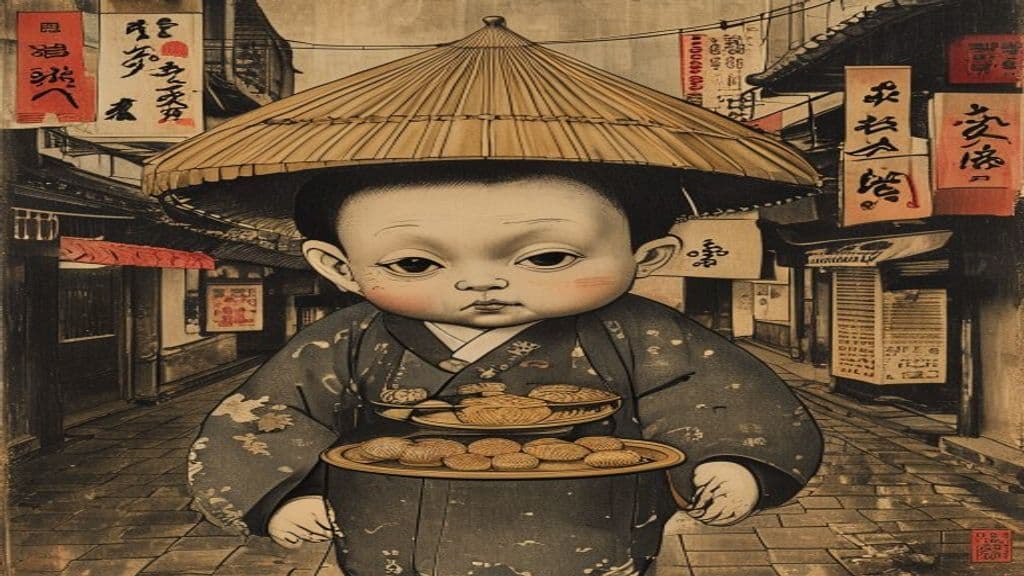
The tōfu-kozō is first attested in An'ei-era printed works and is regarded in the sources as a yōkai created from Edo urban popular culture rather than appearing in older folktale or hyakumonogatari collections. It emerged in kusazōshi and kibyōshi as a visual and narrative character tied to the city’s tōfu vendors and printed entertainments; one early printed source (Bakemono Shiuchi Hyōbanki) includes it and also records a passage where weasels transform into tōfu-kozō, indicating some narrative variation in print-era accounts.
Depicted as a childlike kozō with an emphasized large head in many early illustrations; often shown wearing a kasa (conical hat) and bamboo on the head and carrying a round tray bearing tōfu (commonly a momiji-dōfu pressed with an autumn-leaf design). Clothing patterns in illustrations frequently include motifs (harukoma, daruma, horned owls, swinging drums, red fish) that are shown for the purpose of warding off smallpox in contemporary visual language. Visual conventions vary across sources: some late-Edo depictions show a single eye, while other works present the figure almost indistinguishable from human children.
Early kusazōshi and kibyōshi portray tōfu-kozō as lacking special powers and functioning as servants who deliver tōfu and sake around town; they are characterized as amicable, timid, humorous, and non-confrontational. Later popular and children's literature introduce narrative accretions—for example, motifs of rainy-night offerings of tōfu that develop mold while being eaten and invented genealogies naming other yōkai as parents (e.g., mikoshi-nyūdō, rokurokubi)—but researchers cited in the sources consider the mold trope a post–Shōwa creation and the more extravagant powers/lineages are absent from early print accounts.
Weaknesses
- otherNo specific weaknesses recorded in early sources; early literature does not attribute particular vulnerabilities or countermeasures to tōfu-kozō.
Wards
- symbolProtective clothing motifs (harukoma, daruma, horned owls, swinging drums, red fish)
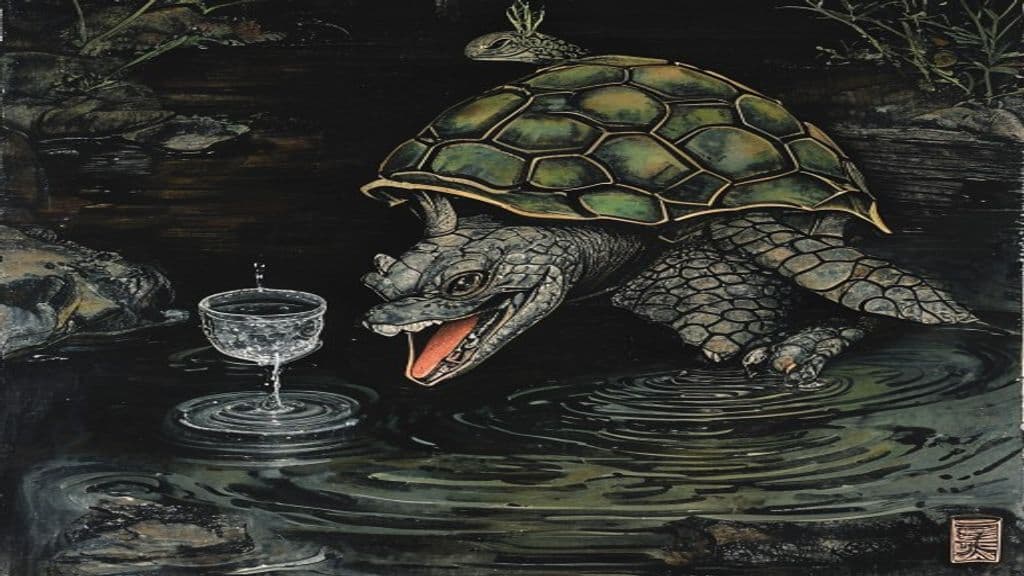
Kappa
A water-dwelling imp of Japanese folklore with a bowl of water on its head. Mischievous but bound by strict codes of politeness; dangerous near rivers.
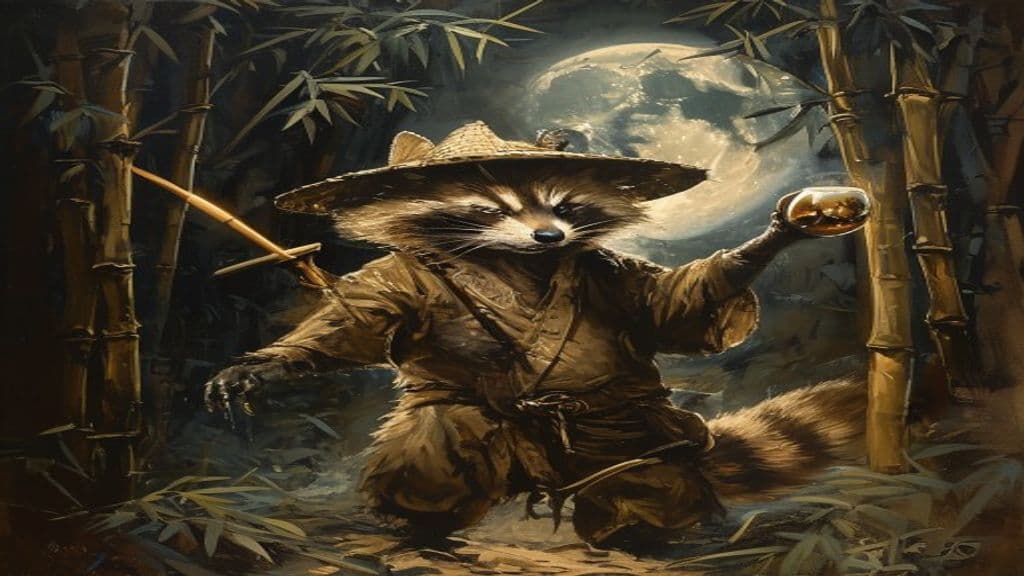
Tanuki
The raccoon-dog spirit of Japanese folklore — a cheerful trickster and master of shape-shifting, less dangerous than the kitsune but far more mischievous. Famous for leaves transformed into money.
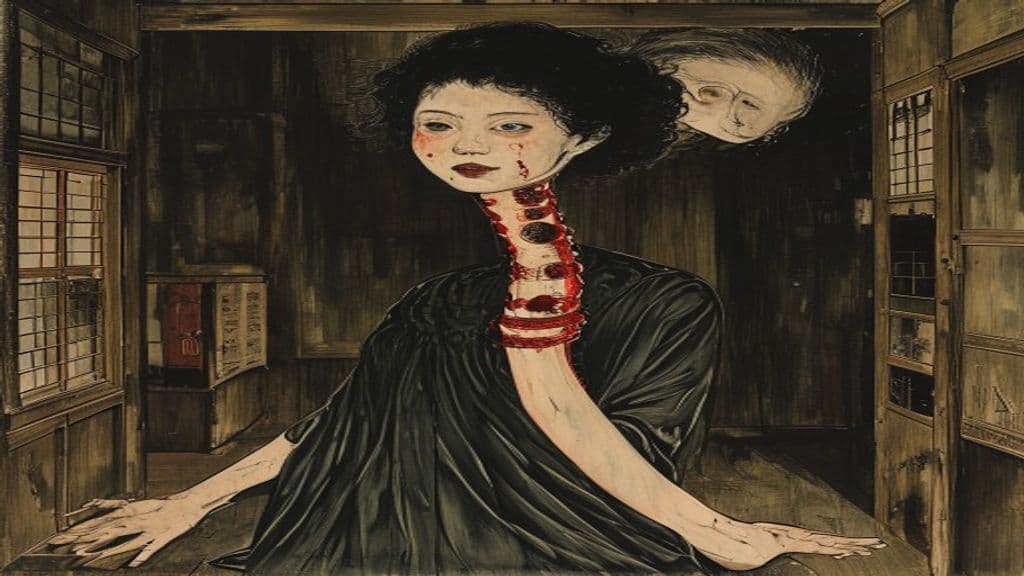
Rokurokubi
A Japanese yōkai-class apparition associated with humans (most often women) who display an uncanny bodily anomaly: either an extremely extendable neck or a head that detaches and moves independently (the latter often called nukekubi). Appears in classical kaidan collections and Edo-period encyclopedias and is variously framed in sources as a supernatural being, an illness, or the soul wandering during sleep.
Fire-breathing monster
A cross-cultural mythic category of monster defined by the ability to expel flame (or fire-like phenomenon) from the mouth or nostrils. Appears in multiple traditions (e.g., Greco-Roman, Hebrew/Biblical, Anglo‑Saxon, Japanese, Philippine, Native American, West African, Mapuche) and in modern fantasy as a recurring trope.
Liminal deity (category)
A scholarly category of gods and divine figures whose proper sphere is thresholds, borders, and transitions — places and moments where one state gives way to another. The term aggregates culturally specific deities (e.g., Janus, Hecate, Charon, Cheng'huang, Menshen, Jangseung, Bes) that function as guardians, psychopomps, or mediators at crossings of space, time, or condition.
Moon Rabbit (Maya Tradition)
A mythical figure associated with lunar mythology, said to pound elixir or medicine for mortals and occasionally foodstuffs. (Note: 1. Power tier: Downgrade to Ancient, as while it's associated with lunar mythology, its abilities are not cosmic in scope. 2. Abilities: Add that the contents of the mortar differ among cultural tradi)
Personifications of Death
Named, often anthropomorphic figures across cultures that embody, govern, or mediate death and the realm of the dead. Roles vary from psychopomp guide to judge or sovereign of an underworld, and forms range from skeletal reapers to regal underworld rulers and spirit families.
Qilin
A legendary hooved chimerical creature of Chinese literary tradition (麒麟, qílín) whose appearances in classical accounts function as auspicious omens tied to the birth, arrival, or death of sages and illustrious rulers. The creature is part of a broader East Asian set of correspondents (Japanese kirin, Korean girin) and was historically conflated with the real giraffe in Ming-dynasty court encounters.
Sea monster
A cross-cultural folkloric category for legendary maritime beings believed to dwell in the sea, commonly imagined as creatures of immense size; the term covers named mythic monsters, reported sightings, and unidentified carcasses (globsters).
Tāwhirimātea
Tāwhirimātea is the atua of weather in Māori cosmology, the personified ancestral being of winds, clouds, storms, thunder, lightning, rain, mist and related atmospheric phenomena. A son of Ranginui (Rangi) and Papatūānuku (Papa), he wages war on his siblings after their separation and his progeny are named winds, cloud-forms and kinds of precipitation.
Tāwhirirangi (Māori tradition)
A large, ocean-going voyaging canoe in Māori tradition that played a significant role in the migrations to New Zealand. (Note: 1. Power tier should be revised from Greater to Ancient, as it carried people "from one place to another, traversing the heavens or having spiritual significance". 2. Appearance is not fully supported)
Tōdaiki / Todaiki
A Japanese yōkai listed in Toriyama Sekien's Konjaku Hyakki Shūi tradition and referenced in modern summaries and fiction as a lamp- or lighthouse-associated demon/spirit. Accounts vary: Sekien's bestiary labels it with the characters 灯台鬼 (lamp/lighthouse + demon), a fandom source depicts it as a transformed human rendered into a candlestick-like ornament, and a modern manga uses the motif as a prophetic giant lighthouse demon.
Tōtara-i-kāria
A powerful ancestral waka from Māori tradition, central to the migrations that settled New Zealand. (Note: 1. Power tier: Lowered from Primordial to Greater, as it is described as an ancestral waka and its abilities are more aligned with powerful regional forces rather than cosmic. 2. Abilities: Clarify th)
Tū-te-wehiwehi
Tū-te-wehiwehi (also Tū-te-wanawana) is an ancestral atua in Māori cosmology presented as the progenitor of reptiles and the father of lizards. He is placed in whakapapa as a descendant of Tangaroa and as a brother of Ikatere, whose flight from Tāwhirimātea explains the separation of life into sea and forest domains.
Tūmatauenga
A primary god in Māori mythology associated with war, human activities related to sustenance and provision. (Note: - Power tier: Greater (not Ancient) - Abilities: Remove "food cultivation" as it's not mentioned in the source material - Sensory cues: Add "no explicit mention" - Weaknesses: Not specified in source )
Community Record
- [1]Tōfu-kozō (Wikipedia). Wikipedia: 'Tōfu-kozō' article (summary of Edo-period depictions, iconography, and later accretions; cites Bakemono Shiuchi Hyōbanki and modern researchers Kyogoku and Yamaguchi regarding post–Shōwa inventions).wiki
- [2]Tōfu Kozo: The Tofu Boy (Hyakumonogatari Kaidankai blog summary). Hyakumonogatari Kaidankai: summary and discussion of tōfu-kozō as an Edo-period yōkai and its appearances in printed culture and modern reception.other
- [3]Tofu Boy (豆富小僧) — film entry (archive). Archive entry for the 2011 film 'This is Tofu Boy (豆富小僧, Tôfu kozô)', cited in the research notes as a modern cultural representation using the name.other
- [4]Kappapedia: Tofu Kozo. Kappapedia blog entry discussing iconography and Edo-period context of tōfu-kozō.other
- [5]Various blog and reference notes collated in research. Research notes compiled from multiple modern reference pages and commentary noting first attestation in Bakemono Shiuchi Hyōbanki, Edo printed-culture origins, iconography, and scholars (Natsuhiko Kyogoku, Bintarō Yamaguchi) who identify modern accretions.other