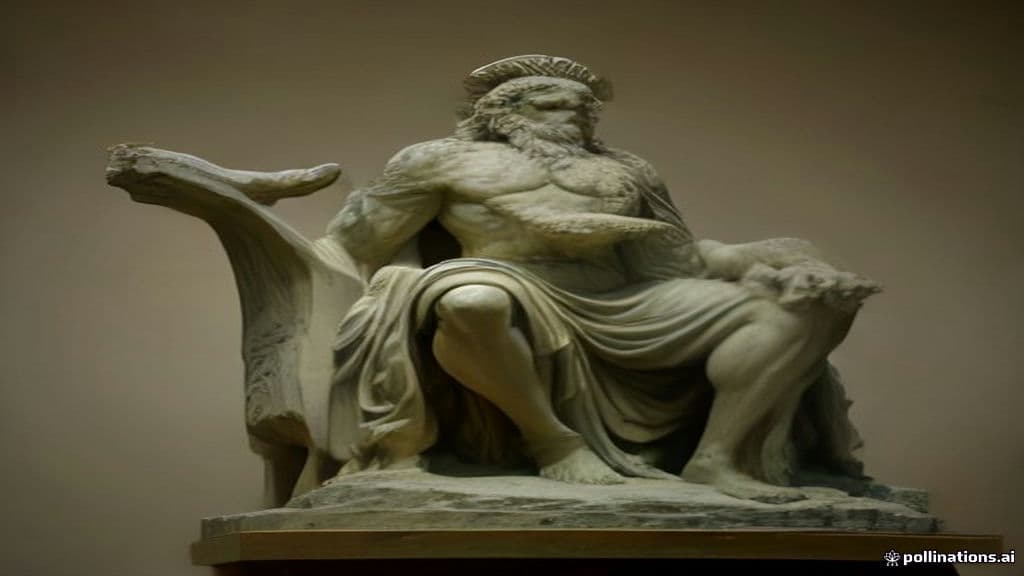
Accounts in the ancient literary tradition and later summaries present Thespius as the eponymous founder and king of Thespiae whose lineage was used to link the polis to the wider heroic age. Genealogical attributions vary in the sources: some reports make him a son of Erechtheus, King of Athens (and possibly Praxithea), while other traditions call him merely a descendant of Erechtheus or identify him as son of Teuthras (son of Pandion or Cepheus). His most famous episode places him contemporaneous with Heracles and the hunt for the Lion of Cithaeron, wherein he arranged for his daughters (the Thespiades) to bear Heracles' children, thereby securing Heracleid descent for his house and city (sources: summaries of Apollodorus/Diodorus traditions as rendered in modern reference compilations cited in the provided material).
The supplied ancient and modern summaries do not supply a physical description of Thespius. He appears in the literary record as a genealogical and civic figure — named in genealogies, listed among founders, and described by actions (founding, ruling, arranging marriages) — rather than by bodily attributes, attire, or iconic visual markers. Surviving notices preserve his identity through kinship and narrative role rather than portraiture or descriptive epithet.
No supernatural powers are ascribed to Thespius in the supplied sources; he functions as a political and familial agent within mythic narrative. The texts attribute to him civic founding and kingship (founder-king of Thespiae) and intentional familial policy: desiring grandchildren by the celebrated hero Heracles, he arranged that his fifty daughters consort with Heracles during the lion-hunt episode. Variant traditions describe the meetings occurring across fifty nights (one daughter each night) or in a single night, with one daughter sometimes said to remain a virgin and become a priestess of Heracles; other accounts report variations in numbers of grandchildren and later claims that some grandsons colonized Sardinia. These actions are social, dynastic, and mytho-political rather than magical (based on summaries of Apollodorus/Diodorus traditions as cited in the provided material).
Heracles
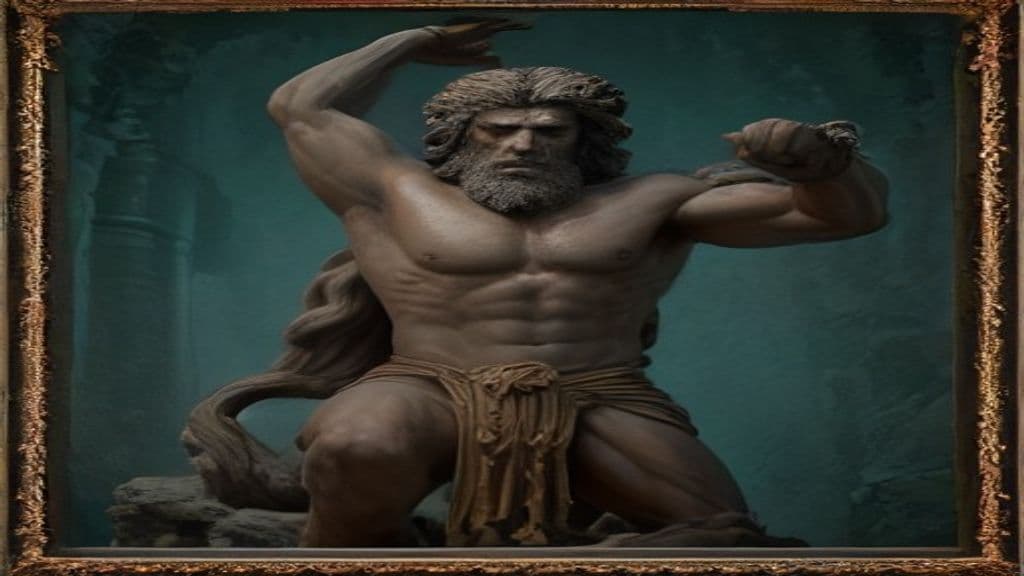
Heracles is the greatest hero of Greek myth whose career bridges mortal hero-cult and full divinization. Celebrated for his Twelve Labours, martial prowess, and travels between the mortal world, the underworld, and Olympus, he functioned as a civic patron, ancestor of royal lines (the Heracleidae), and object of cult that treated him both as chthonic hero and as god.
Heracleidae
The Heracleidae (Ancient Greek: Ἡρακλεῖδαι) are the collective descendants of the hero Heracles invoked in Greek myth and historiography as a kin-group whose pedigree justifies dynastic rule and territorial claims. In tradition they are mortal dynasts and legendary founders whose exile, repeated attempts to reclaim ancestral lands, consultation of the Delphic oracle, and eventual 'Return of the Heraclidae' explain the founding of Dorian and other ruling houses in the Peloponnese.
Erechtheus
Erechtheus is a mythic-heroic foundational figure of ancient Athens whose identity blends an autochthonous, earth-born ancestor-king with a localized cultic name often syncretized with Poseidon; he functions as eponymous progenitor of the Erechtheidai and as the focus of ritual memory on the Acropolis (the Erechtheion).
Community Record
- [1]Thespius — Wikipedia. Wikipedia entry 'Thespius' (summary of ancient traditions and variants, citing Apollodorus, Diodorus, and other sources)wiki
- [2]Wikidata: Thespius. Wikidata item for Thespius (identifier Q952188) summarizing linked data about the legendary founder of Thespiaeother
- [3]LP0081 - VII ARGONAUTS - The Trojan Sea-Monster, from Diodorus (archive). Archive recording including Diodorus material referenced in the supplied notes (contextual corpus containing related heroic-age narratives)literary
- [4]LP0086 - XII ARGONAUTS - The Return of the Argo, from Diodorus (archive). Archive recording including Diodorus material referenced in the supplied notes (contextual corpus containing related heroic-age narratives)literary
- [5]LP0003 Son of Amphitryon (archive). Archive recording containing material from traditions about Heracles and related genealogies as used in the supplied notesliterary