
In Greek myth Thetis is one of the fifty Nereids, daughters of the sea-god Nereus and the Oceanid Doris. She belongs to an older generation of sea-divinities associated with figures such as Tethys; literary tradition places her within the network of Homeric and Hesiodic gods, attending Olympian events (notably her wedding) and interacting with both gods and mortals. A prophecy that a son of Thetis would surpass his father motivates Zeus and Poseidon to arrange for her marriage to the mortal Peleus, a plot point that links her to questions of divine succession.
As a Nereid Thetis is portrayed as a female sea-deity or sea-nymph typical of Homeric imagery, appearing at the sea or its edge. In key narratives she demonstrates shapeshifting abilities: when resisting Peleus she changes form — becoming flame, water, a raging lioness, and a serpent — before being restrained. She is otherwise depicted in the roles of a nurturing attendant and a divine refuge-giver, appearing in scenes of caring or shelter at sea and on islands such as Lemnos.
Thetis is able to shapeshift into elemental and animal forms (flame, water, lioness, serpent) as attested in the marriage narrative. She functions as a kourotrophos (nurse/protector) to heroes (most famously Achilles) and aids gods (sheltering Hephaestus after his fall, giving refuge to Dionysus in narrative recollection). Mythic tradition ascribes to her a capacity to affect the boundary between mortality and immortality: one account describes her nightly ritual of burning away her infant son's mortality and anointing him with ambrosia by day, a process interrupted by Peleus that explains Achilles' retained mortality. Her potential to bear a child greater than his father has cosmological and political consequences among the gods.
Weaknesses
- conditionNo ancient vulnerability specified
Wards
- otherNo ancient wards attested in the supplied sources

Tethys
Tethys is attested in the provided materials primarily as a Titaness of Greek mythic tradition who in a modern children's retelling is presented as an elderly storyteller and mediator among gods. The name is also widely reused in scientific and cultural contexts (a Saturnian moon, a gastropod genus, the ancient Tethys Ocean, and various institutions), usages which are naming transfers rather than continuations of the mythic figure.
Proteus
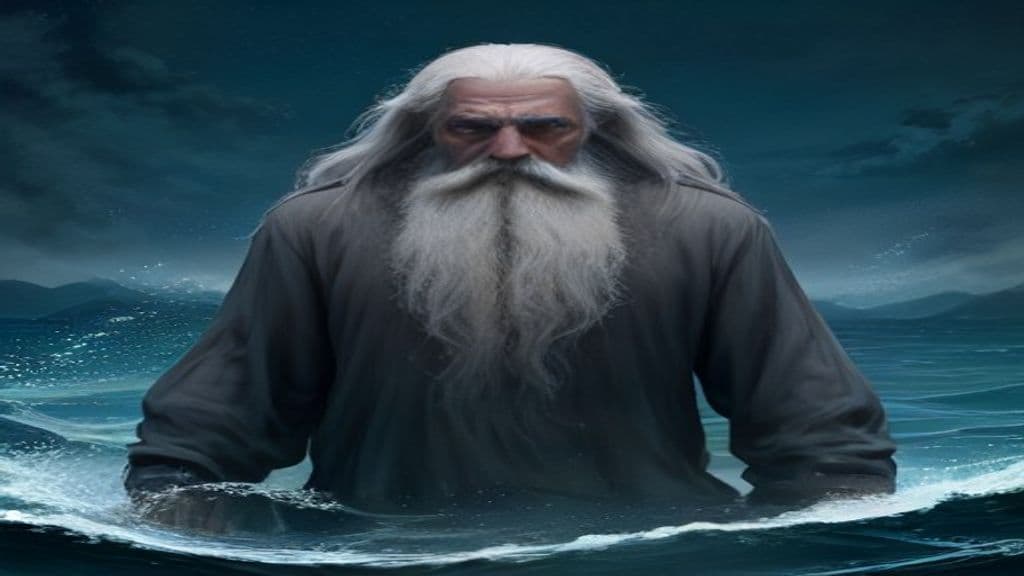
Proteus is an ancient Greek sea-associated divine figure—an 'Old Man of the Sea'—noted for prophetic knowledge and the ability to assume many forms. He is typically portrayed as a subordinate sea-deity (often described as a son of Poseidon) who resists disclosure of hidden truths unless compelled by capture.
Nereus
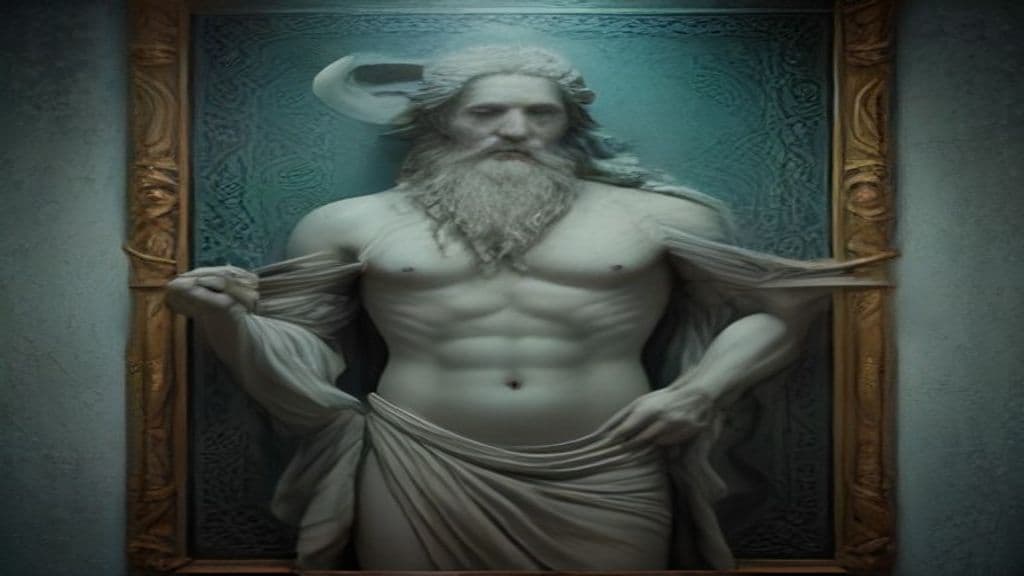
Nereus is an archaic Greek sea-god, eldest son of Pontus and Gaia, known as an aged, truthful 'Old Man of the Sea' who fathers the Nereids and functions as a source of prophetic counsel; he shares traits with other sea-elders like Proteus and later recedes in prominence beneath Poseidon.
Community Record
- [1]Thetis — Wikipedia (summary of traditions, epithets, and myths). Wikipedia: Thetiswiki
- [2]The Iliad, Book XVIII (Homer) — Achilles, Thetis, and Hephaestus passages. Homer, Iliad XVIII (passages on Thetis, Achilles, and Hephaestus)literary
- [3]Concordia University Research Repository — Thetis (academic summary). Concordia University Research Repository: Thetis (research summary)academic
- [4]Wikidata entry for Thetis. Wikidata: Q41220396other