
According to Jewish tradition, the Twin Sisters of Cain and Abel were born to Adam and Eve at the same time as their sons Cain and Abel. Their existence serves a narrative function in explaining the origins of humanity.
No specific powers or behaviors are attributed to them; their role is primarily to serve as a solution to the question of where Cain acquired his wife, addressing a gap in the original Genesis account.

Cain (Jewish Tradition)
Biblical figure and symbol of sin and violence, human being with no supernatural abilities. (Note: 1. Power tier: Change to "Human" is correct. 2. Abilities: Specify that the abilities mentioned are a result of Cain's actions and decisions, not supernatural powers. 3. Weaknesses: Mention God's curs)
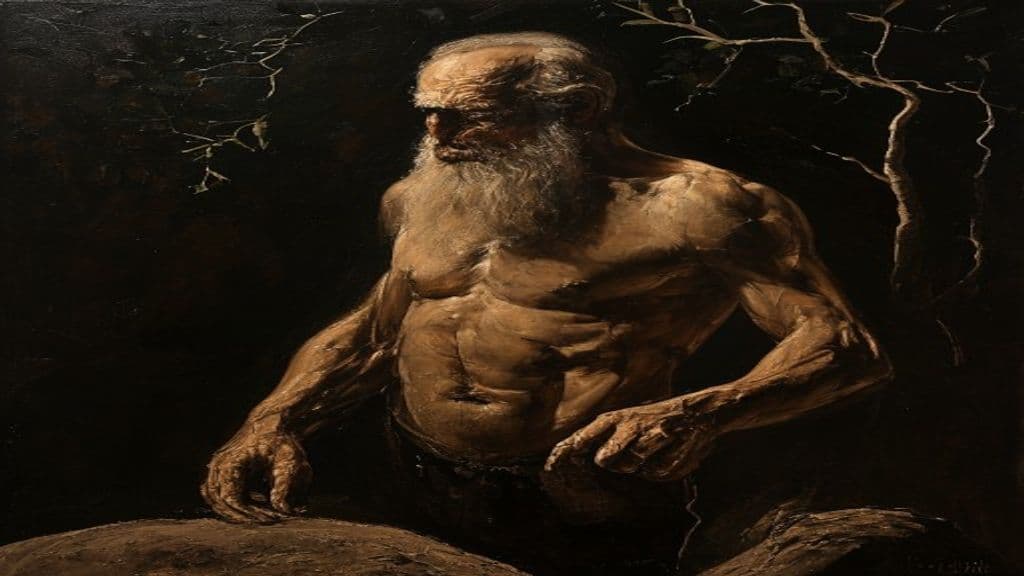
Adam
In the Hebrew Bible (Genesis 1–5) Adam is the first human, both as an individual progenitor and as a term for humankind. Created by God from the dust of the ground and animated by God's breath, Adam is placed in the Garden of Eden, names the animals, receives divine command, disobeys with Eve, and fathers the first named human descendants (Cain, Abel, Seth).

Eve
In the Genesis tradition Eve (Hebrew Ḥawwāh) is the first woman created by God and the companion of Adam; as the progenitor of humankind she participates in the origin story that explains expulsion from the Garden of Eden and certain human conditions such as mortality and pain in childbirth.
Bosom of Abraham
In Jewish tradition, the Bosom of Abraham is a concept representing a state or location within Sheol where righteous individuals await redemption after death. (Note: * Power tier should be Primordial (as it's a concept within Sheol, which is often described as a cosmic realm) * Origin story needs more context from source material; association with Abraham's righte)
Elioud
In Jewish tradition, the Elioud are a part-angel hybrid race with a complex lineage blending human and divine elements. They possess remarkable powers or skills but exhibit morally reprehensible behavior. (Note: 1. The power_tier should be Ancient (deity-level) instead of Primordial (cosmic), as they have abilities that rival those of deities but not on a cosmic scale. 2. The summary should be revised to remo)
Ephraim ben Isaac of Regensburg
A 12th-century Jewish scholar and liturgical poet who contributed to the evolution of halakhic thought, involved in controversy surrounding post-Talmudic authority. (Note: 1. Power tier should be Human, but add that he is also a significant figure in Jewish literature and thought, as per the description of his abilities. 2. Add the name "Ben Yakir" as an alternate title)
Forbidden Fruit (Jewish Tradition)
In the Jewish tradition, a specific type of fruit from the Tree of Knowledge of Good and Evil that holds symbolic significance due to its association with Adam and Eve's disobedience. (Note: 1. Power tier should be Lesser or Minor Spirit at most, as the forbidden fruit is a symbolic object with no supernatural abilities. 2. Sensory cues are not mentioned, but its absence can be noted (e.g)
Nimrod
Biblical figure and human king who defied God's authority, described as 'mighty' and rebellious. (Note: - Power tier should be Primordial, not Ancient, as it is unclear if he had supernatural or deity-level abilities. - Weaknesses should include 'hubris' or 'arrogance', which contributed to his downfall)
Rahab
In Jewish tradition, Rahab is a multifaceted concept representing both the mythical sea monster and various symbolic entities. (Note: * Power tier should be "Primordial" only if Rahab's abilities justify it; the source does not provide sufficient information about its abilities to determine its power level accurately. * Abilities: T)
Re'em (Jewish tradition)
A mysterious animal mentioned nine times in the Hebrew Bible, described as a creature of power and strength with unclear nature and translations. (Note: - Power tier should be Greater (as it is described with translations implying strength/ferocity comparable to powerful regional entities). - Weaknesses and wards should be addressed (not mentioned in )
Sambation
In Jewish tradition, the Sambation is a metaphorical concept representing the boundaries beyond which the Ten Lost Tribes of Israel were exiled. (Note: * Power tier should be Lowered to Lesser or Minor Spirit since there's no attributed powers or behaviors. * Summary should be revised for accuracy: The Sambation is a river in Jewish tradition marking)
Schrat
A diverse legendary creature in Jewish tradition associated with nature, particularly woodlands and domestic spaces, with malevolent intentions towards humans. (Note: 1. The power tier should be Lowered to Lesser (local spirit) based on the description in the source material. 2. Add a mention of Schrat being associated with mischief and household pests, which is me)
Sea Goat
A legendary creature with a hybrid appearance of both terrestrial and aquatic features. (Note: * Origin story: Include the fact that it's not specified in available sources, but also mention that one source (Wikipedia) describes it as a "legendary aquatic animal", implying its origins are likel)
Serpents in Jewish Tradition (Biblical Context)
Symbolic representation of evil and positive aspects, reflecting the complex nature of their symbolism. (Note: - Power tier: Downgrade to Greater (they are described as representing "evil power" but also have positive aspects) - Appearance: Add note that there is no physical description provided in source mate)
Superstition in Judaism
Credulous beliefs in the supernatural that deviate from God's will, often leading people away from monotheistic worship. (Note: 1. Power tier should be Ancient (as superstition is not on a cosmic level, but rather deity-level in its influence and condemnation within Judaism). 2. Sensory cues are missing. 3. Weaknesses could in)
Community Record
- [1]