
Vinayaki’s origins are not fixed in surviving texts; she is attested in a range of medieval Purana lists and Tantric corpora. The Devi Purana explicitly identifies 'Gananayika or Vinayaki' as the shakti of Ganesha and lists her among the Matrikas. The Matsya Purana records an appearance of elephant-headed mother-goddesses in the context of divine troops (Matrikas) created by Shiva to fight demons. The medieval Gorakshasamhita provides an iconographic description of an elephant-faced Vinayaki. Archaeological finds (a terracotta plaque from Rairh dated to ca. 1st century BCE–1st century CE) and later temple images (Pala-period sculptures at Giryek, a metal image at Chitrapur Math, the Chausath Yogini temple at Bhedaghat where she is Sri-Aingini) attest to long-standing, regionally varied cultic presence rather than a single founding narrative.
The consistent core element in all attestations is an elephant head or face and trunk. Beyond that, surviving images and textual descriptions vary: an early terracotta from Rairh (1st century BCE–1st century CE) shows an elephant-faced two-armed figure with the trunk turned right; a metal image at Chitrapur Math (likely medieval) depicts a full‑breasted, slender Vinayaki wearing the sacred thread with two front hands in abhaya and varada mudras and two back arms bearing a sword and noose (trunk left-turning); a Pala sculpture from Giryek (Bihar) shows a four-armed figure holding a gada, ghata, parashu and a rooted vegetable; Pratihara-period images depict a pot-bellied four-armed Vinayaki with a plate of modaks taken by the trunk; the Gorakshasamhita describes a pot-bellied, three-eyed, four-armed Vinayaki holding a parashu and a plate of modaks. Varied arm-count, bodily form (slender to pot-bellied), trunk direction, and held attributes across regions and periods reflect multiple local and sectarian iconographic traditions.
In traditions that identify her as the shakti of Ganesha (Devi Purana), Vinayaki shares Ganesha's functional attribute of removing obstacles. As a Matrika in the Matsya Purana she functions as a martial mother-goddess created to combat demons, indicating a combative, protective role in cosmic struggle. Tantric and yogini lists (e.g., Chausath Yogini Temple at Bhedaghat, where she is Sri-Aingini) place her within esoteric ritual networks. Some Puranic tales and scholarly discussions also record elephant-headed female figures in ambivalent roles (ranging from maternal/creative functions to cursed or demonic figures), but the sources do not provide a single, unified catalogue of powers beyond these attestations.
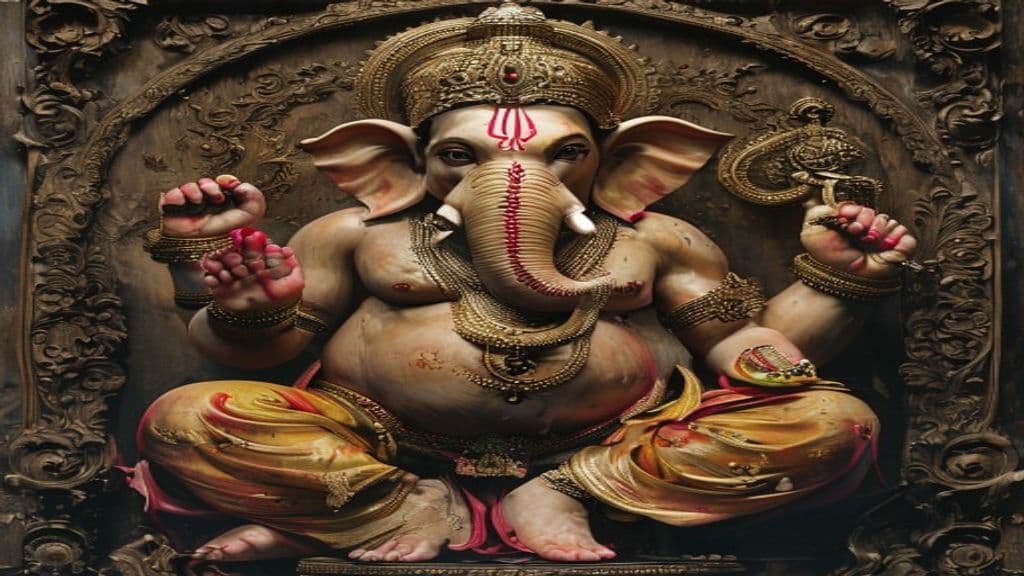
Ganesha
Ganesha (Gaṇeśa), also called Ganapati or Vinayaka, is a widely revered Hindu deity identified by an elephant head who functions as remover of obstacles, patron of arts and learning, and god of beginnings; he is son of Shiva and Parvati and head of the gaṇas in many traditional accounts.
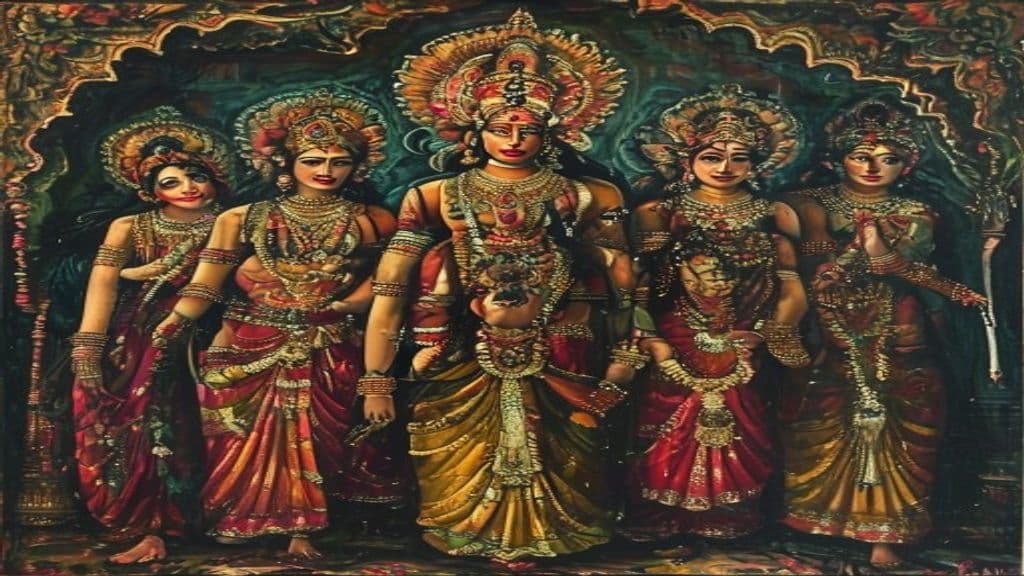
Matrikas
Matrikas (Sanskrit: mātṛkā, 'mothers') are a group of related mother-goddess figures in Hindu tradition, commonly rendered as seven (Saptamatrikas) or eight (Ashtamatrikas). They function ambivalently as protectors and as dangerous female powers tied to fertility, child mortality, disease, and martial activity, and were incorporated into temple and tantric/Shakta practice by the Kushana–Gupta and early medieval periods.
Community Record
- [1]Vinayaki. Wikipedia entry 'Vinayaki' (accessed via provided research notes)wiki
- [2]Vināyakī (Wikidata). Wikidata label and entry for Vināyakī (as cited in research notes)wiki
- [3]Goddess Vinayaki: The Female Ganesha. Archive resource titled 'Goddess Vinayaki The Female Ganesha' (catalogued in research notes)other
- [4]Sanskriti Magazine – Vinayaki: The Female Ganesha. Sanskriti Magazine article on Vinayaki (modern devotional/interpretive commentary referenced in research notes)folk
- [5]The Female Ganesha - Devdutt Pattanaik. Devdutt Pattanaik essay 'The Female Ganesha' (modern interpretive commentary referenced in research notes)folk
- [6]Chausath Yogini Temple (Bhedaghat) references; Pala and regional images. References to the Chausath Yogini Temple at Bhedaghat where Vinayaki appears as Sri-Aingini (noted in research notes via Wikipedia)wiki
- [7]Archive: Kishkindha Kanda Of Tulsi Das With Vinayaki Tika Jabalpur 1913 Pt. Vinayak Rao. Archive catalogue entry for works titled with Vinayaki commentary (listed in research notes)other
- [8]Archive: Sundar Kanda With Vinayaki Tika 1915 Tulsidas. Archive catalogue entry for a Sundar Kanda edition with Vinayaki tika (listed in research notes)other