
The Greek term vrykolakas (βρυκόλακας/βρικόλακας) is recorded as a loanword from the Slavic/Bulgarian lexeme vǎrkolak (originally meaning 'werewolf'); in regional folklore the lexical and conceptual boundaries between werewolf and vampire/revenant figures have shifted and mixed. Greek accounts treat the vrykolakas primarily as an undead/revenant whose return after death is attributed to social and moral causes in life (sacrilegious behavior, excommunication), to burial in unconsecrated ground, or to other culturally significant violations (as recorded in ethnographic summaries).
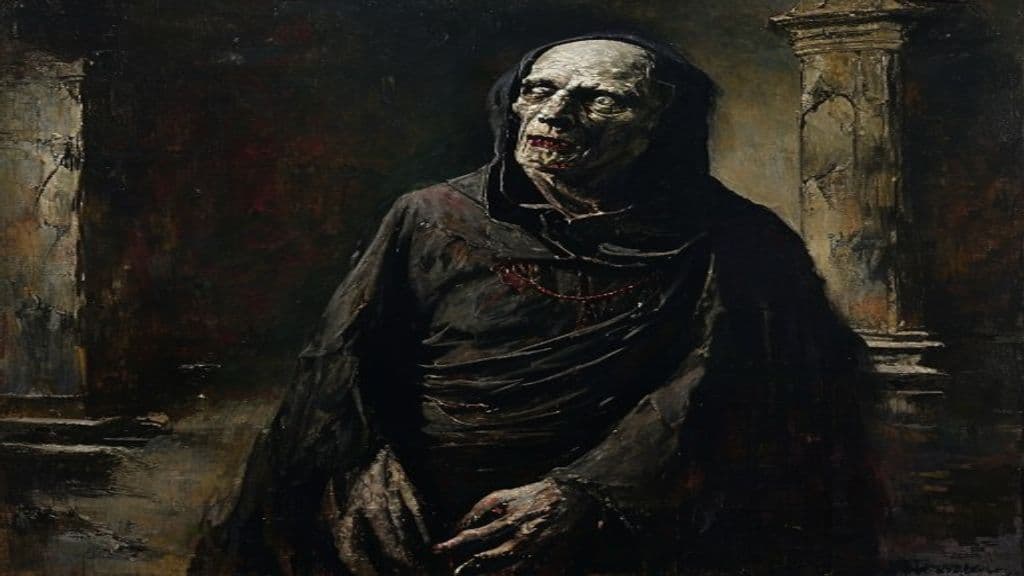
Sources report that suspected vrykolakas corpses may show poor decomposition or unusual corporeal signs: swelling or distention (described in some accounts as 'drum-like' or very large), a ruddy or 'fresh' complexion, and the appearance of being gorged with new blood. In accounts where a werewolf identity is implicated, retained features such as wolf-like fangs, hairy palms, or glowing eyes are sometimes said to remain. Regional folk beliefs noted in the sources also singled out certain physiognomies (for example, red hair and gray eyes in nearby regions) as culturally associated with vampiric suspicion, though such details are ethnographic markers rather than universal physical requirements.
The vrykolakas is reported to leave its grave and roam the community, engage in poltergeist-like disturbances, and be implicated in causing epidemics. Legends say it may knock on doors and call out residents' names; if someone answers (per the tradition recorded) that person may die a few days later and become a vrykolakas. It is also said to crush or suffocate sleepers by sitting on them (paralleling sleep‑paralysis-type phenomena and similar Balkan motifs) and to eat human flesh—with a particular taste for livers—making its behavior closer to cannibalistic revenant or ghoul-like activity than an exclusively blood-drinking vampire motif. The corpse is believed to become more dangerous the longer it is left undisturbed.
Weaknesses
- conditionProper burial in consecrated ground
- ritualExorcism or clerical rites (as recorded in local prescriptions)
- ritualImpalement of the corpse
- ritualBeheading the corpse
- ritualCutting the body into pieces
- ritualCremation of the corpse
- conditionPerforming destructive measures on Saturdays (reported in some accounts as the day when the vrykolakas rests)
Wards
- conditionInterment in church cemetery / consecrated ground
- otherCommunity vigilance and avoidance of answering the first knock (folk precaution)
- otherPreemptive beheading of corpses when burial in consecrated ground is impossible (recorded wartime practice)
Community Record
- [1]Vrykolakas. Wikipedia: Vrykolakas (summary of folklore, etymology, and practices)wiki
- [2]Vrykolakas (Wikidata). Wikidata entry for Vrykolakas (catalogue entry linking to related concepts)wiki
- [3]Episode 56 - Dirt's Just Sand! (podcast episode description referencing vrykolakas). Archive.org podcast episode description grouping vrykolakas among vampire-related figuresother
- [4]Vampires, burial, and death : folklore and reality (archive bibliographic entry). Archive bibliographic entry referencing vampire and burial topics and related folkloric phenomenaother
- [5]Episode 25: The Vampire Part 2 (podcast episode description referencing vrykolakas). Archive.org podcast episode description discussing vampire traditions including vrykolakasother