
The waira does not have an origin narrative in the primary emaki sources; it appears as a named image in pictorial anthologies such as Sawaki Suushi's Hyakkai Zukan and Sekien Toriyama's Gazu Hyakki Yagyō (1776). One emaki variant writes the name as はいら (haira). Modern scholarship (e.g., Katsumi Tada) reads the name as linked to characters and meanings for 'fear' or 'to grow meek from fear,' and notes editorial pairings with the otoroshi in visual taxonomies, but these are interpretive accounts rather than contemporaneous origin legends.
In classical emaki illustrations the waira is depicted with an upper body resembling a large ox-like form bearing thick, sharp claws on its forelimbs; all extant pictorial examples show only the upper body, leaving the lower half unknown. Nobuo Tsuji offered an art-historical reading of one depiction as a 'green monster that looks like a changed toad.' Later popular sources add color and sex distinctions (e.g., males brown, females red), but those details derive from modern children's literature rather than the classical emaki.
Primary emaki sources provide no text attributing abilities, behaviors, or powers to the waira; it exists in those sources as a named image without explanatory narrative. Later Shōwa/Heisei period literature and children's books ascribe various behaviors — mountain-dwelling, digging with large claws to catch moles, attacking or eating humans, or identification as an aged toad-spirit — but these attributions are modern interpretive additions (notably popularized in a 1976 children's series by Norio Yamada) and are not corroborated in the original pictorial captions.
Weaknesses
- otherNo documented weaknesses in primary or surveyed secondary sources
Wards
- otherNo documented wards or protective practices in primary or surveyed secondary sources

Otoroshi
Otoroshi is an Edo-period yōkai type known from painted emaki (picture-scrolls) and yōkai compendia. Primarily an image-and-name pairing with little classical explanatory prose, it is depicted as a fearsome, hair-covered creature that recurs across several visual catalogues of supernatural beings.
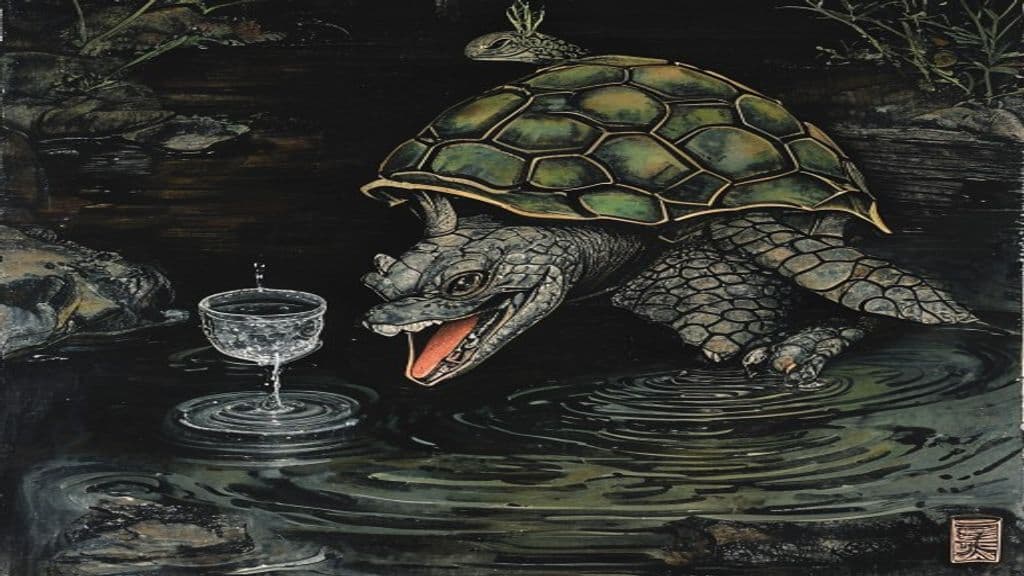
Kappa
A water-dwelling imp of Japanese folklore with a bowl of water on its head. Mischievous but bound by strict codes of politeness; dangerous near rivers.
Wadj-wer
Wadj-wer is an ancient Egyptian deity-personification of large northern waters called the "great green," associated with fertility and the productive richness of the Nile Delta. Modern descriptions often equate him with the Mediterranean Sea, while primary evidence and some scholarly readings emphasize lagoons and lakes of the northernmost Delta; his earliest attestation is on a 5th Dynasty mortuary temple of Sahure.
Wadjet
Wadjet is an ancient Egyptian local goddess of Dep/Buto (Per-Wadjet) in the Nile Delta who became the patron and protector of Lower Egypt and, alongside Nekhbet, a joint protector of united Egypt. She appears as a cobra (uraeus), the 'Eye' (Wedjat-eye), and as a nursing maternal figure for kings; she served protective, royal, oracular, and cultic functions in Pharaonic religion.
Waghya (Waghoba)
Waghya is remembered in Marathi popular memory as the loyal mixed-breed dog of Maratha king Chhatrapati Shivaji Maharaj, traditionally said to have leapt into his master's funeral pyre. The figure functions in monument culture and regional storytelling as an emblem of fidelity and has been commemorated by a statue beside Shivaji's samadhi at Raigad Fort.
Wahieloa
Hero in Hawaiian mythology associated with epic stories. (Note: * Power tier: Given that Wahieloa is associated with epic stories and has exceptional abilities, it's likely that his power tier should be Greater (powerful regional) or at least Ancient (deity-level))
Wainuia clarki
Wainuia clarki is a species of air‑breathing predatory land snail in the family Rhytididae, endemic to New Zealand. Sources describe it in biological and conservation terms; it is carnivorous and feeds mainly on earthworms.
Waipapa (Canoe)
A great ocean-going canoe significant in Māori tradition, associated with regional migrations. (Note: - Power tier: Should be Ancient (Waipapa is a significant vessel associated with regional migrations) - Appearance: Missing information; add description from source material (none mentioned) - Sensory)
Wairua
Wairua is the Māori concept of spirit or soul: a non-physical, enduring aspect of a person (or things connected to people) that exists beyond death and is the focus of spiritual care within Māori wellbeing frameworks.
Wak / Waq / Waqa (unverified)
No reliable evidence in the provided sources identifies a spirit called Wak, Waq, or Waqa as an Ethiopian 'spirit of the sky.' The materials reviewed contain only unrelated uses of the string 'Wak' (disambiguation entries, archival captions, and institutional data).
Wakinyan (Lakota Tradition)
A thunder spirit in Lakota tradition, embodying the raw energy and majesty of nature through its connection to lightning. (Note: - Power tier: Primordial (based on its association with thunder, a cosmic force) - Weaknesses: Not specified in source material; omit or indicate as unknown - Wards: Not mentioned in source material; )
Wakwak
The Wakwak is a nocturnal, predatory creature in Philippine popular belief, typically described as a bird-like vampiric being that hunts humans at night. It is named onomatopoeically for the wak-wak sound associated with its flight or call and occupies the same folkloric cluster as the manananggal, ekek, and aswang.
Wakȟáŋ Tȟáŋka
Lakota term for the Great Sacred or Great Mystery that names the sacred power or quality immanent in all things; sometimes rendered in English as "Great Spirit" but better understood as a pervasive sacredness or, in some historical usages, as a mysterious collective of sacred beings.
Waldgeist (Woodwight / "Wildnisgeist")
A modern analytical label proposed for poltergeist-like phenomena occurring in wooded locations; described in the cited literature as producing physical disturbances (thrown stones, raps, lights, odors, apports) in forested tracts and sometimes overlapping in report-pattern with non-sighting cryptid (Bigfoot) encounters. The term also appears in contemporary culture as a reused compound name but lacks a documented traditional folkloric corpus within the supplied sources.
Community Record
- [1]Waira — Wikipedia. Wikipedia, 'Waira' (summary of emaki attestations, modern interpretations, and source tracing)wiki
- [2]Wairarapa (Wikidata entry, unrelated biological taxon noted as excluded). Wikidata entry (not relevant to the Japanese yōkai; noted in research as unrelated)other
- [3]Wayras Temuco (archive item, unrelated). Archive.org item (contains token 'waira' but unrelated to Japanese yōkai; noted in research as excluded)other
- [4]CIA Reading Room document (unrelated). Archive.org copy of CIA document (contains token string similar to 'waira'; not used for yōkai data)other