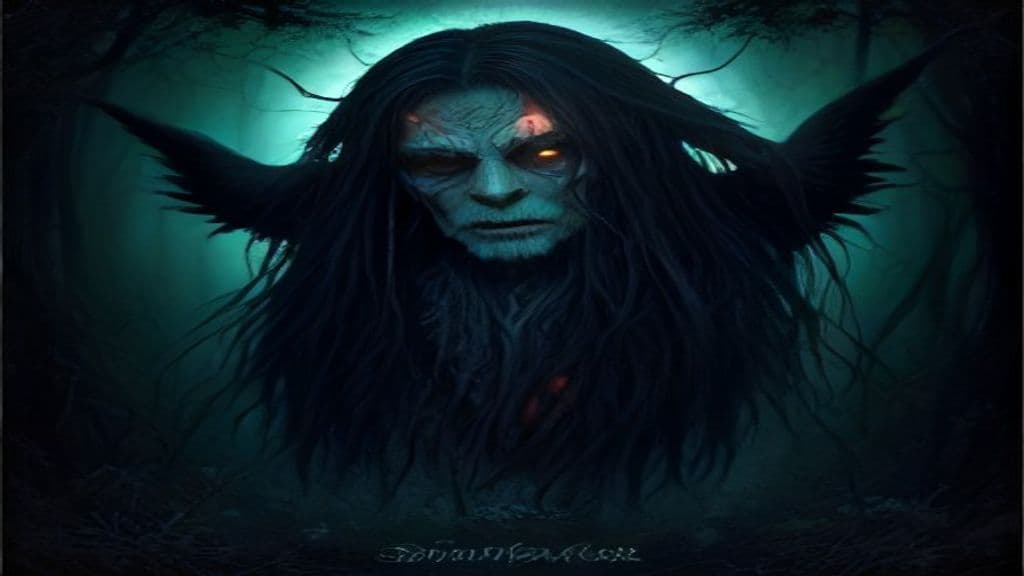
The label as treated in the provided sources is a modern analytical proposal rather than a traditional mythic origin narrative. In the cited discussion Cutchin (quoted by Orcutt) speculates on a phenomenon he terms "wildnisgeist" — literally 'poltergeists of the woods' — and Orcutt suggests the more literal Germanic compound "waldgeist" would be clearer. The origin, therefore, is methodological: researchers seeking to account for a cluster of anomalous woodland experiences (physical disturbances, sensory anomalies, repeated localized events) coined or proposed this category to bridge observations that sit between poltergeist reports and cryptid incident reports. The supplied corpus contains no traditional legendary origin story or genealogical placement for a historical Waldgeist/Woodwight; instead the term functions as a heuristic label in recent analytic literature, and as a lexical compound reused in modern media and names.
The supplied sources do not record a stable corporeal or humanoid appearance for a waldgeist/woodwight. Instead, descriptions in the analytic literature emphasize phenomenological manifestations: thrown stones (pebble showers), raps (knocking sounds), disembodied voices, anomalous odors, frightened animals, apports (appearing objects), electrical interference, and anomalous lights. These sensory and physical disturbances are presented as the primary 'appearance-equivalents' of the phenomenon; no consistent bodily form or anthropomorphic visage is documented in the provided materials.
According to the cited discussion (Cutchin as quoted by Orcutt), phenomena grouped under the proposed wildnisgeist/waldgeist category include the production of thrown stones or pebble-showers, audible raps and disembodied voices, the generation of anomalous odors, causing pets or local fauna to become frightened, producing apports (objects appearing or being placed), interfering with electrical systems, and manifesting anomalous lights. Orcutt notes that these items overlap with elements found in a class of Bigfoot reports that lack direct sightings, and he reports fieldwork details such as witnesses being "showered instead with tiny pebbles" and repeated or frequent encounters at particular woodland sites. The literature frames these capacities as poltergeist-like disturbances localized in woods rather than as confirmed biological behaviors.
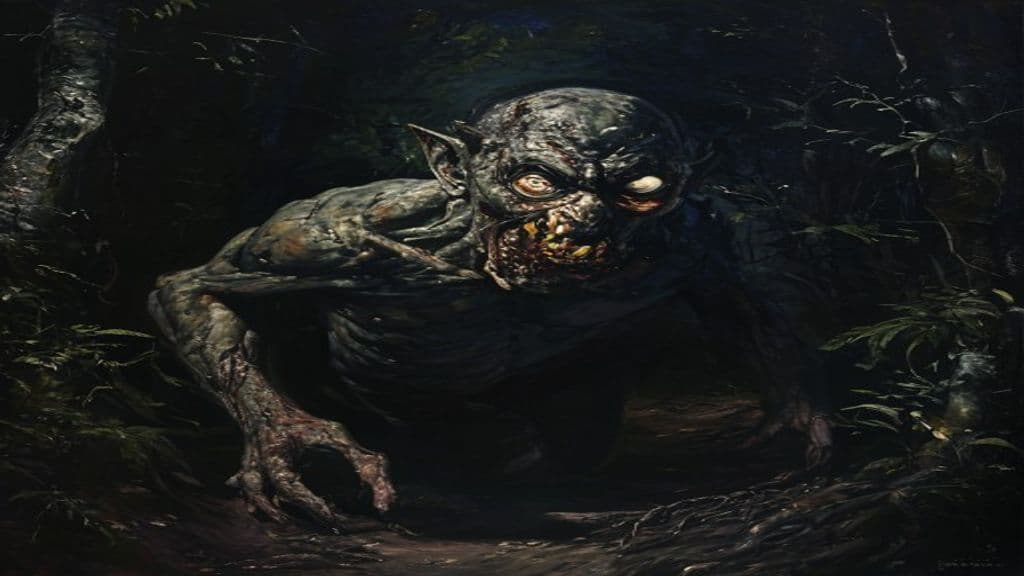
Pishacha
Flesh-eating spirits of Hindu mythology that haunt cremation grounds and are associated with disease, madness, and possession. The lowest class of demon in the Vedic hierarchy.
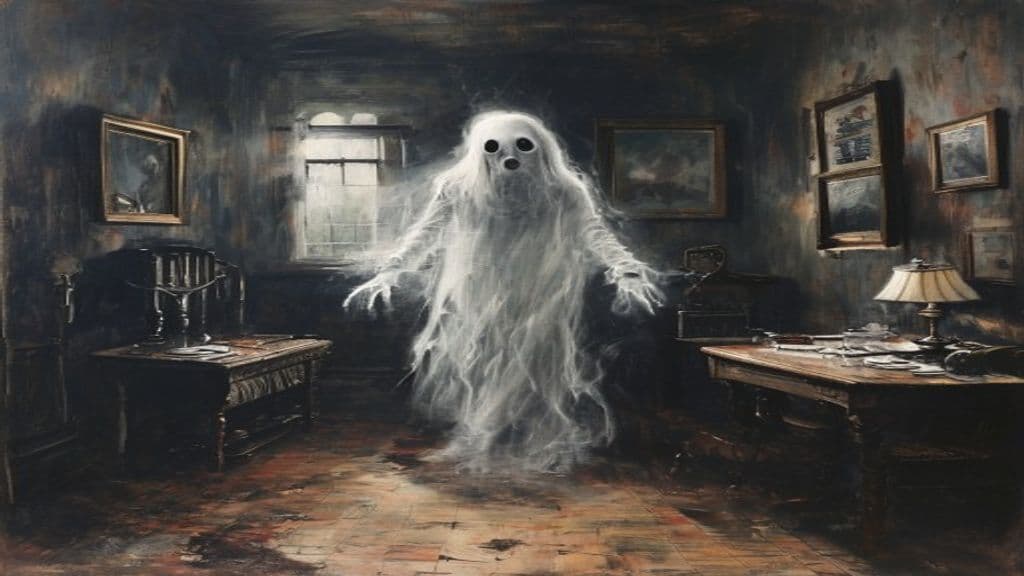
Poltergeist
A poltergeist is a German-derived ghostlore label for an unseen agent associated chiefly with noisy, kinetic, and disruptive physical phenomena in domestic settings. Modern summaries and case literature emphasize episodic outbreaks of object movement, loud noises, and occasional assaults or electrical/foul-smell disturbances, with competing explanations ranging from spirit activity to hoax, psychogenic projection, or natural physical causes.

Bigfoot (Sasquatch)
A North American folkloric large, hairy, bipedal humanoid reported chiefly from the forests of the Pacific Northwest. The figure functions as a 'wild man' type in regional and popular traditions and is documented primarily through sightings, footprint casts, media, and a subculture of enthusiasts rather than accepted biological evidence.
Waira
The waira (わいら) is a yōkai figure attested primarily in Edo-period Japanese picture-scroll (emaki) compendia. It exists chiefly as a named image-type in visual anthologies (e.g., Hyakkai Zukan, Gazu Hyakki Yagyō) rather than as a well-documented narrative creature; later authors have projected varied behaviors and habitats onto the image.
Wairua
Wairua is the Māori concept of spirit or soul: a non-physical, enduring aspect of a person (or things connected to people) that exists beyond death and is the focus of spiritual care within Māori wellbeing frameworks.
Wak / Waq / Waqa (unverified)
No reliable evidence in the provided sources identifies a spirit called Wak, Waq, or Waqa as an Ethiopian 'spirit of the sky.' The materials reviewed contain only unrelated uses of the string 'Wak' (disambiguation entries, archival captions, and institutional data).
Wakinyan (Lakota Tradition)
A thunder spirit in Lakota tradition, embodying the raw energy and majesty of nature through its connection to lightning. (Note: - Power tier: Primordial (based on its association with thunder, a cosmic force) - Weaknesses: Not specified in source material; omit or indicate as unknown - Wards: Not mentioned in source material; )
Wakwak
The Wakwak is a nocturnal, predatory creature in Philippine popular belief, typically described as a bird-like vampiric being that hunts humans at night. It is named onomatopoeically for the wak-wak sound associated with its flight or call and occupies the same folkloric cluster as the manananggal, ekek, and aswang.
Wakȟáŋ Tȟáŋka
Lakota term for the Great Sacred or Great Mystery that names the sacred power or quality immanent in all things; sometimes rendered in English as "Great Spirit" but better understood as a pervasive sacredness or, in some historical usages, as a mysterious collective of sacred beings.
Wandjina
The Wandjina (also Wanjina, Wondjina; sometimes listed as Gulingi) are ancestral cloud-and-rain spirit-beings of the Wanjina Wunggurr cultural bloc in northwestern Australia. They are depicted prominently in Kimberley rock art, some paintings of which date to approximately 4,000 years ago, and are integrated in a local cosmology that includes the creator-being Wunngurr (analogous to the Rainbow Serpent).
Wanjina Wunggurr (unverified)
Insufficient sourced information available in the provided material to describe Wanjina Wunggurr. The only confirmed fact from the source is that the Worrorra (Worora) are an Aboriginal Australian people of the Kimberley region; no reliable details about Wanjina Wunggurr are present in the supplied source.
Warg
A large, malevolent wolf-like being whose modern fictional form was popularized by J. R. R. Tolkien as an intelligent, war‑capable wolf-race allied with Orcs; the term derives from Old Norse vargr and Old English wearh, words that blur natural wolf, outlawry, and destructive agency.
Watcher
Watcher is a polyvalent label applied across religious, literary, and technical domains to beings or systems defined primarily by observation, surveillance, or guarding. In the supplied sources it names an apocryphal class of angels (the Grigori), a localized monstrous guardian in Tolkien's fiction (the Watcher in the Water), a race of cosmic observers in Marvel Comics, and various monitoring programs in computing.
Water deity
A water deity is a god or goddess associated with water or specific bodies of water (sea, ocean, great river, spring, or well). The term is a functional, comparative category used by scholars to group diverse culture-specific divine figures whose primary domain is water.
Way (wayob)
Way (plural wayob) is a Yucatec Maya term denoting a human-linked animal-being tied to sleep; it can mean a person who transforms into an animal while asleep (a Mesoamerican nagual) or the animal transformation/companion itself. Wayob appear in Classic Maya iconography (marked by a special hieroglyph) and are recorded in later Yucatec usage and museum interpretation as both harmful nocturnal agents and as ritual companions for rulers on journeys to the Otherworld.
Community Record
- [1]Don't Cross the Streams! Parsing Potential Poltergeist Phenomena from Alleged Bigfoot Activity (Orcutt audio/lecture item on Archive.org). Orcutt (quoting Cutchin), "Don’t Cross the Streams! Parsing Potential Poltergeist Phenomena from Alleged Bigfoot Activity", Archive.org item description and audio content.academic
- [2]Das Rätsel des steinernen Dolchs (der Waldgeist) — Archive item title (cultural reuse). Archive item title containing the compound "der Waldgeist", attesting to contemporary reuse of the lexical form.other
- [3]Soisloscerdos Podcast#17 - Terremotos En Mí - Nueva Pandemia Mundial (archive item listing includes 'Waldgeist' as track/artist name). Archive item metadata including a track/artist name 'Waldgeist', demonstrating modern cultural deployment of the compound.other
- [4]Waldgeist (Wikipedia entry — racehorse). Wikipedia entry showing contemporary use of the compound as a proper name (racehorse), not a folkloric source in this corpus.wiki
- [5]Wikidata: Waldgeist. Wikidata item referencing the lexical form 'Waldgeist', included among the consulted heterogeneous sources.other