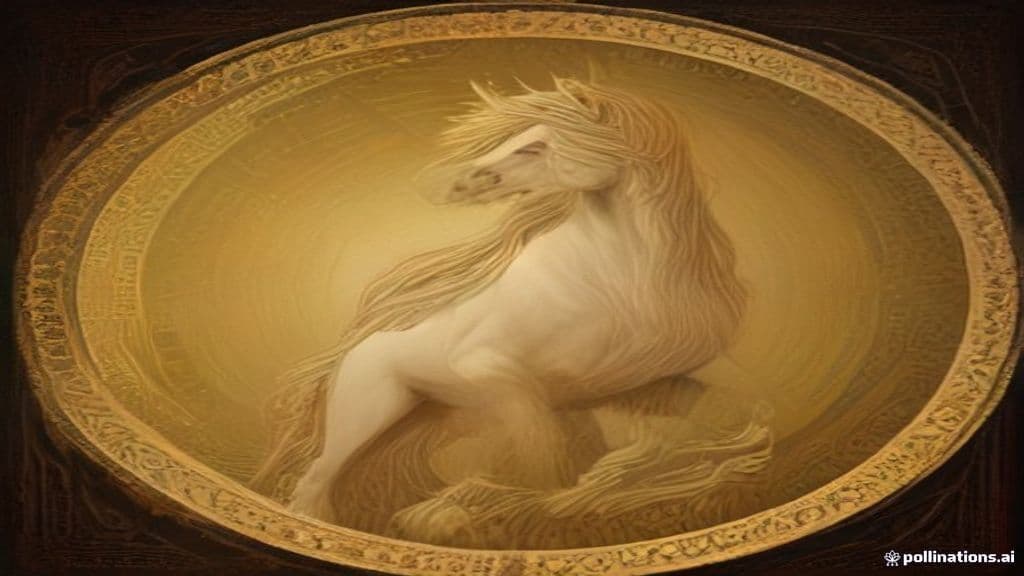
The name Xanthus appears in several origin-contexts rather than a single origin narrative. As a river-personification, Xanthus is the divine name the gods give to the river Scamander, making Xanthus the local river-deity of the Trojan plain within Homeric epic. As a mythic animal, Xanthus is one of the pair of immortal horses associated with Achilles (the other being Balius); these horses belong to the house of Peleus/Achilles in epic accounts, and in narrative time Xanthus is granted temporary speech by a goddess to deliver a portent. Separately, the name is borne by mortals in genealogical and legendary lists (for example a Theban king named Xanthus whose cheating in a duel is said to have led the Thebans to reject rule by a single monarch), and it designates the Lycian city and river Xanthus/Xanthos found in historical/topographical records.
Descriptions vary by manifestation. The etymology ("yellow, blond") suggests a fair or yellow appearance and the name is often taken as indicating blond/yellow coloration—applied to a horse it suggests a light-colored coat, though classical sources do not give elaborate physical detail beyond the name. The river-personification has no detailed physical description in the supplied materials beyond its identity as the Scamander/Xanthus. Mortal bearers and the Lycian city are attested as names without physical description in the provided sources.
Abilities are specific to particular manifestations. The horse Xanthus is attested as immortal (paired with Balius) and is recorded in some accounts as being given the power of speech by Hera so that he could warn Achilles of his impending death — a narrative instance of prophetic or portentous speech. The river-name Xanthus/Scamander functions as a personified local deity of the river, implying control or personification of the watercourse in Homeric narrative, though no discrete feats or magical actions are detailed in the supplied sources. Mortal bearers of the name are portrayed in conventional human actions within genealogical or legendary tales.

Acacallis
Acacallis (Ancient Greek: Ἀκακαλλίς; also Acalle) is a mythological princess of Crete in Greek tradition, daughter of King Minos and Pasiphae. She functions primarily as a dynastic and etiological figure: in varying accounts she is mother, by gods such as Hermes (Mercury) or Apollo, of eponymous or founder-figures like Cydon (founder of Cydonia), Miletus, or Lydon/ Lydus.
Acamas
Acamas (Ancient Greek: Ἀκάμας) is a personal name recurrent in ancient Greek narrative traditions applied to multiple human characters (warriors, princes, suitors), once to a Cyclops, and once as a hound's name. Rather than a single supernatural entity, bearers of the name appear episodically across the Trojan War, Theseid, and Theban cycles as mortal actors whose deeds intersect with gods and fate.
Acanthis
Acanthis is a young woman in Greek myth, daughter of Autonous and Hippodamia, who is transformed into a thistle finch by the gods as an etiological explanation for the bird's name. The story is preserved chiefly in Antoninus Liberalis' Metamorphoses and summarized in modern reference works.
Acaste
Acaste (Ancient Greek: Ἀκάστη) is a named Oceanid — one of the daughters of the Titans Oceanus and Tethys — recorded among the companions of Persephone at the moment of her abduction; the name also appears separately as a nurse of the daughters of King Adrastus of Argos in later genealogical lists.
Achaeus
Achaeus (Ancient Greek: Ἀχαιός, Akhaiós) is an eponymous personal name borne by three mythological human figures in Greek tradition; best attested is Achaeus, son of Xuthus and Creusa, brother of Ion and grandson of Hellen, who is named as father of Archander and Architeles in Pausanias. The name is glossed as meaning "griever," from ἄχος (achos, "grief, pain, woe").
Aegle
Aegle (Ancient Greek: Αἴγλη, 'brightness' or 'dazzling light') is a name applied to several distinct female figures in Greek myth: a daughter of Asclepius associated with health, a Naiad mother of the Charites by Helios and Neaera, one of the Heliades transformed into a poplar after Phaeton's death, a named Hesperid, an alternate name for Coronis in some traditions, a daughter of Panopeus beloved by Theseus, and a nurse of Dionysus. The recurrence of the name links these figures by the themes of brightness, beauty, and filial or nymph-like status rather than by a single unified identity.
Aello
Aello (Ancient Greek: Ἀελλώ) is a named figure in Greek myth primarily attested as one of the Harpies—winged female personifications of storm-wind who harry, snatch, and torment. The name also appears in variant lists as applied to an Actaeonian hunting dog, showing onomastic fluidity in the tradition.
Agaptolemus
Agaptolemus (Ancient Greek: Ἀγαπτόλεμος) is a mythic Greek prince, one of the fifty sons of King Aegyptus, best known as the husband of the Danaid Pirene who, like most of the Danaids, slew her husband on their wedding night at the command of her father Danaus.
Agave
Agave (Ancient Greek: Agaue/Agaúē) is a personal name borne by at least two distinct figures in Greek myth: a Nereid (one of the fifty sea-nymph daughters of Nereus) and a Theban princess, daughter of Cadmus, who appears in myths connected with Dionysus. The name is glossed in Greek sources as 'illustrious', 'noble', or 'high-born'.
Agrius
Agrius (Ancient Greek: Ἄγριος, 'wild') is an onomastic figure in Greek myth whose name is applied to multiple distinct personae—including a Giant, a centaur, a bear‑born twin, a princely son, a suitor of Penelope, and one of Actaeon's dogs—rather than a single unified supernatural being. Each attestation places an Agrius in different narrative registers (Gigantomachy, Heracles' labors, heroic genealogies, the Odyssean cycle, and the Actaeon hunt).
Agron
Agron (Ancient Greek: Ἄγρων, 'wild' or 'rustic') is a human/mortal figure attested in the summary of Antoninus Liberalis' Metamorphoses (as presented on Wikipedia) who, because of impiety toward certain gods, is transformed by Hermes into a plover. The tale functions as an etiological metamorphosis and moral exemplum about observing cult obligations.
Aitolos
Aitolos is a name that appears in Greek-language traditions referring to two distinct figures: Aetolus, a mythic genealogical ancestor in classical Greek myth (son of Endymion, descendant of Deucalion), and Kosmas Aitolos (St. Cosmas of Aetolia), a historical/hagiographic Orthodox teacher whose collected writings emphasize pastoral and ascetical themes. The sources do not present Aitolos as a single folkloric supernatural being.
Community Record
- [1]Xanthus (mythology) — Wikipedia. Wikipedia, 'Xanthus (mythology)'wiki
- [2]Balius and Xanthus — Wikipedia. Wikipedia, 'Balius and Xanthus'wiki
- [3]BALIUS & XANTHUS (Balios & Xanthos) - Immortal Horses of Achilles. Theoi Project, 'Balios & Xanthos'literary
- [4]Xanthus (general Wikipedia page). Wikipedia, 'Xanthus'wiki
- [5]LP0061 Thebes Mythical History (archive). Archived summary of Pausanias-derived Theban mythical history (Thebes)other
- [6]Xanthus Name Meaning & Origin | Name Doctor. Name-Doctor entry on 'Xanthus' (etymology: 'yellow, blond')other
- [7]Encyclopedia of Greek Mythology: X. MythWeb encyclopedia entries (Xanthus references)other
- [8]How to See the British Museum in Four Visits, by W. Blanchard Jerrold. Historic text citing classical names and toponyms (referenced in supplied notes)other
- [9]Lycia - Biblical Cyclopedia (Xanthus/Xanthos). Biblical Cyclopedia entry on Lycia, noting Xanthus/Xanthos as Lycian city and riverother