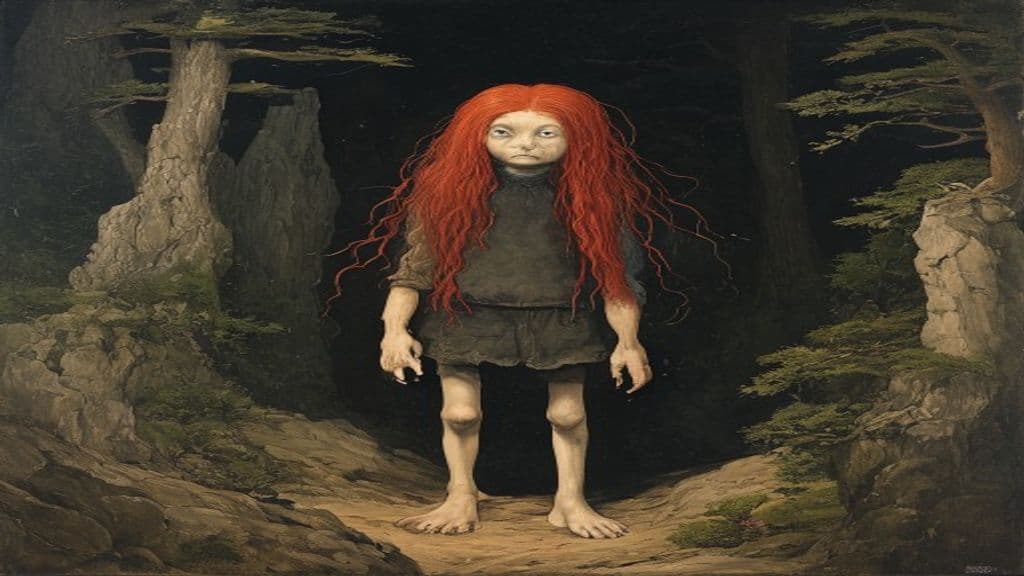
Yamawaro are presented in regional folklore as autonomous inhabitants of mountain interiors rather than descendants of a single mythic progenitor. In many western-Japan narratives they are identified with kappa that leave rivers and become yamawaro during autumn Higan and return during spring Higan; local variants record specific movement dates (e.g., district accounts noting February 1 or June 1). Folklorist Kunio Yanagita proposed that such seasonal movement narratives reflect shifts in local cultic attention among field (ta-no-kami), water (kappa), and mountain (yama-no-kami) guardians. The tradition therefore frames yamawaro as part of a cyclical, place-based network of spirits tied to seasonal labor and landscape pathways.
Accounts commonly describe yamawaro as roughly childlike in size and appearance (often likened to a ten-year-old). Edo-period descriptions (Wakan Sansai Zue) give them a short torso, long legs, a round head, and long hair described as persimmon-red or navy-colored; the body is often said to be covered with intricate fur or hair. Some regional descriptions add dog-like pointed ears; one older source contains an ambiguous note about an atypical eye-placement (rendered in summaries as "one eye above their nose"), which should be treated as a variant detail rather than a definitive trait. Overall, descriptions vary between a scraggly, hairy humanoid child and a heavily furred small humanoid with long hair.
Yamawaro are credited with a cluster of practical and phenomenal behaviors rather than overt world-altering powers. They are reported to assist woodcutters and lumber crews in mountain work in exchange for food and alcohol, insisting on the exact goods promised and reacting angrily if substitutions are offered or terms broken; sometimes they take early payment and run off. They act as tricksters—harassing cattle and horses, entering homes and baths (soiling bathwater with grease and an offensive smell), and stealing meals in some variants. Yamawaro also serve as folkloric agents for mountain noises and events: they are said to produce large falling-tree or rock sounds (tengu-daoshi-type phenomena), imitate human songs, mimic tool-drop noises (mokko), and in local reports are evoked to explain sudden explosive sounds (e.g., dynamite-like noises). They speak human language in at least some traditional accounts and travel along recognized mountain corridors (osaki/toorisuji).
Weaknesses
- symbolink line (sumi-ito)
- conditionnot building on established osaki/toorisuji (avoidance/taboo)
Wards
- symbolink line (sumi-ito) used in carpentry — reported deterrent in Kumamoto Prefecture
- conditionrespecting and avoiding building on 'osaki' mountain passageways so as not to obstruct yamawaro/kappa routes
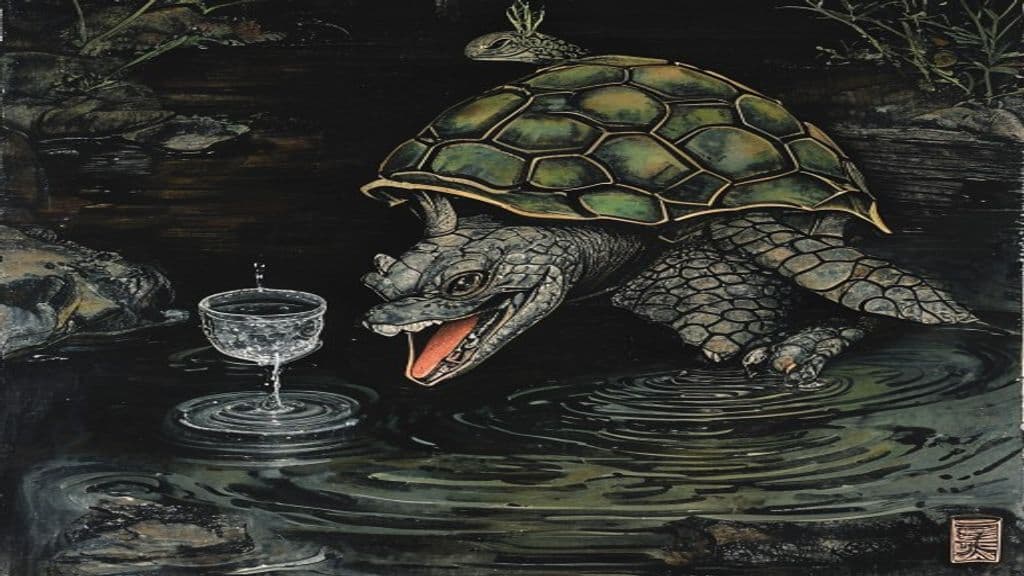
Kappa
A water-dwelling imp of Japanese folklore with a bowl of water on its head. Mischievous but bound by strict codes of politeness; dangerous near rivers.
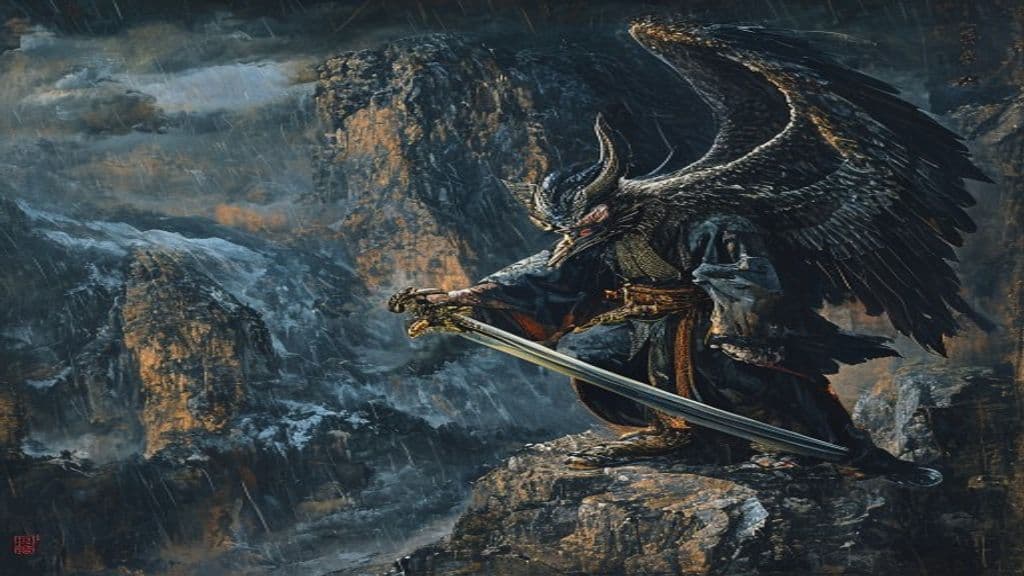
Tengu
Proud, warrior-like mountain spirits of Japan, associated with martial arts, pride, and the wild mountains. Neither fully good nor evil — they test and train warriors and monks, but punish the arrogant.
Akashaguma
Akashaguma is presented in the available sources as a child-like house guardian spirit in the Japanese yokai tradition, closely comparable to the regional zashiki-warashi. It is associated with domestic interiors (parlors or storage rooms) and with bringing prosperity to households where it dwells.
Azukibabaa
Azukibabaa (あずきばばあ, "bean hag") is a Japanese yōkai represented as an old-woman figure whose presence is signaled by the sound of azuki beans being handled (azukiarai). Found in regional folk narratives around Kantō and nearby prefectures, she lures or unnerves night travelers and in some localities is said to scoop up or swallow passersby.
Bakeneko
The bakeneko (ばけ猫, "changed cat") is a Japanese yōkai classed as a kaibyō (supernatural cat). Folklore presents it as a household cat that, through age, long residence, or other local conditions, acquires uncanny abilities such as shapeshifting, speech, and vengeance against cruel humans.
Betobeto-san
A Japanese yōkai manifesting as the sound of footsteps that follow lone travelers at night. Traditionally regarded as non‑harmful: walkers are advised to step aside and address it politely to have the footsteps pass.
Chōchinbi
Chōchinbi (提灯火, "paper-lantern fire") are regionally reported Japanese atmospheric spirit-lights treated as a variety of onibi. Tales describe them as lantern-like floating flames seen near footpaths, rice fields, riverbanks, and graveyards, sometimes vanishing when approached and sometimes associated with animal yōkai or resentful human spirits.
Hannya (般若)
Hannya is a traditional Japanese Noh mask type and the theatrical/folkloric embodiment of a woman transformed into a resentful, jealous spirit. The mask represents a stage of metamorphosis into an onryō-like figure, visually marked by horns and a leering mouth, and is situated at the intersection of Noh theatre, ritual dance (kagura), and Buddhist-influenced folk belief.
Hito-gitsune
A household-associated small carnivore spirit from western Japan (Chūgoku region) that attaches to certain families, providing wealth in belief but causing illness, behavioral change, social stigma, and transmission across households. It is represented in regional traditions as a marten/fox/weasel‑like possessing spirit rather than a singular individualized deity.
Inugami
Inugami (犬神) are Japanese household-associated dog-spirits that appear in western Japan. In folklore they may be intentionally created by kodoku/kojutsu rituals or become hereditary household possessors that attach to people, animals, or objects and produce illness, jealousy, or social stigma.
Ishinagenjo
Ishinagenjo is a Japanese coastal folkloric phenomenon in which fishermen hear the sound and feel the effects of a huge stone crashing into the sea though no stone is ever found. Sources treat it variously as an episode of yōkai activity (sometimes linked to sea-witch figures such as the Iso Woman) or as an illusion/perceptual error recorded in fisherfolk accounts from several coastal localities.
Isonade
A large, shark-like sea monster from Japanese regional folklore (notably Matsuura and other parts of western Japan). Its body is said to remain hidden beneath the waves, with only a huge, barbed tail fin visible; it approaches boats stealthily, can snare sailors with its hooked tail, capsize vessels, strike beaches, and is associated with fierce winds when it appears.
Japanese wolf
An endemic subspecies of gray wolf historically inhabiting Honshū, Shikoku, and Kyūshū, remembered in Japanese natural history and folklore as both a biological predator and a liminal spiritual figure associated with mountain deities and occasional protective roles toward travelers.
Kamaitachi
A class of Japanese yōkai associated with sudden cutting winds and whirlwinds that cause sharp, initially painless wounds. Narratives vary by region: kamaitachi may be imagined as weasel-like creatures riding dust devils, trios of mischievous gods, animated sickles (tsukumogami), or other local spirit causes.
Community Record
- [1]Yamawaro - Wikipedia. Wikipedia contributors. "Yamawaro." Wikipedia, The Free Encyclopedia.wiki
- [2]YAMAWARŌ | BYU BAKEMONO. BYU Bakemono Library, "YAMAWARŌ" entry.folk
- [3]The Night Parade Of One Hundred Demons: A Field Guide To Japanese Yokai (archive). Field guide compilation (archive.org) listing yamawaro among yōkai catalogues.other