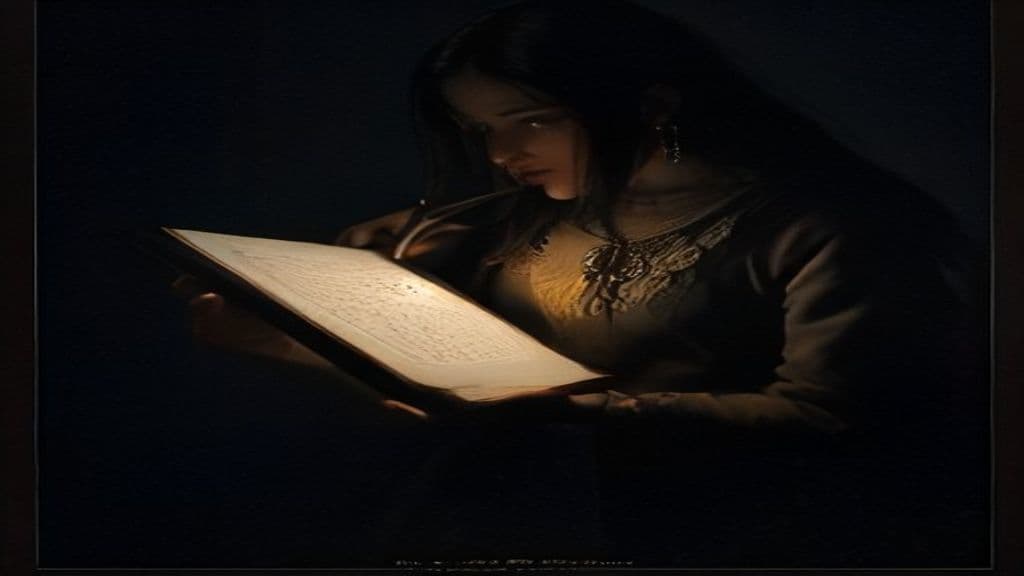
This rite is documented folklore, recorded for study — not instruction. It is presented here as part of the historical record of what practitioners in this tradition have done, not as guidance to perform it.
The spirit is said to grant wealth arriving faster and from less accountable sources than work allows. The wealth is never free: a tumbal is owed — commonly a member of the seeker's own family, or the seeker's service to the spirit after death — and the debt is understood to be collected whether or not the seeker still wants the bargain.
Pesugihan is the Javanese shortcut to wealth: an agreement with a spirit, or with the power residing in a particular place, that money will come quickly and from nowhere accountable. It is not a spell so much as a contract, and its defining term is the tumbal — the price owed in return, which the stories are unanimous in setting at a life rather than a sum.
The named forms are distinct bargains rather than variations of one rite. In pesugihan babi ngepet the seeker takes the form of a boar to root money out of neighbours' houses while a partner keeps a candle burning at home; if the flame gutters, the seeker cannot change back. A tuyul (toyol) is a child spirit kept and fed by its master so that it can steal cash — wealth that arrives as other people's missing money. Others are tied to place: the shrines of Gunung Kawi, the pilgrimage at Mount Kemukus, and the court of Nyi Roro Kidul beneath the southern sea, whose servants are said to be bound to her after death.
What every account shares is the collection. The wealth is real while it lasts and conditional throughout: the tumbal falls due on a family member, the fortune evaporates the moment a condition is broken, or the seeker is owed to the spirit after death and enters its service. In the moral logic of the stories, sudden unexplained wealth in a neighbour is itself the evidence — pesugihan is as much a way of explaining a rich man as a way of becoming one.
- 01The seeker travels to a place that holds the reputation — a cave, a grave, a mountain shrine, or the southern sea — rather than performing anything at home.
- 02A dukun or the site's juru kunci mediates the approach to the spirit and states the terms.
- 03Terms are agreed: what is granted, and the tumbal owed in return. Accounts are consistent that the price is a life or a lifetime of service, not money.
- 04Offerings (sesajen) are made and a period of vigil or fasting is kept, sometimes repeated on a set night in the Javanese calendar.
- 05The seeker keeps the standing conditions of the pact. Ordinary life is what breaks it — a spouse who fails to keep the candle burning, a lapse in the offering, or the terms spoken aloud.
- ⚠Every account is a cautionary tale: the wealth is conditional and revocable — the tumbal falls due, the family dies one by one, the money vanishes when a condition is broken, or the seeker is bound to the spirit after death.
- ⚠Breaking the terms mid-rite is held to be worse than never beginning.
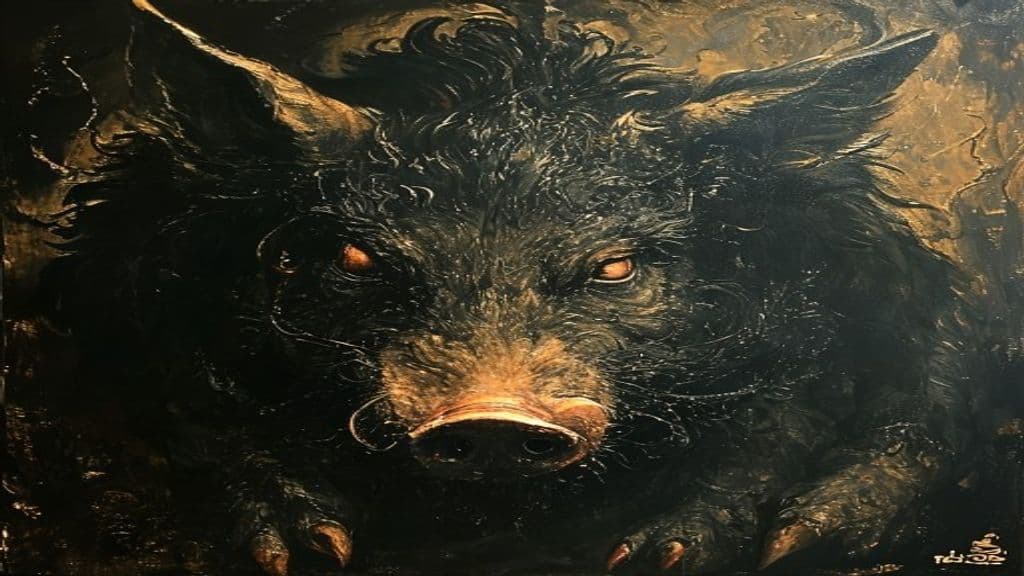
Babi Ngepet
In Indonesian mythology, the Babi Ngepet is a boar demon associated with malevolent intentions towards humans. (Note: * Power tier: Downgrade to Ancient (deity-level) as there's no indication of Primordial powers. * Abilities: Specify what malevolent intentions towards humans implies, e.g., ability to curse or cause )

Nyi Roro Kidul (Queen of the Southern Sea)
Nyi Roro Kidul is a supernatural female figure in Sundanese and Javanese tradition identified as the Queen of the Southern Sea off the coast of Java. She functions as a regionally significant sea sovereign connected in local narratives and place‑based traditions (for example Pelabuhan Ratu) and appears in contemporary poetic and popular media.
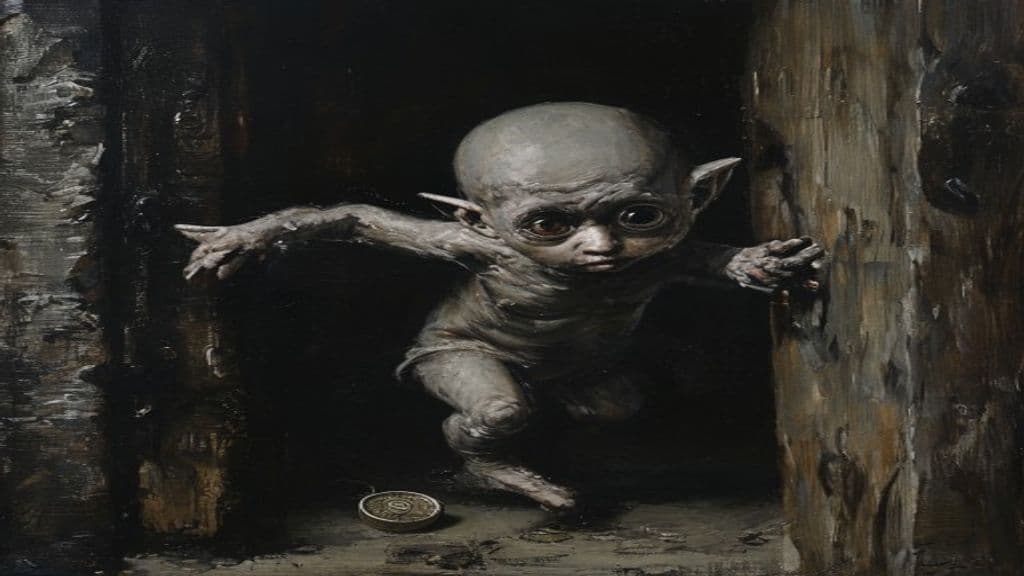
Toyol
A malevolent fetal spirit used as a supernatural familiar in Malay and Javanese black magic — typically stolen or purchased from a dukun, fed blood, and set to steal from neighbors.
Community Record
- [1]Pesugihan — Wikipedia (Indonesian). "Pesugihan adalah serangkaian mitos atau ritual yang dipercaya bisa digunakan untuk memperoleh kekayaan secara instan melalui jalan pintas ... tumbal atau mahar tertentu harus dipersembahkan kepada makhluk gaib sebagai penggantinya."wiki
- [2]Babi ngepet — Wikipedia. "Babi ngepet is boar demon in Indonesian mythology. Babi ngepet are commonly known in Java and Bali."wiki
- [3]Tuyul — Wikipedia. "A common use for the toyol includes using it for financial gain, where the creature robs people of their riches."wiki
- [4]Nyai Roro Kidul — Wikipedia. "Nyi Roro Kidul is a supernatural being in Indonesian folklore. She is the Queen of the Southern Sea."wiki
- [5]