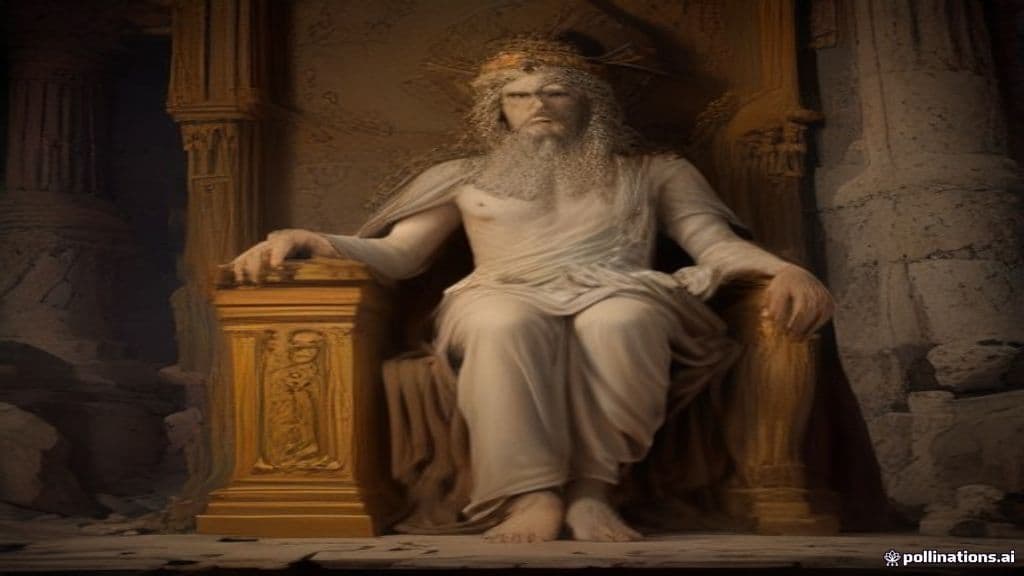
The phrase originates in the prophetic/visionary material of the Book of Daniel, where a figure or event 'makes sacrifice and offering cease, and in their place shall be an abomination that desolates' (related to Daniel 11:31; 12:11; the Seventy Weeks schema of Daniel 9 provides the wider prophetic frame). Historical reading links the vision to the crisis under Antiochus IV Epiphanes in the 160s BCE, when the twice-daily burnt offering was halted and the Temple was rededicated to foreign cult (cf. 2 Maccabees 6:5); later Christian writers (Mark, Matthew, Luke) reapply the phrase as a sign within their eschatological discourse, instructing flight when the sign is observed, and interpreters have variously mapped the term to historical events (Antiochus IV, the Roman siege of 70 CE) or to a future eschatological agent.
Primary texts do not present a consistent physical description. In Daniel the 'abomination' functions as whatever replaces or prevents the regular burnt offering—scholarship commonly identifies this as pagan offerings or an altar placed in the Temple. Older commentators and some ancient writers proposed a statue (for example, of Zeus) set up in the sanctuary; speculative proposals include baetyls affixed to the altar. In the Gospel of Mark the Greek grammar (a masculine participle) has led some readers to construe the phrase as 'standing where he ought not to be,' implying a person or agent, but the canonical texts themselves offer no literal corporeal portrait.
Functionally the abomination 'operates' by profaning the cult: it replaces or prevents the twice-daily burnt offering, thereby rendering the Temple ritually desolate and signaling divine judgment or eschatological crisis. In the gospel tradition it serves as a sign whose appearance indicates imminent destruction and calls for immediate human responses (flight/avoidance). Interpretive traditions frame its 'activity' as imposition of foreign cultic practice, installation of pagan sacrificial equipment or images, or—in some readings—the actions of a hostile ruler who occupies sacred space.
Weaknesses
- conditionhuman avoidance (flight to the mountains)
Wards
- conditionflight and avoidance (Mark 13:15; Matthew 24:16; Luke 21:20–21)
- othertheological reassurance and communal endurance (Daniel's visionary reassurance)
Abishag
Abishag is a young woman from Shunem described in 1 Kings 1 as chosen to attend the aged King David, brought to lie beside him to provide warmth and serve as a helper/servant; her later status became a political issue in the succession disputes following David's death.
Abishai
Abishai is a personal name attested in several distinct sources: a biblical individual described as the eldest son of Zeruiah (sister of King David); a Semitic chief named in an inscription at Beni-Hasan in Middle Egypt; and modern cultural uses including a named monster in Dungeons & Dragons and as an artist/stage name. The supplied materials do not present Abishai as a supernatural being within a living cosmology.
Abishua
Abishua (Hebrew: אֲבִישׁוּעַ, ʾĂḇīšūaʿ) is presented in the provided sources as an early Israelite priestly figure and ancestor in the line of Aaron, appearing in biblical genealogies (not as a supernatural being). He functions as a link in the hereditary succession of priests that legitimizes cultic authority in Israelite tradition.
Abital (Avital)
Abital (Hebrew Ab'ital / Avital) is a Hebrew personal name attested in the Old Testament as one of King David's wives and in modern Hebrew as a given name. The name literally evokes dew (tal) combined with av/avi (father/my father) and functions in sources as an onomastic item rather than a supernatural being.
Abner
Abner (Hebrew: אַבְנֵר, ʾAḇnēr; also Abiner) is a human figure in the Hebrew Bible, presented as Saul's kinsman and commander-in-chief who plays a central role in the dynastic conflict between Saul's house and David. Later rabbinic (Midrashic) literature expands and moralizes his biography with legendary exaggerations about his strength and parentage.
Abnoba
Abnoba is a Gaulish theonym and toponym attested in Roman-era sources and inscriptions: a localized deity associated with woods, springs and the sources of rivers (notably the Danube) and simultaneously the name applied to a mountain or mountain range in the Black Forest/Baar/Odenwald region. Roman altars equate her with Diana, reflecting syncretic cult practice in frontier provinces.
Aborigines (mythology)
A mytho-historical label used in Roman and general reference sources to denote the oldest inhabitants of a region (specifically central Italy in the cited Roman context). The term functions as an identity/category for original human populations rather than as a characterized supernatural being in the provided sources.
Abraham
Abraham (originally Abram) is the foundational patriarchal ancestor in the Hebrew Bible whose life establishes a covenantal relationship between his family/people and God. He functions as an exemplar of faith, the progenitor of promised descendants, and a narrative anchor for claims of land, blessing, and communal identity in later religious traditions.
Abraham (Ibrāhīm) in Islam
Ibrāhīm (Abraham) in Islam is a human prophet and messenger chosen by God, a paradigm of pure monotheism (hanīf), patriarchal ancestor to later peoples and prophets, and traditionally regarded as having helped establish the Kaʿbah with his son Ismāʿīl. He is called Khalīl Allāh ('Friend of God') and is central to rites commemorated in Hajj and Eid al‑Adha.
Abraham Cornelius
Abraham Cornelius is a fictional human scientist in Marvel Comics, a senior Weapon X technician who helped develop the technique to bond adamantium to bone and who features in Wolverine's origin and later storylines, including Death of Wolverine.
Abraham of Farshut
Abraham of Farshut was a sixth‑century Coptic monastic leader and abbot associated with the Pachomian federation in Upper Egypt, venerated as a saint in the Coptic Church (feast day February 12). He is remembered for monastic leadership, founding a monastery and convent at Farshut, copying monastic rules, refusing imperial pressure to accept the Council of Chalcedon, and receiving a late‑life vision of earlier monastic fathers announcing his death.
Abraham of Scetis
Abraham of Scetis is an early Egyptian desert monk remembered in Coptic Christian tradition as a holy ascetic (a Desert Father). He is venerated as a saint with a feast day on January 4; his cell (Dshabih) later became a local Christian shrine.
Community Record
- [1]Abomination of desolation - Wikipedia. Wikipedia, 'Abomination of desolation' (overview of Daniel and New Testament use)wiki
- [2]abomination of desolation - Wikidata. Wikidata entry for 'abomination of desolation' (classification as apocalyptic biblical phrase)other
- [3]Abomination of Desolation - International Standard Bible Encyclopedia. International Standard Bible Encyclopedia entry (note on Hebrew root shaqats / shiqquts and ritual/ethical field)academic
- [4]2 Maccabees (historical reference). Referenced account in 2 Maccabees of the Temple's rededication to Zeus (used in scholarly identification of Daniel's referent).academic
- [5]Archive: End Times Study Part 1 : Luke 17: 'That Night'. Archived sermon/lecture material cited among provided sources (reflecting later interpretive uses).other
- [6]Archive: THE ABOMINATION OF DESOLATION & THE GREAT DECEPTION ARE UPON US AND AI IS THE DELIVERY AGENT!. Archived popular/polemical material included in the source list (examples of modern reuse; not primary-ritual data).other