Within the provided sources Adonai is not a mythic origin figure but a sacred divine name that emerged within Hebrew religious language and was employed in scripture, prayer, and liturgy to address the one God of Israel. The sources list it among other reverential divine names (including the Tetragrammaton, El, Elohim, Shaddai, and Tzevaot) and indicate that rabbinic and later authorities treated divine names as having special status, with attendant rules and customary practices governing their writing and pronunciation. The usage extended into Christian devotional practice where the term is invoked in the O Antiphons of Advent (e.g., “O Adonai” on Dec 18 in the traditional sequence).
The sources do not ascribe any physical or anthropomorphic appearance to Adonai; it is a sacred linguistic appellation for the singular God rather than an iconographic or creaturely figure. The material instead emphasizes perceptual and ritual taboos surrounding the writing and pronunciation of divine names, and notes that some communities avoid writing the full divine name in vernacular (e.g., writing “G‑d”).
The sources do not describe supernatural abilities in creature-like terms. Rather, the functional effects of the name are ritual and legal: certain Hebrew names designated as sacred are treated with restrictions (for example, rules about erasure or preservation of written divine names), and liturgical practice substitutes Adonai in prayer and public reading in place of the Tetragrammaton. Thus 'ability' here is best understood as linguistic and ritual authority—the name's capacity to serve as a reverent address to the one God in prayer and liturgy.
Weaknesses
None recorded.
Wards
- ritualHalakhic precautions in writing divine names

Djinn
The class of supernatural beings created from smokeless fire in Islamic cosmology — a parallel civilization to humanity, capable of belief or unbelief, with their own prophets, society, and judgment before God.

Jann
The weakest class of djinn in Islamic tradition, associated with desert winds and taking the form of snakes or whirlwinds, dwelling in empty wilderness and posing little threat to those who know the proper invocations.
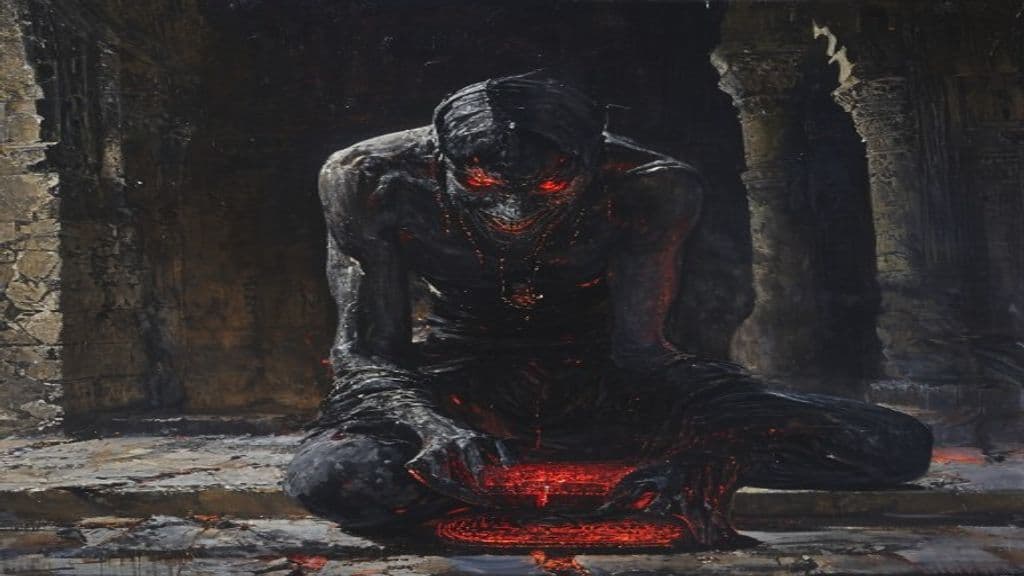
Shaitan
A class of corrupted djinn who follow Iblis and dedicate themselves to leading humans astray — distinct from Iblis himself, the Shayatin are a species of evil djinn who whisper doubts and temptations into the minds of the living.

Lamia
A child-devouring demon of Greek mythology — once a queen of Libya and lover of Zeus, driven mad by Hera's destruction of her children and transformed into a monstrous hunter of other women's children.
Community Record
- [1]Names of God in Judaism. Wikipedia, entry 'Names of God in Judaism'.wiki
- [2]God in Judaism (Wikidata). Wikidata item 'God in Judaism'.other
- [3]Červený stan 85 - 2019-07-17 Thu-Hien Poma of Adonai. Archive.org program listing referencing 'Adonai' in title/description.other
- [4]Dec 18 – Advent Feria / S Gatian (O Antiphons: O Adonai). Archive.org item referencing the Advent antiphon 'O Adonai' and related meditations.other