
Alcestis is presented in Greek myth as a daughter of Pelias and a princess of Iolcus who becomes the wife of Admetus of Pherae. In the narrative preserved in classical sources and summarized in the provided materials, Admetus receives from Apollo the chance to avoid a fated death through a bargain with the Fates that permits a willing substitution. When Admetus’ appointed time of death approaches, Alcestis alone comes forward to die in his stead. Her sacrifice and subsequent retrieval from the underworld by Heracles — who fights Thanatos to recover her as a token of gratitude for Admetus’ hospitality to the hero — form the core episodes of her tale.
The supplied sources do not give a detailed physical description of Alcestis (clothing, coloration, stature, or distinguishing marks). She is described by social identity and familial ties: a princess of Iolcus and “the fairest among the daughters of Pelias” in summaries of the tradition. The emphasis in surviving summaries is on her role and actions rather than on corporeal detail.
Alcestis is not described as possessing supernatural powers. Her principal notable action is moral and volitional: she voluntarily sacrifices her life to save her husband, a deed recorded as central to her identity. After Heracles restores her to the mortal realm, sources report that she is temporarily unable to speak and must undergo a three-day period of silence until she is purified of her debt to the chthonic gods. Beyond these narrative features — sacrificial courage and a post-return ritual constraint — the provided materials do not ascribe other extraordinary abilities to her.
Weaknesses
- conditionmortality (vulnerable to death and debt to chthonic powers)
- conditionpost-underworld impurity requiring purification (three-day silence reported)
Wards
- othernone attested
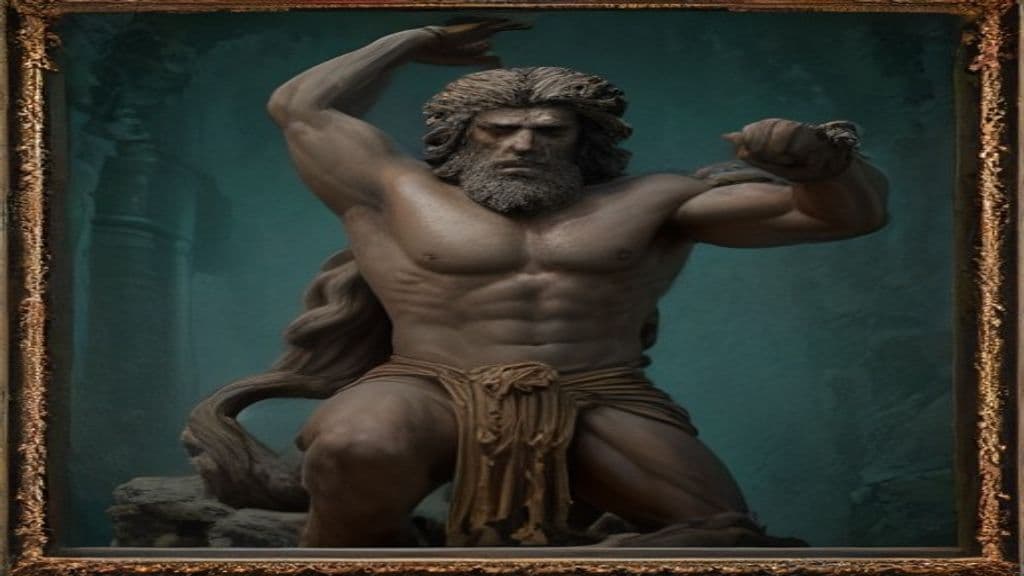
Heracles
Heracles is the greatest hero of Greek myth whose career bridges mortal hero-cult and full divinization. Celebrated for his Twelve Labours, martial prowess, and travels between the mortal world, the underworld, and Olympus, he functioned as a civic patron, ancestor of royal lines (the Heracleidae), and object of cult that treated him both as chthonic hero and as god.
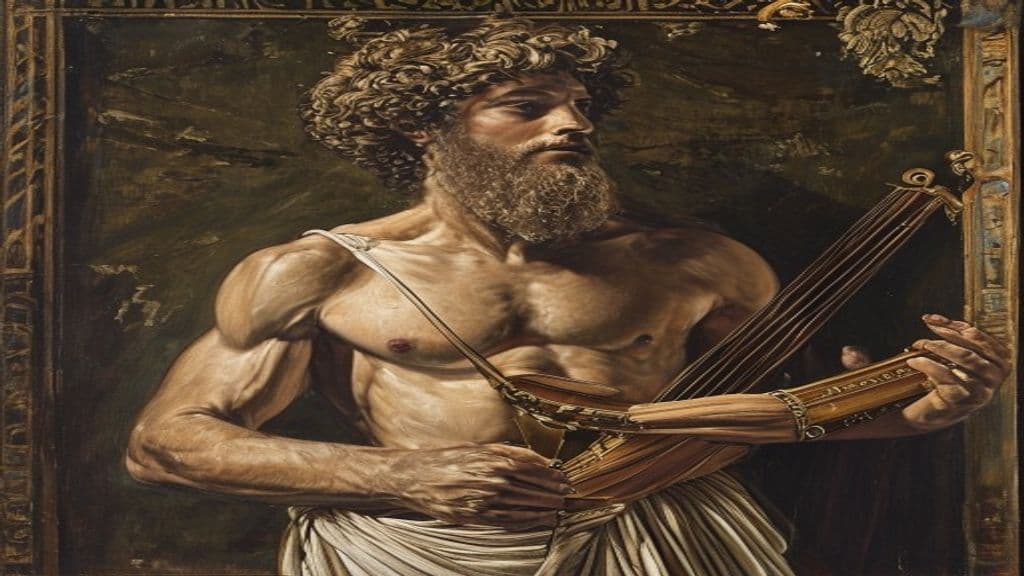
Apollo
Olympian deity of ancient Greek religion associated with prophecy, healing, music, archery, purification, and civic order. Principal patron of the Delphic oracle, protector of youth and flocks, and ambivalently both healer and bringer of plague.

Admetus
Admetus is a mortal king of Pherae in Thessaly in the Greek tragic tradition (notably Euripides' Alcestis). His life becomes the subject of a divine bargain in which Apollo intervenes to delay his appointed death, a bargain that requires another to die in his stead — most famously his wife Alcestis.
Acacallis
Acacallis (Ancient Greek: Ἀκακαλλίς; also Acalle) is a mythological princess of Crete in Greek tradition, daughter of King Minos and Pasiphae. She functions primarily as a dynastic and etiological figure: in varying accounts she is mother, by gods such as Hermes (Mercury) or Apollo, of eponymous or founder-figures like Cydon (founder of Cydonia), Miletus, or Lydon/ Lydus.
Acanthis
Acanthis is a young woman in Greek myth, daughter of Autonous and Hippodamia, who is transformed into a thistle finch by the gods as an etiological explanation for the bird's name. The story is preserved chiefly in Antoninus Liberalis' Metamorphoses and summarized in modern reference works.
Acaste
Acaste (Ancient Greek: Ἀκάστη) is a named Oceanid — one of the daughters of the Titans Oceanus and Tethys — recorded among the companions of Persephone at the moment of her abduction; the name also appears separately as a nurse of the daughters of King Adrastus of Argos in later genealogical lists.
Achaeus
Achaeus (Ancient Greek: Ἀχαιός, Akhaiós) is an eponymous personal name borne by three mythological human figures in Greek tradition; best attested is Achaeus, son of Xuthus and Creusa, brother of Ion and grandson of Hellen, who is named as father of Archander and Architeles in Pausanias. The name is glossed as meaning "griever," from ἄχος (achos, "grief, pain, woe").
Aegle
Aegle (Ancient Greek: Αἴγλη, 'brightness' or 'dazzling light') is a name applied to several distinct female figures in Greek myth: a daughter of Asclepius associated with health, a Naiad mother of the Charites by Helios and Neaera, one of the Heliades transformed into a poplar after Phaeton's death, a named Hesperid, an alternate name for Coronis in some traditions, a daughter of Panopeus beloved by Theseus, and a nurse of Dionysus. The recurrence of the name links these figures by the themes of brightness, beauty, and filial or nymph-like status rather than by a single unified identity.
Aello
Aello (Ancient Greek: Ἀελλώ) is a named figure in Greek myth primarily attested as one of the Harpies—winged female personifications of storm-wind who harry, snatch, and torment. The name also appears in variant lists as applied to an Actaeonian hunting dog, showing onomastic fluidity in the tradition.
Agaptolemus
Agaptolemus (Ancient Greek: Ἀγαπτόλεμος) is a mythic Greek prince, one of the fifty sons of King Aegyptus, best known as the husband of the Danaid Pirene who, like most of the Danaids, slew her husband on their wedding night at the command of her father Danaus.
Agave
Agave (Ancient Greek: Agaue/Agaúē) is a personal name borne by at least two distinct figures in Greek myth: a Nereid (one of the fifty sea-nymph daughters of Nereus) and a Theban princess, daughter of Cadmus, who appears in myths connected with Dionysus. The name is glossed in Greek sources as 'illustrious', 'noble', or 'high-born'.
Agrius
Agrius (Ancient Greek: Ἄγριος, 'wild') is an onomastic figure in Greek myth whose name is applied to multiple distinct personae—including a Giant, a centaur, a bear‑born twin, a princely son, a suitor of Penelope, and one of Actaeon's dogs—rather than a single unified supernatural being. Each attestation places an Agrius in different narrative registers (Gigantomachy, Heracles' labors, heroic genealogies, the Odyssean cycle, and the Actaeon hunt).
Agron
Agron (Ancient Greek: Ἄγρων, 'wild' or 'rustic') is a human/mortal figure attested in the summary of Antoninus Liberalis' Metamorphoses (as presented on Wikipedia) who, because of impiety toward certain gods, is transformed by Hermes into a plover. The tale functions as an etiological metamorphosis and moral exemplum about observing cult obligations.
Aitolos
Aitolos is a name that appears in Greek-language traditions referring to two distinct figures: Aetolus, a mythic genealogical ancestor in classical Greek myth (son of Endymion, descendant of Deucalion), and Kosmas Aitolos (St. Cosmas of Aetolia), a historical/hagiographic Orthodox teacher whose collected writings emphasize pastoral and ascetical themes. The sources do not present Aitolos as a single folkloric supernatural being.
Alcippe
Alcippe (Ancient Greek: Alkippe / ᾿Αλκιππή) is a personal name applied to multiple distinct female figures in Greek mythic genealogies—including a daughter of Ares, an Amazon, and one of the Alcyonides—rather than a single uniform supernatural being.
Community Record
- [1]Alcestis — Wikipedia. Wikipedia: Alcestis. Summary of mythic narrative including her voluntary substitution, Heracles' rescue, and the three-day purification.wiki
- [2]Alcestis — Wikidata entry. Wikidata item for Alcestis (also notes other uses of the name).other
- [3]Children of the dawn; old tales of Greece — table of contents (archive.org). Table of contents indicates inclusion of "The sacrifice of Alcestis" among English-language retellings.literary
- [4]The earthly paradise; a poem — table of contents (archive.org). Table of contents lists chapters such as "Love of Alcestis. Lady of the land," demonstrating the tale's presence in poetic collections.literary