No mythic origin story for Alignak is attested in the supplied sources. The available references are encyclopedia-style entries that list Alignak's domains (moon, weather, water, tides, eclipses, earthquakes) but do not record a creation narrative, genealogical placement, or mythic episodes. Beyond being labelled an Inuit deity in modern reference material, the sources do not situate Alignak within a larger traditional origin account.
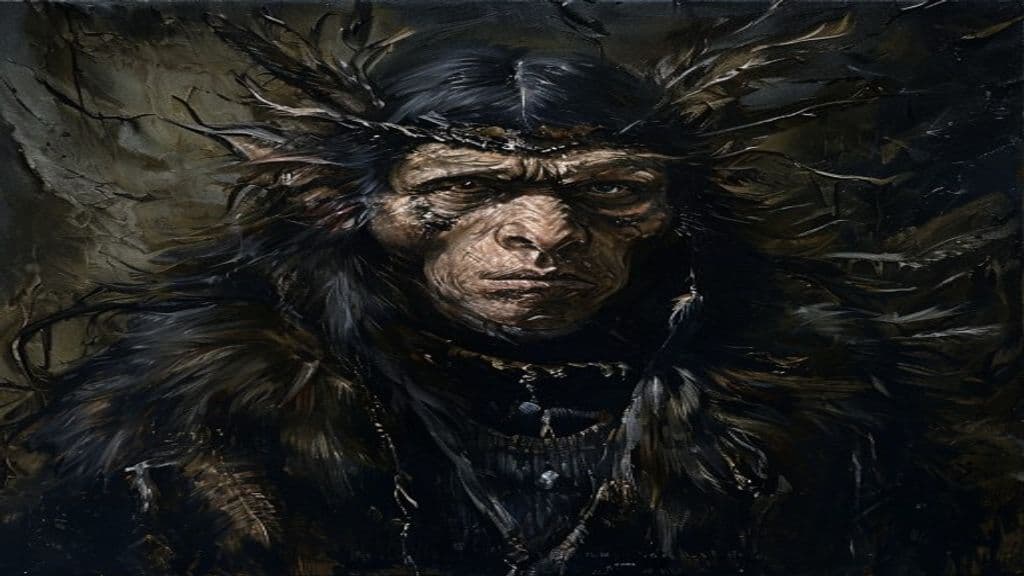
The supplied materials do not provide any physical description, iconography, or typical representation of Alignak. Encyclopedia entries and database labels cite only Alignak's domains and do not describe anthropomorphic or zoomorphic form, attire, attributes, or symbolic imagery. Therefore no reliable visual description is available from the cited sources.
Sources consistently associate Alignak with lunar functions and several environmental phenomena: lunar deity; god of weather; god of water and tides; and linked to eclipses and earthquakes. The references name these domains but do not specify the mechanisms, limits, narratives of action, or typical behaviors by which Alignak affects those phenomena. Whether Alignak is invoked, propitiated, or feared in specific ways is not documented in the provided materials.
Weaknesses
- otherNo weaknesses attested in supplied sources
Wards
- otherNo protective rituals or wards attested in supplied sources
Adlet
A category of non-human peoples in Inuit narrative tradition (also rendered Erqigdlet/Irqigdlit) that functions both as a mythic ancestor-race and as dog‑legged antagonists; the term can denote inland native American peoples or half‑canine humanoids depending on regional usage.
Aipaloovik
Aipaloovik is an Inuit sea-associated supernatural being described in available sources as an evil or dangerous water deity linked to death and hazard for fishermen. The figure is described as the opposite of the being Anguta; beyond this brief characterization the cited sources provide no detailed myths, appearance, or ritual corpus.
Akhlut
An Inuit composite, shape‑changing animal‑spirit described in early ethnographic accounts as an orca that can become a wolf on land (and sometimes depicted in later popular media as a wolf‑orca hybrid). Associated with the seashore and ice edge along the Bering Sea, it is portrayed as powerful and dangerous in the cited sources.
Amarok
In Greenlandic Inuit tradition the Amarok (also Amaroq) is a singular, gigantic wolf-like spirit said to hunt alone and to interact powerfully with humans: stalking and devouring lone nocturnal hunters, wresting with humans to bestow strength in Rink's tales, and — in another tale — dragging a humanoid from the water and taking a mourner's soul. The term in some dialects is reserved for this legendary wolf, while other Arctic peoples may use the word for ordinary wolves.
Amautalik
Amautalik is a child‑stealing ogress from Inuit folktale collections and modern retellings. Presented in story collections, illustrated books, graphic novels, and short films, she functions as a monstrous threat who carries away children and haunts communities, and whom protagonists overcome through luck, courage, and ancestral knowledge.
Anguta
Anguta is an ancestral/parent figure in Inuit cosmology associated with the sea-goddess Sedna and the underworld Adlivun. Different traditions variously portray him as a creator or supreme being (especially in some Greenlandic accounts), a mortal ancestor, and most consistently as a psychopomp or lord of the dead who ferries souls and supervises part of the afterlife journey.
Apanuugak
Apanuugak is an Inuit legendary figure presented in modern summaries as a culture-hero who is narratively ambivalent: sometimes an error-prone or long-lived warrior and elsewhere depicted as a dastardly villain or cunning trickster.
Arnapkapfaaluk
A fearsome sea-being of the Coronation Gulf Copper Inuit who controls access to seals and other marine mammals; she withholds game as punishment for taboos or indiscretions and thus governs hunters' success.
Aulanerk
Aulanerk is an Inuit sea spirit attested in several short ethnographic and reference summaries as a benevolent sea-being who lives in the ocean and is responsible for producing waves and surf; he is also described as helping hunters by working with other sea powers to lead them to seals.
Caribou Mother
An Inuit deity described as the maternal source and protector of caribou herds and, in some texts, the owner of all land animals. She is depicted as ancient and gigantic and is implicated in regulating human behaviour toward animals, especially in the context of hunting.
Eeyeekalduk
Eeyeekalduk is identified in multiple compiled references as an Inuit supernatural figure associated with medicine, healing, and good health. The available sources list the name among Inuit deities or pantheons but provide no primary ethnographic detail about myths, rituals, or iconography.
Goose Wife
A bird‑woman figure from Inuit and other Arctic oral traditions who alternates between human and avian form by removing or donning a feathered skin; she may become a human wife when her skin is taken and later return to the bird realm by reclaiming or fashioning feathers.
Community Record
- [1]Alignak — Wikipedia. Wikipedia, entry 'Alignak' — states Alignak is a lunar deity and god of weather, water, tides, eclipses, and earthquakes.wiki
- [2]Alignak — Wikidata. Wikidata entry Q2742049 — labels Alignak as 'Inuit deity'.wiki
- [3]L'ourson des neiges (mention). Archive item: modern French-language children's novel summary uses Alignak as a personal name for a young Inuit character; cited here only to note modern literary use, not traditional mythic content.literary
- [4]Thingiverse: Skyrim Dwarven Hand Axe Split (mention). Archive item contains an unrelated mention of the name Alignak and provides no ethnographic detail.other
- [5]International Email Audio Art Project Volume 6 (mention). Archive item includes a modern, non-ethnographic use of the name Alignak and offers no traditional information.other