
No mythological origin story or narrative biography is preserved in the attested material. Almáttki áss appears only as a formulaic epithet within a legal oath in Landnámabók; later scholarly literature proposes identifications (Thor, Ullr, Odin, Týr) or suggests the phrase could reflect a Christianizing scribe's language, but these remain conjectural and are not present in the primary attestation.
There are no physical descriptions or iconographic details in the sources. The figure is attested only as a named epithet within an oath formula; no anthropomorphic traits, garments, or symbols are described.
The only attested function is liturgical: Almáttki áss is invoked as the divine guarantor/witness in a legal oath sworn on a temple ring in Landnámabók. The sources do not ascribe independent actions, narratives, or powers beyond this oath-confirming role.
Weaknesses
- otherNo weaknesses attested in the sources
Wards
- otherNo warding or protective practices against Almáttki áss are attested; the deity is invoked for oath-binding rather than treated as a hostile force
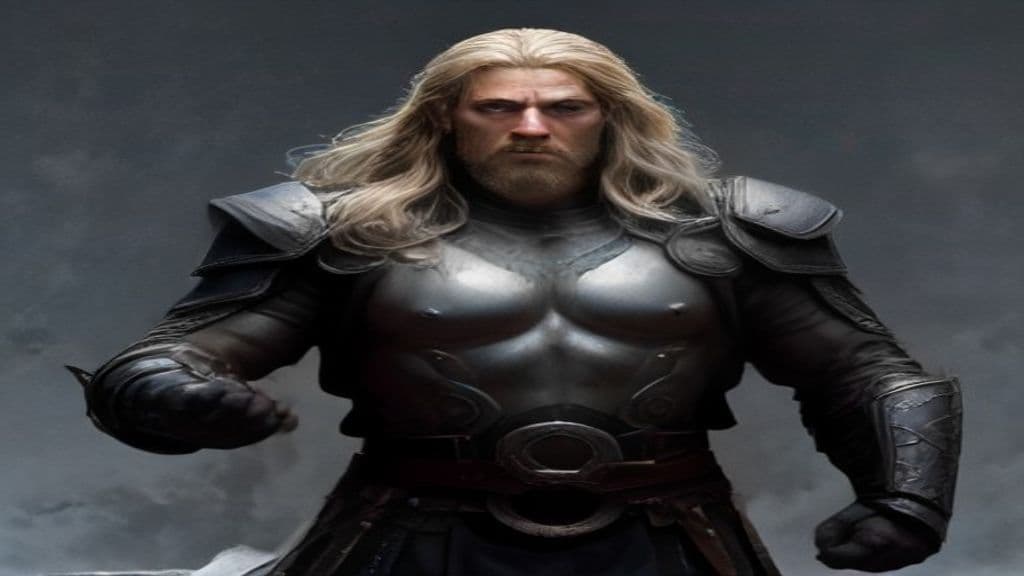
Thor (Þórr)
Thor (Old Norse Þórr) is a central god in the pre-Christian Germanic/Norse religious framework, primarily associated with thunder, storms, strength, protection, fertility, and the welfare of farmers. He is a hammer-wielding warrior who fights monstrous enemies (notably Jörmungandr) and is widely attested from Roman-era Germania through the Viking Age, with ongoing cultural presence in personal and place-names and weekday nomenclature (Thursday).
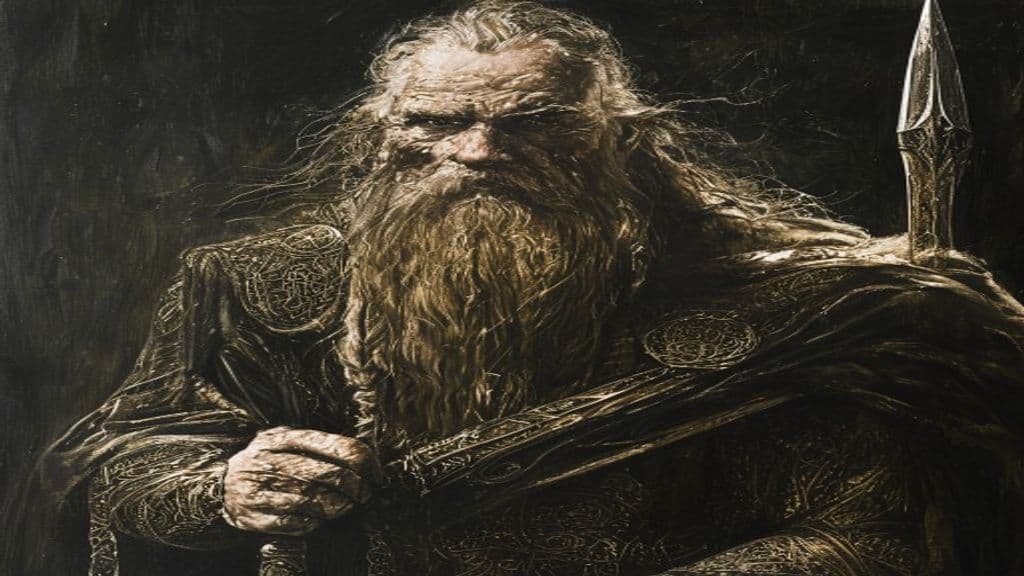
Odin
Odin (Old Norse: Óðinn) is the chief god of the Norse (Æsir) pantheon, a multifaceted deity associated with wisdom obtained by sacrifice, poetic inspiration, death and warfare, and rulership over the hall Valhöll where chosen slain warriors (einherjar) dwell. He appears throughout Germanic tradition from Roman-era accounts through the Viking Age and in later folklore as leader of the Wild Hunt.
Alloces
Alloces (also spelled Allocer, Alocer, Allogor, Algor) is a named ducal spirit in post-medieval Western grimoire tradition, listed among the spirits of the Goetia (the Lesser Key of Solomon) and attested in variant form in the Liber Officiorum Spirituum. He is presented as an evocable intelligence who teaches sciences, commands legions of spirits, and appears with differing visual descriptions across sources.
Allochrocebus
Allochrocebus is a zoological genus of Old World monkeys known as the terrestrial guenons, containing species such as L'Hoest's monkey, Preuss's monkey, and the sun-tailed monkey. The genus was split from Cercopithecus in recent taxonomic treatments and comprises ground-oriented guenon species native to Central and West African forests.
Alluttu
Alluttu is not attested in the provided source as a mythic or personal supernatural being; the name appears in the context of Babylonian star catalogues and therefore should be understood as an astronomical/catalogue designation rather than a described spirit or deity in the cited material.
Almaqah
Almaqah was the principal national deity of the ancient Sabaean kingdom (Saba') in southwestern Arabia, venerated as a celestial tutelary god with strong dynastic, oracular, and vegetative associations. His main cultic center was the Awwam Temple near Marib; his worship extended into the northern Horn of Africa (Dʿmt, Aksum). Scholarly treatments debate whether his primary identification is lunar, solar, or syncretic.
Almas
Almas is presented in the provided source as a Mongolian 'wildman' reported in folklore and modern anecdote and treated within the modern subculture of cryptozoology as a disputed cryptid. The source frames Almas not as an established element of Mongolian cosmology but as an entity whose existence is unsubstantiated by mainstream science and discussed primarily in anecdotal and folkloric terms.
Almo
Almo is attested in the provided sources as a river-deity named for the ancient River Almone near Rome. The supplied material identifies Almo only by name and by association with that river; no detailed myths, rites, iconography, or powers are recorded in the provided documents.
Aloadae
The Aloadae (Otus and Ephialtes) are twin, exceptionally large brothers of Greek myth—variously portrayed as gigantic, hubristic challengers to the Olympian order and as local culture-bringing founders and worshipers of the Muses. Traditions report prodigious growth and strength, an attempt to scale the heavens by stacking mountains, the capture of Ares in some versions, and several differing accounts of their deaths or posthumous punishment.
Aloeus
Aloeus (Ancient Greek: Ἀλωεύς), sometimes rendered Haloeus, is a mytho-historical/genealogical figure in Greek tradition. Two distinct personages appear in sources: a Thessalian prince (son of Poseidon and Canace) connected to the Aloadae, and a son of Helios associated with sovereignty in Asopia (Sicyon). He functions as an eponymous ancestor and local founder-figure rather than as a supernatural actor.
Aloja
Aloja is listed in available sources as a named figure in Catalan legend; beyond a brief disambiguation listing, traditional folkloric details are absent in the consulted material. A contemporary commercial design note reinterprets Aloja as a Mediterranean/sea goddess with energetic yet tender character, but this is explicitly a modern creative description rather than documented folk belief.
Alope
Alope is a mortal woman from Greek myth who, after bearing a child by Poseidon and suffering familial punishment, is transformed by the god into a spring that bears her name. Her story functions etiologically to explain local toponyms (a spring and a town named Alope) and a memorial monument on the road from Eleusis to Megara.
Alp
A German nightmare demon — often the projected spirit of a living person — who sits on sleeping victims' chests causing terrifying dreams, sleep paralysis, and wasting illness.
Alp
A German-speaking folkloric figure associated with nocturnal disturbance of sleepers. Historically tied to the broader Germanic family of 'elves' and treated variously as an eerie nature-being in medieval glosses and as a male nocturnal spirit in later folk accounts that sits on sleepers' chests and causes nightmares (Alptraum) and 'elf-pressure' (Alpdruck).
Community Record
- [1]Almáttki áss — Wikipedia. Wikipedia: 'Almáttki áss (the almighty áss 'god') is an unknown Norse god evoked in an Icelandic legal oath sworn on a temple ring, mentioned in Landnámabók (Hauksbók 268).' — summary and discussion of scholarly identificationswiki
- [2]Wikidata: Almáttki áss. Wikidata entry referencing the attestation of Almáttki áss in Landnámabók and related scholarshipother