There is no single origin story for Alphesiboea: the name is borne by multiple mythic women in different local traditions. In Arcadian/Psophian tradition she is a daughter of King Phegeus who married Alcmaeon and later was deserted when Alcmaeon took Callirhoe; following Alcmaeon's murder (variously attributed to Phegeus or his sons), this Alphesiboea killed her brothers in revenge. In variant genealogies she is named as wife of Pelias (a less common identification compared with other names for Pelias's spouse). Another account describes an 'Indian nymph' Alphesiboea who refused Dionysus until the god transformed into a tiger and carried her across the river Sollax, an episode which in that tradition leads to the river being called Tigris and to the birth of Medes; yet another tradition lists her as mother of Adonis by Phoenix.
The sources provide no consistent physical description for Alphesiboea. Each attested figure is identified by relationships and narrative role (daughter of Phegeus; wife of Alcmaeon; daughter of Bias and Pero in the Pelias variant; an Indian nymph pursued by Dionysus) rather than by corporeal traits. Descriptions in the available summaries emphasize genealogical position and actions (marriage, motherhood, revenge, resistance to a god) rather than clothing, stature, or other visual markers.
No explicit supernatural powers are attributed to the mortal Alphesiboea figures in the supplied material. Their notable behaviors are social and narrative: marriage and motherhood (one tradition names her mother of Adonis by Phoenix), participation in dynastic episodes (as wife of Alcmaeon, or—variant—wife of Pelias), and active vengeance (the Psophian Alphesiboea is said to have killed her brothers in revenge for her husband's murder). One attested variant describes an 'Indian nymph' Alphesiboea, which identifies that bearer as a supernatural nymph figure in the narrative; the account records her resistance to Dionysus and his use of transformation (into a tiger) to compel her, but the sources do not ascribe independent magical powers to her beyond her status as a nymph.
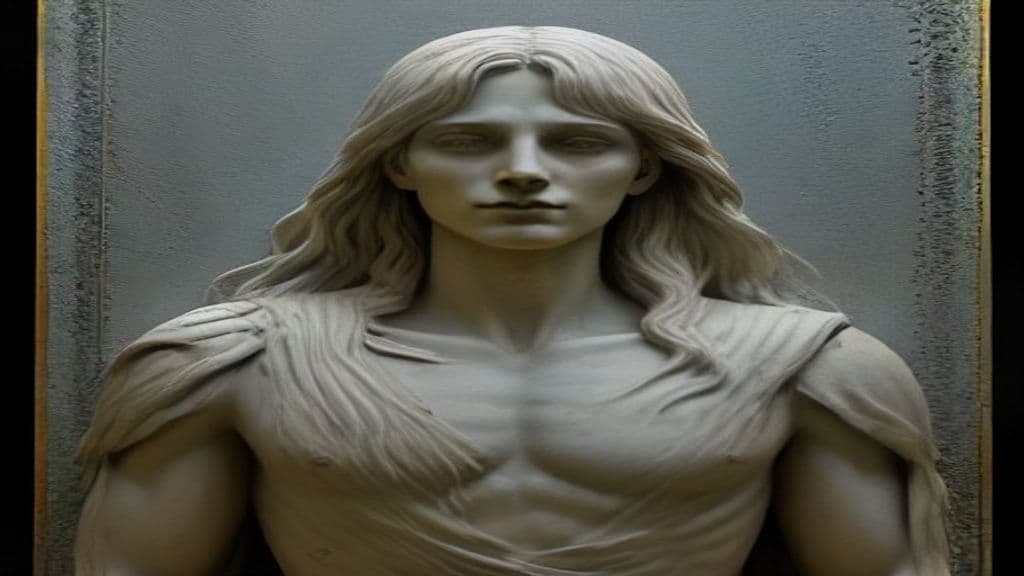
Pelias
Pelias (Πελίας) is a mortal king of Iolcus in Greek myth who usurped power in Thessaly, sent Jason to fetch the Golden Fleece, and was ultimately killed through Medea's deception when his daughters dismembered him in an attempted false rejuvenation.

Callirhoe
Callirhoe (also Callirrhoe, Callirhoé) is a name attested across Greek myth, classical literature, toponymy, and botanical taxonomy. The provided sources do not present Callirhoe as a single supernatural spirit or consistent cosmological entity; instead the name refers to several mythological characters, an ancient Greek novel and its artistic adaptations, a place with baths near the Dead Sea, and a genus of mallow-family plants used in horticulture and traditional herbal practice.

Dionysus
Dionysus (Ancient Greek: Διόνυσος) is a major ancient Greek deity associated with wine and winemaking, vegetation and fertility, festivity and theatre, ritual ecstasy and possession, and liminal links with death and the underworld. He is an epiphany-god who travels between worlds, whose cult includes ecstatic rites and mystery initiation.
Community Record
- [1]Alphesiboea — Wikipedia. Wikipedia, 'Alphesiboea' (summary of multiple classical attestations and variants)wiki
- [2]Alphesiboea — Wikidata. Wikidata item Q59280244 (identifies homonymous modern taxonomic usage)other
- [3]The Kings of Athens (Archive excerpt referencing Apollodorus and mythographic tradition). Archive.org LP0037, contextual mythographic material related to the mythic cycles in which figures like Alcmaeon and Phegeus appearliterary