
The materials supplied do not present a unified mythic origin for Callirhoe as a single supernatural being. Instead, several figures in Greek mythology bear the name Callirrhoe; Chariton's ancient Greek novel Chaereas and Callirhoe centers on a heroine named Callirhoe and gave rise to later operatic and ballet adaptations. Separately, the toponym Callirrhoe denotes baths near Zareth-shahar on the eastern shore of the Dead Sea. The botanical genus Callirhoe was named in modern taxonomy and includes multiple North American species; ethnobotanical notes record traditional medicinal uses for roots of Callirhoe involucrata.
No consistent supernatural appearance is described in the provided sources. Mythological and literary usages imply human characters named Callirhoe but no physical descriptions are excerpted. For the plant genus Callirhoe, species descriptions are available: Callirhoe involucrata is a sprawling perennial forb with stems to about 50 cm, pubescent surfaces, flowers with bracts beneath the calyx; Callirhoe pedata produces solitary inflorescences reaching up to 100 cm with petals showing slightly fringed edges; Callirhoe bushii is a tuberous perennial with ascending pubescent stems to ~50 cm.
The supplied corpus does not ascribe supernatural powers, behaviors, or interactions to any single entity named Callirhoe. Botanical and ethnobotanical properties are documented for the plant genus: habitat preferences for sun and dry sandy soils, perennial life cycles with summer flowering, and traditional medicinal actions such as a root decoction used for internal pain and smoke from burnt dried root used topically or inhaled (for Callirhoe involucrata).
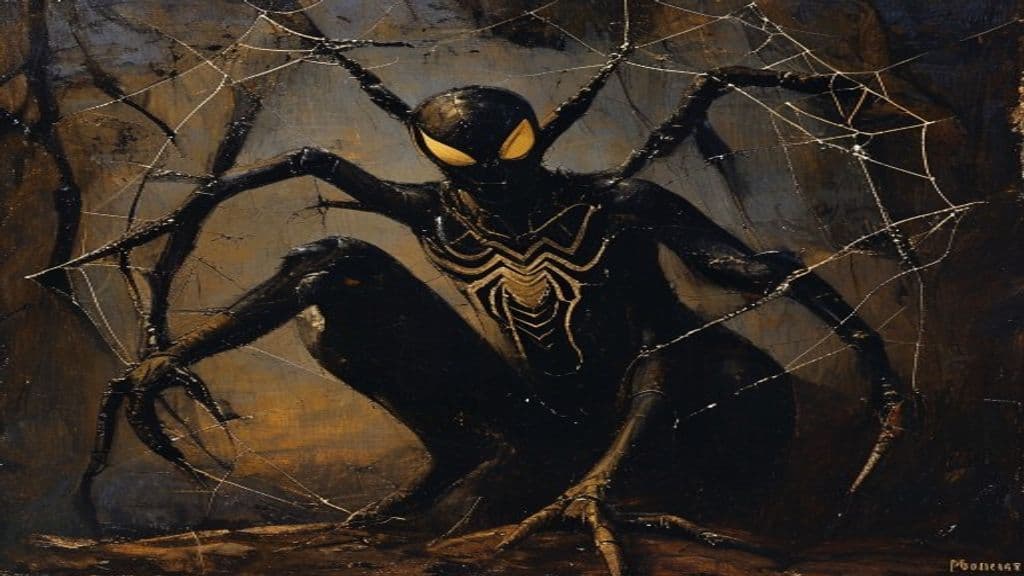
Anansi
The spider trickster god of Akan folklore — cunning, mischievous, and wise. Keeper of stories and teacher of human beings, brought through the slave trade into Caribbean and African-American tradition.

Banshee
A female spirit of Irish and Scottish folklore whose wail heralds an impending death in a family of Gaelic descent. Not a cause of death — a witness to it.
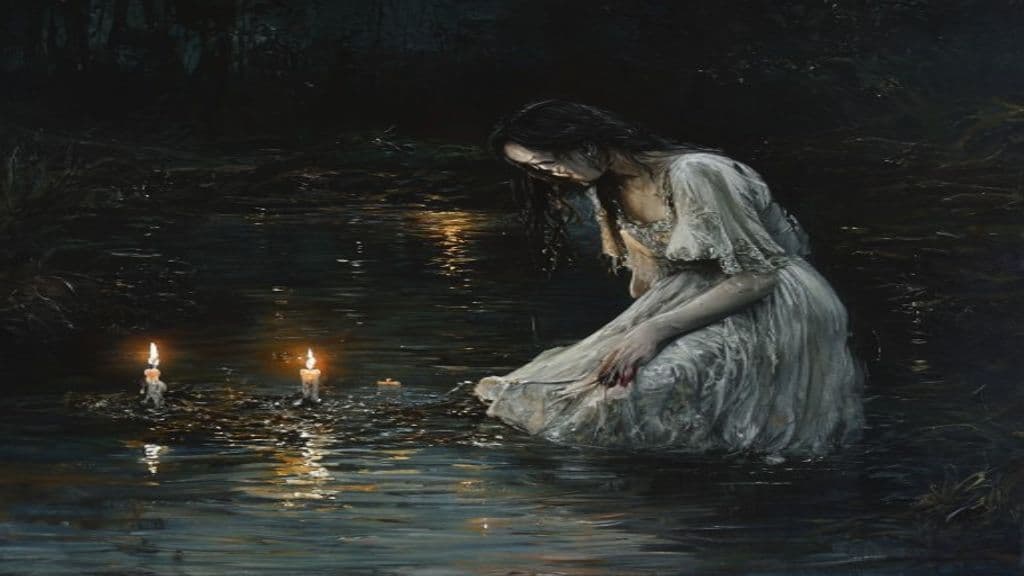
La Llorona
The Weeping Woman of Mexican folklore — the ghost of a mother who drowned her children and now wanders rivers and lakes, weeping for them and taking other children she finds at night.

Rusalka
Water spirits in Slavic folklore — the spirits of young women who died by drowning or suicide, bound to rivers and lakes. Beautiful and dangerous, they can bewitch men to their deaths.

Naga
Divine serpent beings of Hindu, Buddhist, and Jain cosmology — powerful guardians of water, earth, and underground treasures. Revered as deities in South and Southeast Asia.

Apsara
Celestial dancers and water nymphs of Hindu cosmology — beautiful semi-divine beings who dance at the court of Indra and, by his command, descend to earth to distract sages from excessive asceticism.
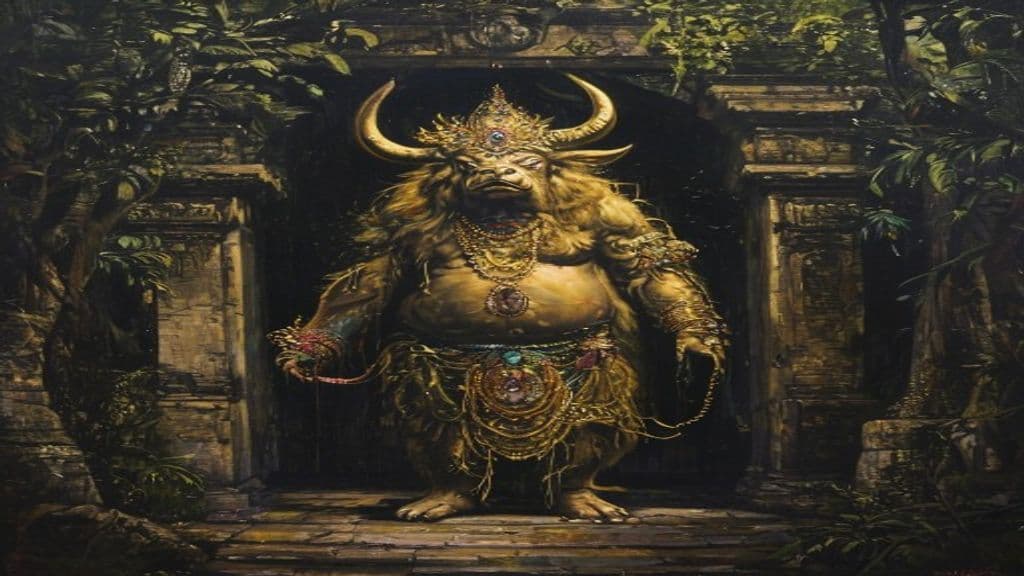
Yaksha
Nature spirits of Hindu, Buddhist, and Jain cosmology — guardians of forests, treasures, and wilderness. Ambivalent beings, capable of great benevolence to the respectful and terrible harm to the greedy.
Cephalus
Cephalus (Ancient Greek: Κέφαλος) is an ancient Greek masculine personal name borne by several mythological and literary figures. In surviving sources he appears as a hunter, husband of Procris, a beloved of the dawn-goddess Eos in some traditions, a son in varying genealogies, and as a named interlocutor in Plato's Republic rather than as a class of supernatural being.
Medea
Medea is a mythic Greek woman of royal lineage associated with practiced pharmakeía (drugcraft) and ritual knowledge; in epic she functions as the helper who enables Jason's success, and in tragedy she becomes a transgressive avenger whose actions include murder. Sources present her variably as mortal with divine ancestry (granddaughter of Helios) and as a skilled worker in magical substances and rites often linked in literature to Hecate.
Minos
Minos is a legendary Cretan king in ancient Greek myth, remembered as a lawgiver and founder of Cretan naval power in life and as one of the three judges of the dead in Hades after death. Classical sources present him as a semi-divine, politically powerful mortal (son of Zeus and Europa) whose authority is both terrestrial and judicial in the afterlife.
Niobe (Argive)
Niobe is a mortal figure of Greek myth, daughter of Tantalus and wife of Amphion, famed for boasting of her many children and for grieving them when Apollo and Artemis slew the Niobids; she is transformed into a perpetually weeping rock on Mount Sipylus in later tradition.
Callianassa
Callianassa (Ancient Greek Καλλιάνασσα, Kallianassa, 'lovely/beautiful queen') is attested as one of the approximately fifty Nereids — sea‑nymph daughters of Nereus and Doris — in ancient Greek mythic catalogues. She is named in lists and reference works but has no independent myths or distinct cultic attributes recorded in the supplied sources.
Callianeira
Callianeira (Ancient Greek: Καλλιάνειρα) is one of the fifty Nereids in Greek mythology, the sea‑nymph daughters of the sea‑god Nereus and the Oceanid Doris. She is named among the Nereids who appear to Thetis in epic tradition and otherwise functions as an individual member of the collective group of marine nymphs.
Calliope
Calliope (Greek Καλλιόπη) is one of the Muses in ancient Greek myth, traditionally presiding over eloquence and epic poetry. She is portrayed as an immortal divine inspirer and instructor of poetic composition, called 'Chief of all Muses' in classical sources and invoked by later poets for epic authority.
Calliphaea
Calliphaea (Ancient Greek Καλλιφάεια, Kalliphaeia) is a naiad of Greek tradition, one of the Ionides sisterhood associated with a healing spring on the River Cytherus (Kytheros) in Elis. Her spring waters were locally venerated for their curative properties for diseases and aches and pains.
Callirrhoe (Oceanid)
Callirrhoe (Καλλιρρόη, Kallirrhoê) is an Oceanid — a daughter of the Titans Oceanus and Tethys — whose name literally means "beautiful flow" or "beautiful stream." She functions in Greek myth as a water-nymph (naiad/Oceanid) and appears in genealogical contexts, notably as the mother of Chione by the river-god Nilus in some traditions.
Calliste (Kalliste / Callistis)
Calliste (Ancient Greek Kalliste/Callistis, 'the most beautiful') is a local Aegean sea-nymph figure tied to the island called Kalliste (modern Santorini). In surviving summaries she appears as a youthful woman who was given to the Argonaut Euphemos as a clod of earth which transformed into a woman; she is also attested as a surname/epithet (Calliste/Callistis) applied to other goddesses such as Artemis in cultic contexts.
Callisto
Callisto is a figure from Greek mythology described as an Arcadian mountain nymph (Oread) whose life is altered by the Olympian gods: she is seduced by Zeus, becomes mother of Arcas, is transformed into a bear (in many accounts by Hera's jealousy), and is ultimately placed among the stars as a constellation. She functions as a nature-spirit, an ancestral/etiological figure for Arcadia, and a mythic explanation for a bear-shaped constellation.
Callithyia
Callithyia (Ancient Greek: Καλλίθυια), also called Callithoe, Callithea, or Io, is an Argive princess in Greek mytho-historical tradition described as the first priestess of Hera at Argos. She functions as a foundational, legitimating figure for the local Hera-cult rather than as a supernatural being.
Community Record
- [1]Callirrhoe - Wikipedia. Wikipedia: Callirrhoe (disambiguation) entrywiki
- [2]Callirhoe (novel) - Wikipedia. Wikipedia: Callirhoe (novel) entrywiki
- [3]Callirhoé - Wikipedia. Wikipedia: Callirhoé (opera) entrywiki
- [4]Callirrhoe (Jordan) - Wikipedia. Wikipedia: mentions Callirrhoe (Jordan), site of baths near Zareth-shahar on the eastern shore of the Dead Seawiki
- [5]Callirhoe involucrata page - MissouriPlants. MissouriPlants: species description for Callirhoe involucrataother
- [6]Callirhoe bushii page - MissouriPlants. MissouriPlants: species description for Callirhoe bushiiother
- [7]Clustered Poppy-mallow (Callirhoe triangulata) - Minnesota Wildflowers. MinnesotaWildflowers: habitat and identification notes for Callirhoe triangulataother
- [8]Callirhoe pedata images - University of Texas. University of Texas botanical image and notes for Callirhoe pedataother
- [9]Callirhoe involucrata images - University of Texas. University of Texas botanical image and notes for Callirhoe involucrataother
- [10]POPPY MALLOW - Callirhoe involucrata (medicinal notes). NaturalMedicinalHerbs: ethnobotanical uses (root decoction; smoke from dried root)other
- [11]Callirhoe - Wikidata. Wikidata item for Callirhoe (genus / name)wiki
- [12]Archive: Chariton - Callirhoe. Archive.org: digitized texts of Chariton's Callirhoe/related materialsliterary
- [13]Archive: Chariton & Longos - Chaereas si Callirhoe; Dafnis si Cloe. Archive.org: edition containing Chariton's Chaereas and Callirhoeliterary