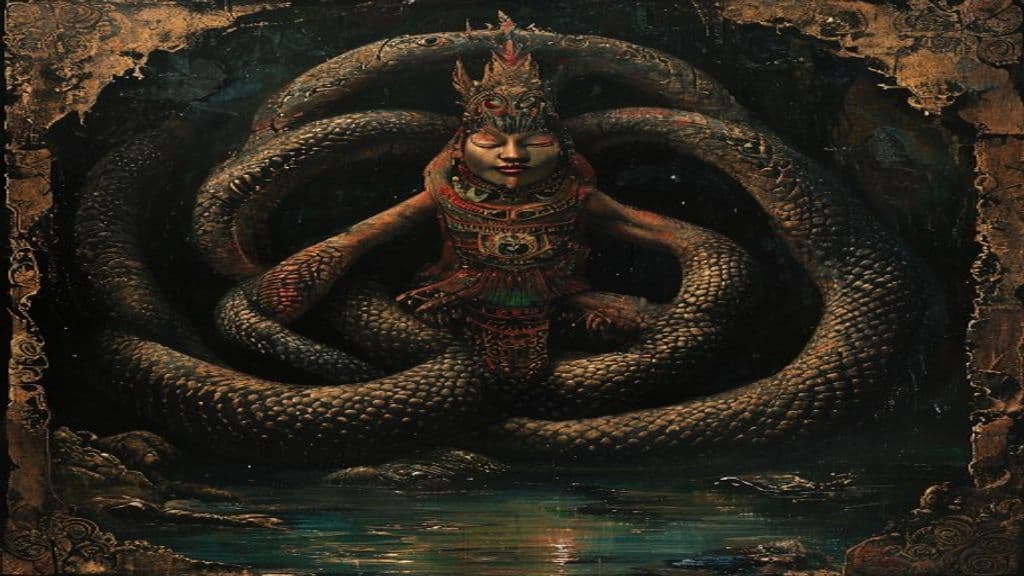
Amaru is described as a huge double-headed serpent.
Amaru has the ability to traverse worlds, allowing it to navigate different dimensions.
Atoq (Andean fox spirit) — Untested attestation
Atoq is presented in some modern summaries as an 'Andean fox spirit' associated with Inca-related material, but the single provided source (a general overview of Inca mythology) does not itself attest specific information about Atoq. This entry therefore limits claims to what the supplied source supports and notes absent evidence where appropriate.
Ayar Cachi
In Inca mythology, Ayar Cachi is one of the brothers of Manco Cápac and a significant figure in the origin myth of the Incas. (Note: 1. Power tier: Lower to Ancient (deity-level) since Ayar Cachi is described as one of Manco Cápac's brothers and shares an origin myth, but does not appear to possess cosmic powers. 2. Abilities: The )
Huayna Pacha
Deity in Inca mythology associated with the upper world or sky, connected to weather and natural phenomena. (Note: - Power tier: Should be Ancient, not Greater, as a deity is typically on a higher power level than regional. - Sensory cues, wards, and weaknesses: None mentioned in source material; should be deleted)
Mama Ipacura
A name that appears in some modern mentions as a feminine figure associated with Inca origin-cycle narratives; however, the supplied source set contains no primary descriptions or attestations of Mama Ipacura as a distinct, historically documented mythic personage. Most statements about her must therefore be treated as uncertain and extrapolated from the general category of Inca "Mama-" founding women.
Mama Ocllo
Deified mother and fertility goddess associated with the establishment of the city of Cusco and foundational power within Inca society. (Note: - Power tier: Primordial (due to her association with creation and foundational power) - Abilities: The text only mentions reproductive and maternal care powers, but it is likely that Mama Ocllo's abi)
Mama Pacha
Mama Pacha (commonly Pachamama) is an Andean/Inca deity and cosmological principle representing space-time, a maternal force that sustains life, fertility, and nature. She is presented in sources as an omnipresent, generative principle within Andean worldview rather than a narrowly localized spirit.
Mama Uqllu
Mama Uqllu (Hispanicized Mama Ocllo, Mama Occllo, Mama Okllo) is an Inca mother-figure and culture-founder associated with fertility, marriage, the menstrual cycle, and the transmission of domestic and civilizing arts (weaving, house-building). She is paired with Manco Cápac in foundation myths and appears in variant genealogies as child of either Inti and Mama Killa or of Viracocha and Mama Qucha.
Pacha (Inca mythology)
Cosmological concept representing the relationship between space and time in Inca mythology; an abstract entity embodying the interconnectedness of the physical world and time. (Note: 1. Power tier should be Primordial, but a note or explanation on how it fits into that category would help clarify its role as a fundamental cosmic relationship. 2. The summary could be more accurate,)
Vichama
In Inca mythic accounts Vichama is described as a god of death who, according to available summaries, destroyed an earlier human race created by Pacha Kamaq and then caused a new human race to be born from three eggs. A short alternative attestation describes Vichama as a god who "personifies the day."
Amarillodon
No folkloric or supernatural entity named "Amarillodon" is documented in the supplied sources. The name components that resemble "Amarillodon" occur in paleontological and geological contexts (e.g., the Mata Amarilla Formation and the taxonomic suffix -don), and the available materials treat these as scientific labels rather than names for beings in a belief tradition.
Amarok
In Greenlandic Inuit tradition the Amarok (also Amaroq) is a singular, gigantic wolf-like spirit said to hunt alone and to interact powerfully with humans: stalking and devouring lone nocturnal hunters, wresting with humans to bestow strength in Rink's tales, and — in another tale — dragging a humanoid from the water and taking a mourner's soul. The term in some dialects is reserved for this legendary wolf, while other Arctic peoples may use the word for ordinary wolves.
Amarynceus
Amarynceus is a mortal chieftain of Elis in the Greek mythic-historical tradition, presented as a regional leader of the Eleans connected to the heroic age. He appears in variant genealogies and in narratives linking Elis to the Trojan expedition, funeral games, and the dynastic politics involving Augeas and Heracles.
Community Record
- [1]