
No primary or colonial-era origin story for a figure named "Mama Ipacura" is present in the supplied sources. The available materials do, however, describe a class of Inca origin narratives in which founding male and female pairs (for example, Manco Cápac and Mama Ocllo in broader retellings) emerge from a cosmogonic setting such as Paqariq Tampu or are sent by the creator deity Viracocha to establish the people and institutions of the Incas (sources summarizing Inca origin myths). Any connection of the name "Mama Ipacura" to those specific foundation events is not attested in the provided documents and therefore remains speculative.
The supplied sources contain no physical description or iconography for Mama Ipacura. In contrast, general treatments of Inca founding women in the secondary summaries focus on their functional roles (teachers, culture-bringers, consorts to founding males) rather than standardized physical portrayals; those general roles are noted in modern retellings of Inca origin pairs but are not direct descriptions of Mama Ipacura herself.
No specific powers, behaviors, or ritual functions are recorded for Mama Ipacura in the provided material. By analogy with better-attested founding women in Inca tradition (e.g., Mama Ocllo in some retellings), female founders are often described in secondary sources as imparting domestic arts, weaving, agricultural knowledge, or religious instruction to the people; the supplied sources do not attribute these functions explicitly to the name "Mama Ipacura."

Manco Cápac
Manco Cápac is the foundational ancestral figure and culture‑founder of the Inca (Quechua) tradition: remembered as the first ruler (Sapa Inca) and progenitor who, according to origin legends, established Cusco after emerging with Mama Ocllo from Lake Titicaca. Sources treat him variably as mythic ancestor, legitimizing founder, and a possibly historical early ruler.
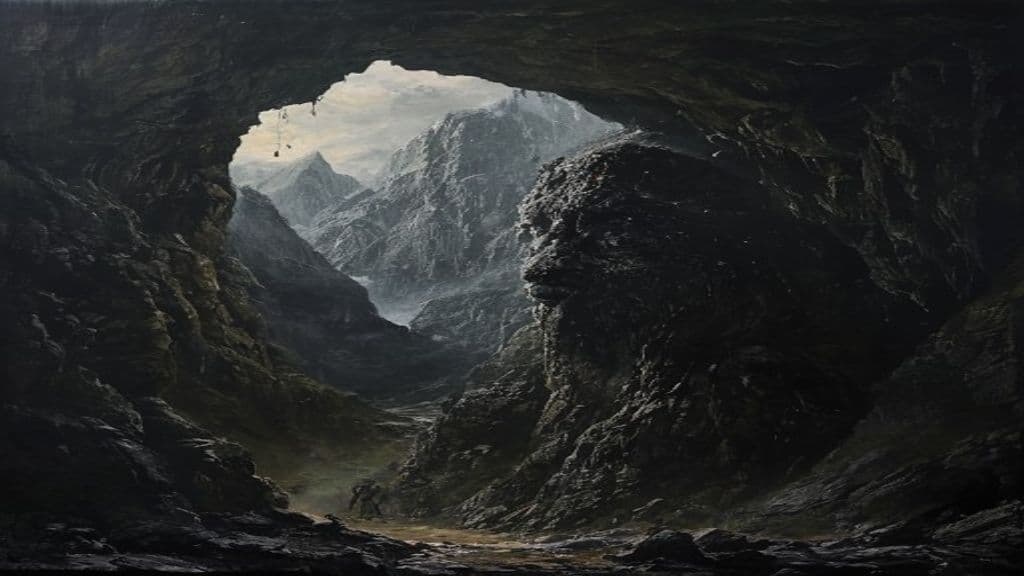
Ayar Cachi
In Inca mythology, Ayar Cachi is one of the brothers of Manco Cápac and a significant figure in the origin myth of the Incas. (Note: 1. Power tier: Lower to Ancient (deity-level) since Ayar Cachi is described as one of Manco Cápac's brothers and shares an origin myth, but does not appear to possess cosmic powers. 2. Abilities: The )
Amaru (Inca mythology)
In Inca tradition, Amaru is a double-headed serpent representing infinity, knowledge, and cosmic renewal, with the ability to traverse worlds. (Note: - Power tier should be Ancient (Amaru's abilities suggest a deity-level power) - Origin story is missing - Wards and weaknesses are not mentioned in the source material, so they should be removed or r)
Atoq (Andean fox spirit) — Untested attestation
Atoq is presented in some modern summaries as an 'Andean fox spirit' associated with Inca-related material, but the single provided source (a general overview of Inca mythology) does not itself attest specific information about Atoq. This entry therefore limits claims to what the supplied source supports and notes absent evidence where appropriate.
Ayar Cachi
In Inca mythology, Ayar Cachi is one of the brothers of Manco Cápac and a significant figure in the origin myth of the Incas. (Note: 1. Power tier: Lower to Ancient (deity-level) since Ayar Cachi is described as one of Manco Cápac's brothers and shares an origin myth, but does not appear to possess cosmic powers. 2. Abilities: The )
Huayna Pacha
Deity in Inca mythology associated with the upper world or sky, connected to weather and natural phenomena. (Note: - Power tier: Should be Ancient, not Greater, as a deity is typically on a higher power level than regional. - Sensory cues, wards, and weaknesses: None mentioned in source material; should be deleted)
Mama Ocllo
Deified mother and fertility goddess associated with the establishment of the city of Cusco and foundational power within Inca society. (Note: - Power tier: Primordial (due to her association with creation and foundational power) - Abilities: The text only mentions reproductive and maternal care powers, but it is likely that Mama Ocllo's abi)
Mama Pacha
Mama Pacha (commonly Pachamama) is an Andean/Inca deity and cosmological principle representing space-time, a maternal force that sustains life, fertility, and nature. She is presented in sources as an omnipresent, generative principle within Andean worldview rather than a narrowly localized spirit.
Mama Uqllu
Mama Uqllu (Hispanicized Mama Ocllo, Mama Occllo, Mama Okllo) is an Inca mother-figure and culture-founder associated with fertility, marriage, the menstrual cycle, and the transmission of domestic and civilizing arts (weaving, house-building). She is paired with Manco Cápac in foundation myths and appears in variant genealogies as child of either Inti and Mama Killa or of Viracocha and Mama Qucha.
Pacha (Inca mythology)
Cosmological concept representing the relationship between space and time in Inca mythology; an abstract entity embodying the interconnectedness of the physical world and time. (Note: 1. Power tier should be Primordial, but a note or explanation on how it fits into that category would help clarify its role as a fundamental cosmic relationship. 2. The summary could be more accurate,)
Vichama
In Inca mythic accounts Vichama is described as a god of death who, according to available summaries, destroyed an earlier human race created by Pacha Kamaq and then caused a new human race to be born from three eggs. A short alternative attestation describes Vichama as a god who "personifies the day."
Mam
Mam is a pan‑Maya kinship term used as a respectful appellation for aged ancestral powers and several local elder deities. It names a set of distinct local figures—mountain spirits, earth deities, a ritual straw effigy used during the Uayeb, and particular cult figures such as the Tzutujil Mam Maximón—each tied to specific places, seasons, or social domains.
Mama Huaco
Mama Huaco is an ancestral female figure in Inca origin narratives who emerges from the cave of Paqariq Tampu/Pacaritambo among the founding siblings; sources describe her as strong and skillful and record an act in which she hurled two golden staffs northward, an action tied to territorial marking in the origin cycle.
Mama Killa (Mama Quilla)
Mama Killa (Quechua: Mama Killa / Mama Quilla, 'Mother Moon') is the Inca lunar goddess and a high-ranking divine figure whose cycles regulated time, ritual order, and aspects of women's social life. She is depicted as a moon-personified woman, served by priestesses, and figured in myths explaining lunar spots and eclipses.
Community Record
- [1]Inca mythology (Wikipedia summary). Wikipedia contributors, "Inca mythology," Wikipedia, The Free Encyclopedia.wiki
- [2]Ayar Cachi. Wikipedia contributors, "Ayar Cachi," Wikipedia, The Free Encyclopedia.wiki
- [3]Manco Cápac. Wikipedia contributors, "Manco Cápac," Wikipedia, The Free Encyclopedia.wiki
- [4]Sarmiento de Gamboa — history of the Incas (excerpt). Sarmiento de Gamboa, historical accounts of the Incas (excerpted/transcribed online).other
- [5]What is the origin of the Incas? (popular summary). TicketMachupicchu.com, "What is the origin of the Incas?" (popular-retelling summary).other
- [6]Viracocha and coming of the Incas (Internet Sacred Text Archive). Internet Sacred Text Archive, "Viracocha And The Coming Of The Incas."other