
Amarynceus is presented in the sources as a member of the heroic generation tied to Elis. He is treated as a regional chief whose parentage is given in varying accounts (e.g., son of Onesimachus; son of Acetor/Alector and Diogeneia; in some accounts connected to Thessalian immigrants), and as the father of Diores and Hippostratus. Rather than a divine or chthonic origin, his identity functions to anchor local claims of lineage and participation in wider heroic events (Trojan expedition, contests surrounding Heracles and Augeas).
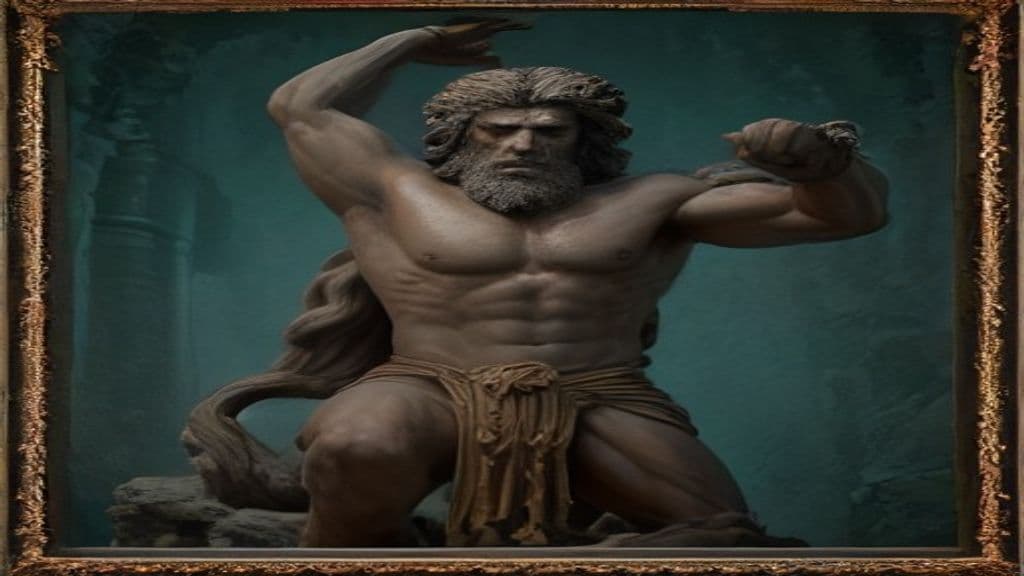
Primary sources and collected summaries provide no physical or visual description of Amarynceus. He is represented through social role, genealogy, and deeds rather than bodily detail.
No supernatural abilities are ascribed to Amarynceus in the cited materials; his capacities are political and military: he is a chief of the Eleans, an ally rewarded by Augeas (shared rule), and an actor in martial and funerary contexts. Some sources attribute direct participation in the Trojan expedition (Hyginus), while Homer records his son Diores as the named combatant, reflecting variant traditions about his military role.
Acarnan
Acarnan (Ancient Greek: Ἀκαρνάν) is an anthroponym attested in Greek mythic and epic tradition as the name of at least two distinct mortal figures: a son of Alcmaeon and Callirrhoe, and a human suitor of Penelope from Dulichium. The lexical form also appears adjectivally/ethnically (Acarnanian), linking the word to the region Acarnania; etymologically the name is reported as derived from a Greek fish-name (akarnan).
Aphareus of Messenia
Aphareus (Ancient Greek: Ἀφαρεύς) is a legendary king of Messenia attested in Greek mytho-historical genealogies. He appears in literary and local traditions as a member of heroic-age lineages, a regional ruler, and an ancestral figure used to anchor Messenian dynastic claims.
Apis
Apis (Ancient Greek: Ἄπις) is a name applied to several early mythic figures in Greek tradition—kings, a seer-healer, and local heroes—whose stories explain place-names (notably Apia/Peloponnesus) and foundational events in the Peloponnesus. Classical sources treat Apis as a mythic ancestor or culture-hero embedded in genealogies and early regal chronology rather than as a narrowly ‘otherworldly’ being.
Pandion II
Pandion II (Ancient Greek: Πανδίων) is a legendary king in Greek mytho-historical tradition, presented in Athenian royal succession lists as a heroic-age ruler and ancestral figure. He is portrayed as son of Cecrops II, father of Aegeus and others, exiled by rivals to Megara where he became king and received local hero-cult commemoration.
Telamon
Telamon (Ancient Greek: Τελαμών) is a mortal heroic king and warrior from archaic Greek myth, son of Aeacus and the nymph Endeïs in many accounts, father of Ajax and Teucer, and a participant in pan‑Hellenic episodes (Argonauts, Calydonian Boar hunt, allied actions with Heracles). He functions primarily as an ancestor‑hero who links civic lineages (Aegina, Salamis, Megara) into the epic heroic world.
Thersander (Epigoni)
Thersander is a mortal heroic prince of the Theban cycle, son of Polynices and counted among the Epigoni who led the successful second attack on Thebes; several accounts make him king of Thebes and state he intended to join the Greeks at Troy but was killed before the expedition.
Tlepolemus
Tlepolemus (Ancient Greek: Τληπόλεμος, Tlēpólemos, 'enduring war') is a mortal hero of Greek myth, a son of Heracles who leads the Rhodian contingent at Troy, wounds and is slain by Sarpedon, and—after killing Licymnius—founds the three Rhodian cities Cameirus, Ialysus, and Lindus.
Amarillodon
No folkloric or supernatural entity named "Amarillodon" is documented in the supplied sources. The name components that resemble "Amarillodon" occur in paleontological and geological contexts (e.g., the Mata Amarilla Formation and the taxonomic suffix -don), and the available materials treat these as scientific labels rather than names for beings in a belief tradition.
Amarok
In Greenlandic Inuit tradition the Amarok (also Amaroq) is a singular, gigantic wolf-like spirit said to hunt alone and to interact powerfully with humans: stalking and devouring lone nocturnal hunters, wresting with humans to bestow strength in Rink's tales, and — in another tale — dragging a humanoid from the water and taking a mourner's soul. The term in some dialects is reserved for this legendary wolf, while other Arctic peoples may use the word for ordinary wolves.
Amaru (Inca mythology)
In Inca tradition, Amaru is a double-headed serpent representing infinity, knowledge, and cosmic renewal, with the ability to traverse worlds. (Note: - Power tier should be Ancient (Amaru's abilities suggest a deity-level power) - Origin story is missing - Wards and weaknesses are not mentioned in the source material, so they should be removed or r)
Amasagnudi
Amasagnudi is a late-attested Mesopotamian divine attendant (nin-sukkal) associated with the sky-god Anu. She appears primarily in lexical and god-list texts and was integrated into the Seleucid-period reorganization of Uruk's pantheon, where she is paired with the male attendant Papsukkal.
Amata
Amata is a legendary early-Roman queen in Virgil's Aeneid: wife of Latinus and mother of Lavinia. In the epic she opposes Aeneas' claim on Lavinia, hides her daughter, rallies Latin women against the Trojans, and ultimately commits suicide when she believes Turnus has died. Dante later cites her in Purgatorio (Canto 17) as an exemplum of the vice of wrath.
Community Record
- [1]Amarynceus — Wikipedia. Wikipedia entry summarizing classical references to Amarynceus.wiki
- [2]Pausanias — Description of Greece (Elis material summarized). Pausanias' account as summarized in archival compilation: reports Amarynceus' service to Augeas and shared rule.literary
- [3]Hyginus (as cited). Summary citation noting Hyginus reports Amarynceus joined the Trojan expedition with nineteen ships.literary
- [4]Homeric references (Diores, Amarynceides). Homer names Diores, son of Amarynceus (Amarynceides), among the participants in the Trojan War; Homer does not list Amarynceus himself.literary
- [5]Myths.uvic.ca — Amarynceus entry. University of Victoria myth catalog entry summarizing variant genealogies and traditions concerning Amarynceus.other
- [6]Pantheon.org — Amarynceus. Reference summary of Amarynceus' role as chief of the Eleans and related traditions.other