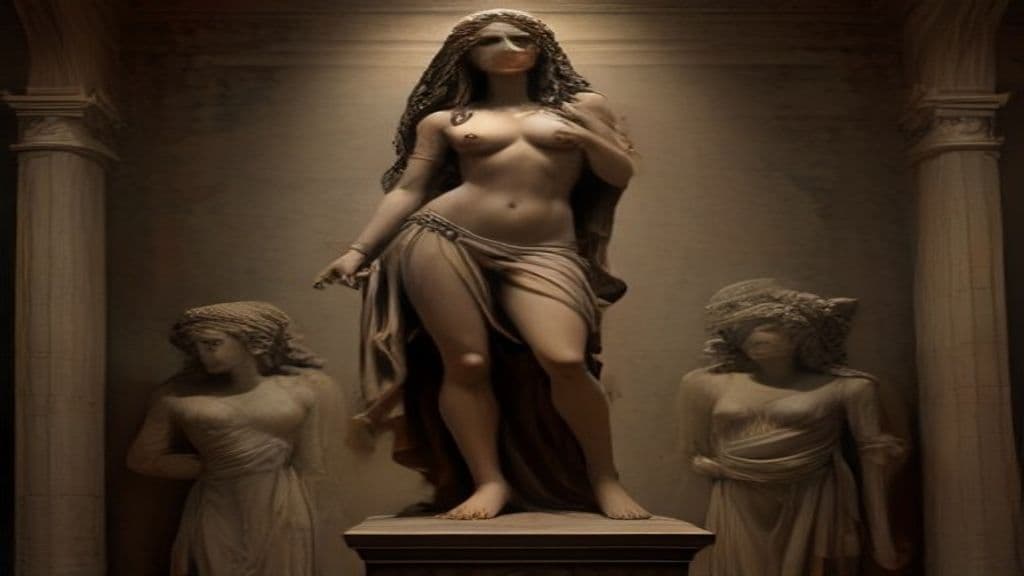
In the extant summaries of Greek tradition Amymone appears within the Danaid cycle and in local etiologies for springs. In multiple accounts she is one of Danaus’s daughters; in narratives preserved in later summaries she is sent to fetch water and becomes the focus of an episode in which a rustic pursuer (a satyr in some versions) threatens her. Poseidon intervenes in those versions, either driving off the attacker or seizing Amymone, and by striking the ground with his trident produces a spring at or near Lerna that thereafter bore her name. Some authors conflate the Danaid Amymone with a naiad daughter of Inachus or with Hypermnestra (the Danaid sometimes singled out as the one who spared her husband), and sources vary on whether Amymone is counted among the Danaids who killed their husbands or is the exceptional, 'blameless' sister.
No canonical, detailed physical description is preserved in the supplied corpus beyond conventional iconographic representation. In terracotta vases and Pompeian wall-paintings Amymone is depicted as a standing young woman, often shown in the narrative moment with Poseidon (Neptune), attendant figures (Eros), or a satyr; attributes associated with the scenes include the presence of water and the spring. Museum captions and object descriptions imply typical youthful female dress and the water-fetcher role (pitcher/water context), but no unique marks or supernatural visual signs are recorded in the provided materials.
The sources do not attribute independent supernatural powers to Amymone herself. Her effective 'powers' in the tradition are eponymous and genealogical: a spring is named after her when Poseidon produces water at her presence, and she is mother to notable descendants (commonly given as Nauplius in many accounts; in some variants identification with Hypermnestra links her to Abas). She is also an active human agent within household and dynastic narratives (sent to fetch water, subject to pursuit), and in some traditions her identity overlaps with naiad figures—though primary agency for miraculous events rests with Poseidon rather than with Amymone.
Weaknesses
- conditionmortal status (no independent divine agency)
- otherdependence on Poseidon for miraculous effect (spring production attributed to the god rather than to Amymone herself)
Wards
- othernone attested (no apotropaic rites or protective practices against Amymone recorded in supplied sources)
- othersite cult orientation (the evidence records cultic recognition of the spring at Lerna rather than protective rites directed at Amymone)
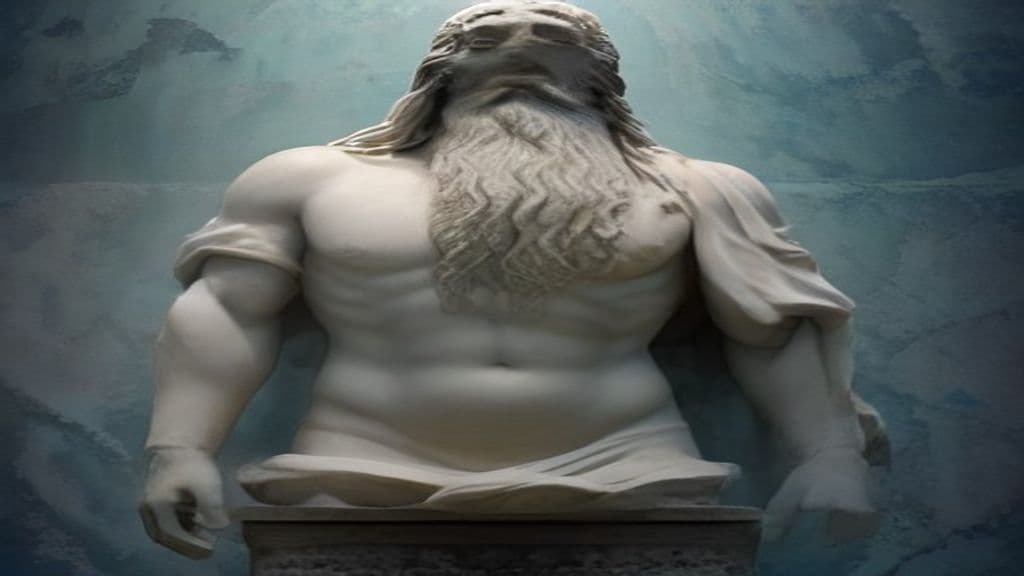
Poseidon
Poseidon is a principal deity of the ancient Greek pantheon, counted among the Twelve Olympians; he presides over the sea, storms, earthquakes and horses and functions as protector of seafarers and guardian of cities and colonies.

Naiad
A class of female nature-spirits in ancient Greek religion whose being is bound to particular bodies of fresh water (springs, wells, fountains, streams). Naiads are local, embodied presences venerated in community cults and invoked in rituals of purification, healing, and life-cycle events, yet they may also act harmfully toward humans.
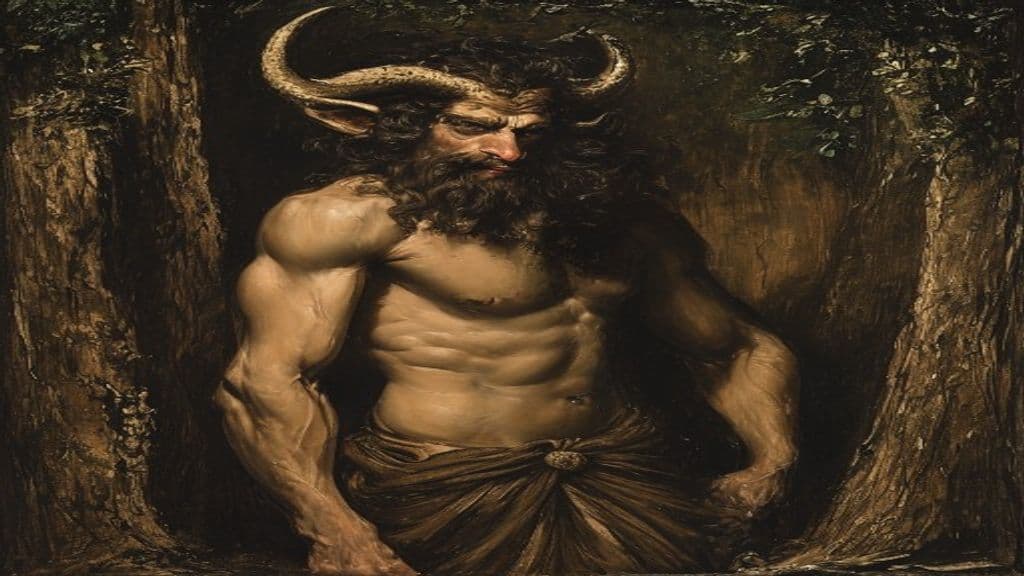
Satyr
In ancient Greek tradition a satyr (σάτυρος, sátyros) is a male nature spirit of woodlands, mountains, and pastures who accompanies Dionysus (and is later identified with Pan/fauns). Satyrs embody ribaldry, music, dance, and unrestrained sexuality and appear collectively (as a chorus) in the satyr play as well as individually in mythic episodes (e.g., Marsyas, Silenus).
Abderus
Abderus (Ancient Greek: Ἄβδηρος, romanized Ábdēros) is a mortal heroic figure in Greek myth closely associated with Heracles, remembered as the youth left in charge of the Mares of Diomedes who was killed by them. He functions as an eponymous local/divine-hero ancestor for the city of Abdera and received funerary commemoration and athletic agones at his tomb.
Acamas
Acamas (Ancient Greek: Ἀκάμας) is a personal name recurrent in ancient Greek narrative traditions applied to multiple human characters (warriors, princes, suitors), once to a Cyclops, and once as a hound's name. Rather than a single supernatural entity, bearers of the name appear episodically across the Trojan War, Theseid, and Theban cycles as mortal actors whose deeds intersect with gods and fate.
Acarnan
Acarnan (Ancient Greek: Ἀκαρνάν) is an anthroponym attested in Greek mythic and epic tradition as the name of at least two distinct mortal figures: a son of Alcmaeon and Callirrhoe, and a human suitor of Penelope from Dulichium. The lexical form also appears adjectivally/ethnically (Acarnanian), linking the word to the region Acarnania; etymologically the name is reported as derived from a Greek fish-name (akarnan).
Acastus
Acastus is a mortal heroic figure of ancient Greek tradition: son of Pelias who became king of Iolcus, an Argonaut who sailed with Jason, and an actor in the post-Argonautic cycle involving Medea, Peleus, and the aftermath of Pelias’s death. He is attested as performing civic and ritual actions (burying Pelias, instituting funeral games, purifying Peleus) and as a participant in vendetta episodes that end in violent reprisals.
Acmon
Acmon (Ancient Greek: Ἄκμων, 'anvil') is a polyvalent personal name in Greek myth borne by several distinct minor figures — a Dactyl (artisan), a Phrygian eponymous king, a mischievous woodland creature, companions in epic cycles (one companion of Diomedes transformed into a bird; an Aenead), and in some brief traditions an alleged father of Uranus. The name therefore functions across artisanal, topographical, trickster, and metamorphosis motifs rather than denoting a single unified supernatural species.
Acrisius
Acrisius (Ancient Greek: Ἀκρίσιος, Akrisios) is a mythic-historical king of Argos in Greek tradition whose narrative is defined by an oracular prophecy foretelling his death by his daughter's son. He is portrayed as a mortal ruler entangled with dynastic rivalry, oracular authority, and the eventual accidental fulfillment of fate.
Aeacidae
The Aeacidae are a dynastic lineage in Greek myth and historiography descended from the hero Aeacus, son of Zeus and the nymph Aegina. The name functions as a patronymic designation for those 'of Aeacus' and is used to claim genealogical legitimacy and political prestige in regions such as Aegina and Molossian Epirus.
Aegipan
Aegipan (Αἰγίπαν / Αἰγίπανος) is an ancient Greek mythological figure associated with goat attributes and with the sea‑goat imagery of the constellation Capricornus. He appears in classical myth as a semi‑divine helper (notably in the Typhon episode) and, in later natural‑history and medieval bestiary reception, the name is applied to satyr‑like or ape‑like wild men in distant lands.
Aegisthus
Aegisthus (Greek Αἴγισθος, Aigisthos) is a mortal member of the House of Atreus in Greek myth who, born of incestuous circumstances and raised by shepherds and a goat, participates in dynastic murder and usurpation — notably the slaying of Atreus in some accounts and the conspiracy (with Clytemnestra) that results in Agamemnon's death — and is later killed by Orestes, an episode that figures in narratives about inherited guilt, vengeance, and the transition from private retribution to public justice.
Aepytus
Aepytus (Ancient Greek: Αἴπυτος, Aíputos/Aípytos, lit. 'steep, high, lofty') is a personal name in Greek myth borne by several legendary kings tied to Arcadian and Heraclid genealogies. The figures named Aepytus function as ancestral/dynastic nodes in literary genealogies and later literary receptions rather than as supernatural beings.
Aeson
Aeson (Ancient Greek: Αἴσων) is a legendary mortal king of Iolcus in Thessaly in Greek myth, best known as the father of the hero Jason. His fate—imprisonment by his half-brother Pelias and either suicide or a miraculous restoration performed by Medea—provides the dynastic and moral background for the Argonautic cycle.
Aethalides
Aethalides is a personal name borne by two distinct figures in ancient Greek myth: one listed among the Argonauts as a son of Hermes and Eupolemeia, and another named among the Tyrrhenian sailors who attempted to deceive Dionysus and was transformed into a dolphin. The sources treat Aethalides as named human mythic personages appearing in separate narrative contexts rather than as a class of supernatural being.
Community Record
- [1]Amymone (Wikipedia). Wikipedia entry 'Amymone' (summary of literary variants, name meaning, connection to Lerna and Poseidon, conflations with Hypermnestra and a naiad daughter of Inachus)wiki
- [2]Amymone (Wikidata). Wikidata item for Amymone (identification as daughter of Danaus)wiki
- [3]Terracotta pelike (jar) — MMA (Archive item). Museum/object caption describing a scene of Amymone with Poseidon and a satyr; notes rescue and spring produced by Poseidon's tridentother
- [4]Terracotta hydria (kalpis) — MMA (Archive item). Museum/object caption describing Amymone iconography (standing female with Poseidon and attendant figures)other
- [5]Pompeii wall painting (Casa della Regina Margherita / Casa dell’ Ancora). Pompeian wall-painting images and captions showing Neptune/Poseidon with Amymone in Roman-era muralsother
- [6]Aeschylus' Amymone (GRBS article / fragmentary evidence). Scholarly note that Aeschylus wrote a satyr play Amymone (part of the Danaid cycle); reflects theatrical tradition rather than extant ritual textacademic
- [7]Pleiades place resource: Amymone. Place resource listing for a location named Amymone (associates toponyms with the mythic figure)academic