
In the surviving Eddic tradition summarized in the Prose Edda (Gylfaginning) and reflected in Poetic Edda references (Völuspá hin skamma as reported in secondary summaries), Angrboða is presented as a jötunn who became the mate of Loki and bore three children—Fenrir the wolf, Jörmungandr the Midgard serpent, and Hel the ruler of the dead. These children are subsequently separated from the Æsir world by the gods (Fenrir bound, Jörmungandr cast into the sea, Hel assigned a realm), and their destinies figure centrally in accounts of Ragnarök. Scholarly commentary noted in the sources also observes that the name Angrboða may first appear in the written record in the later medieval period (roughly twelfth century), while the motif of Loki fathering monstrous offspring may derive from older oral strands.
The primary medieval attestations identify Angrboða by social category (a jötunn or giantess) and by association with Járnviðr (Ironwood) but do not supply a detailed physical description. Sources consistently call her a giantess and imply residency among the female jötnar of Ironwood (the Völuspá reference as summarized in secondary material). No explicit details of stature, coloration, garments, or distinguishing marks are preserved in the cited summaries.
Surviving texts and the modern summaries provided attribute Angrboða's significance chiefly to her role as mother and participant in divinely consequential kinship ties: her three offspring become agents in the prophetic order culminating in Ragnarök. The supplied sources do not ascribe specific independent magical acts, spells, or other supernatural interventions to Angrboða herself; rather, her importance in the tradition rests on genealogical and cosmological functions recorded in Gylfaginning and the Völuspá material summarized by later compilers and modern references.
Weaknesses
- otherNo weaknesses attested in supplied sources
Wards
- otherNo wards attested in the medieval sources or supplied materials
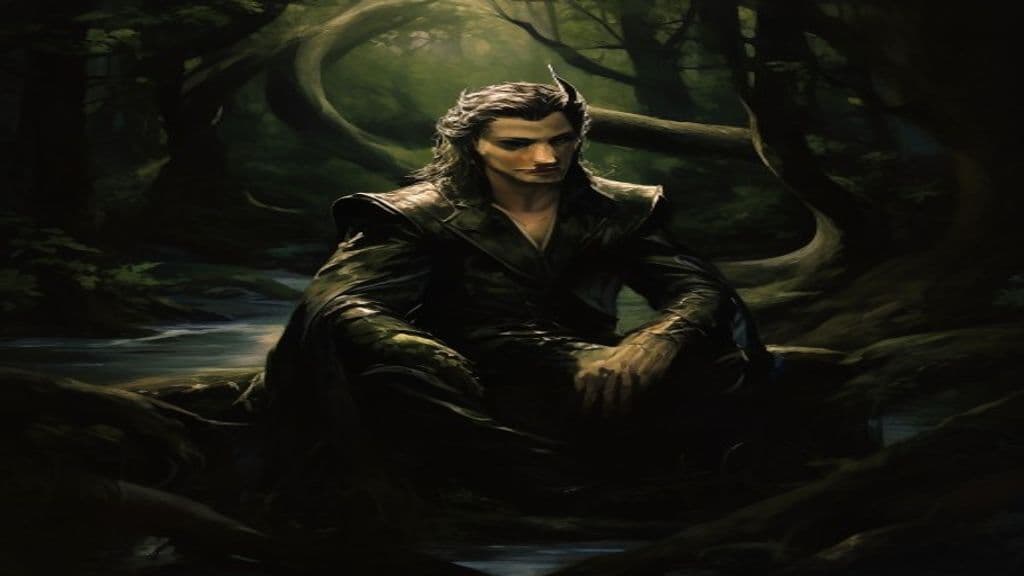
Loki
A complex figure in Old Norse myth: son of a jötunn and the female figure Laufey, resident among the Æsir, a shape‑changing trickster whose cunning alternately aids and undermines the gods and who is bound for his role in Baldr's death before breaking free to fight at Ragnarök.
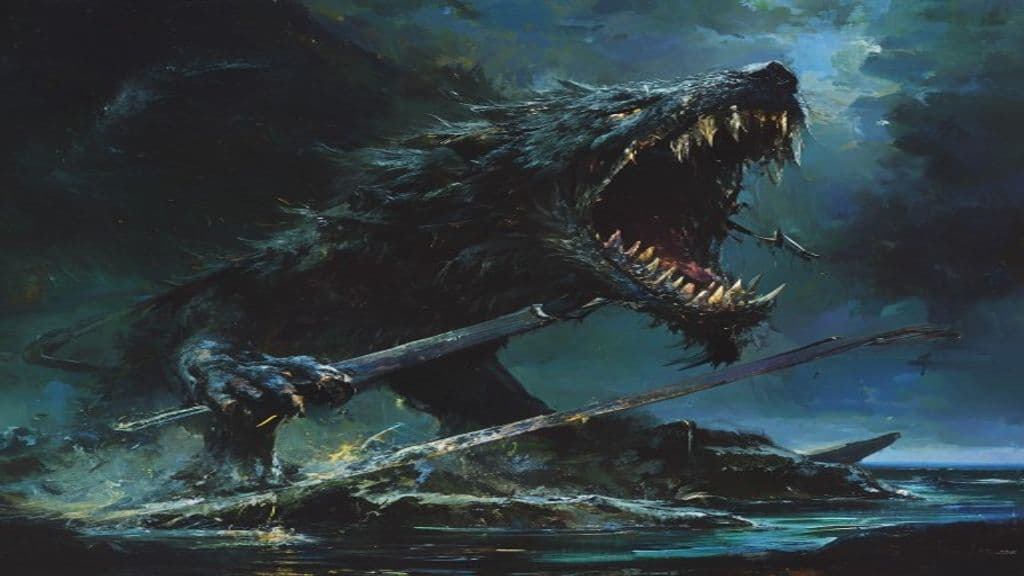
Fenrir
The monstrous wolf son of Loki, bound by the gods with a magical ribbon until Ragnarök — when he will break free and swallow Odin, and the world.

Jörmungandr
In Norse mythology, Jörmungandr is an unfathomably large sea-serpent, the Midgard Serpent or World Serpent, that dwells in the world sea and encircles Midgard, biting its own tail; Jörmungandr releasing his tail is described as one of the signs of the beginning of Ragnarök. The name has been reused in modern astronomy for near-Earth asteroid 471926 Jormungandr (provisional 2013 KN6), discovered 28 May 2013.
Andvari
Andvari is a dwarf from Old Norse sources (attested in the 12th century) who lives beneath a waterfall, hoards gold, owns a magical ring called Andvaranaut, can change into a pike, and curses the gold when it is stolen—events that set in motion tragic outcomes in Norse heroic narrative.
Ask and Embla
In Norse myth Ask (Askr) and Embla (Embla) are the first human man and woman, fashioned from wood/trees by the gods at the beginning of the cosmos and endowed with the gifts that make them human; they serve as the progenitors of humankind in the Norse cosmological narrative.
Atter
In Norse tradition, Atter refers to various forms of poison, corruption, or noxious influence that can manifest physically or morally. (Note: * Power tier should be Primordial only for its ability to cause cosmic-scale harm (e.g., societal consumption). However, most of its described abilities fall under Greater or Lesser powers, implying A)
Aurboða
Aurboða is a jötunn (giantess) in Norse mythology attested as the wife of the jötunn Gymir and mother of the jötunn Gerðr; the name also appears separately as one of the nine maidens in the poem Fjölsvinnsmál. Her name is debated etymologically as either 'gravel-bidder' (aurr + boða) or, in an alternative reading, 'gold-bidder' (aur + boða).
Auðumbla
Auðumbla is the primeval cow of Old Norse cosmogony attested in the Prose Edda: she nourishes the primordial jötunn Ymir with rivers of milk and by licking salty rime-stones reveals Búri, an ancestor of the gods. Her name and role link fertility, nourishment, and the emergence of key lineages in the Norse origin narrative.
Baldr
Baldr (Old Norse Baldr; Old English Bældæġ; Old High German Balder/Palter) is a god in Germanic mythology. In the Norse branch he is named as a son of Odin and Frigg and as a member of the Aesir, attested alongside brothers such as Thor and Váli in the supplied sources.
Barri
Barri (also attested Barrey/Barey) is a mythic place-name in Old Norse tradition, named in Skírnismál and Snorri Sturluson’s Gylfaginning as the rendezvous-site where Freyr and Gerðr will meet nine nights after prior events. The term is etymologically ambiguous between a grove/wood and an island or a grain-field, and scholars debate whether its semantic field evokes woodland or agricultural fertility.
Baugi
Baugi is a jötunn (giant) in Old Norse myth who appears as a secondary actor in the mead of poetry narrative preserved in Skáldskaparmál and the þulur. He is presented as the brother of Suttungr, provides and uses an auger named Rati to bore into the mountain Hnitbjörg, and figures in Odin's (Bölverk’s) bargain and deception to obtain the mead of poetry.
Beli
Beli is a jötunn (giant) in Old Norse myth known chiefly as an adversary slain by the god Freyr. Attestations are fragmentary: he appears in Eddic and skaldic references as the named foe of Freyr and as an element in kennings, and scholars treat the fuller myth as largely lost.
Bergelmir
Bergelmir is a jötunn in Norse mythology, attested as a descendant of the primordial giant Aurgelmir (Ymir) and portrayed as the survivor who preserves the frost-jötunn line after the primeval flood caused by Ymir's death. He appears in two primary Old Norse contexts: the poem Vafþrúðnismál (where he is implied to be an infant laid in a lúðr) and Snorri Sturluson's Gylfaginning (where he and his wife escape on a lúðr).
Beyla
Beyla is a minor attendant of the Vanir god Freyr attested only in the Poetic Edda poem Lokasenna (prose introduction and stanzas 55 and 66). Surviving texts give her no independent cult or clear domain; modern scholars have proposed she may be an agricultural personification based on name-interpretation and association with Freyr.
Blóðughófi
Blóðughófi (variant Blóðhófr) is a named mythic horse in Old Norse poetic tradition attested in þulur (name-lists) as the steed associated with the god Freyr, glossed literally as "Bloody Hoof." The attestations are primarily catalogic rather than narrative, and no extended mythic episodes or independent powers are directly ascribed to this horse in the surviving cited materials.
Community Record
- [1]Angrboða — Wikipedia summary (provided). "Angrboða is a jötunn in Norse mythology. She is the mate of Loki and the mother of monsters. She is only mentioned once in the Poetic Edda as the mother of Fenrir by Loki. The Prose Edda (Gylfaginning) describes her as 'a giantess in Jötunheimar' and as the mother of three monsters: the wolf Fenrir, the Midgard serpent Jörmungandr, and the ruler of the dead Hel."wiki
- [2]Wikidata: Angrboða. Wikidata entry for Angrboða (structured data summary linked to the same attestations).other
- [3]The Sinister Legacy of Loki: The Fate of His Offspring (video summary — archive). "Loki's offspring, born of unions with a witch and a giantess named Angrboða, were deemed monstrous by the Aesir gods. The All-Father Odin, foreseeing a prophecy that implicated Loki's children in the onset of Ragnarok, took preemptive measures to alter their fates." — contemporary video summary included in source set.other
- [4]God of War Ragnarok already has haters (game reveal commentary — archive). Contemporary media coverage and commentary illustrating modern visual reinterpretations and audience reactions to portrayals of Angrboda in popular media.other
- [5]Atreus y Angbroda Fanart (archive). Example of fan art and modern reinterpretation; cited as a modern creative depiction rather than an historical source.other
- [6]Danheim - Jörmungandr (Midgard Serpent). Modern artistic/modern-media piece referencing the Prose Edda tradition about Jörmungandr as Angrboða's offspring and its casting into the ocean; used as a contemporary reflection of the classical narrative.other