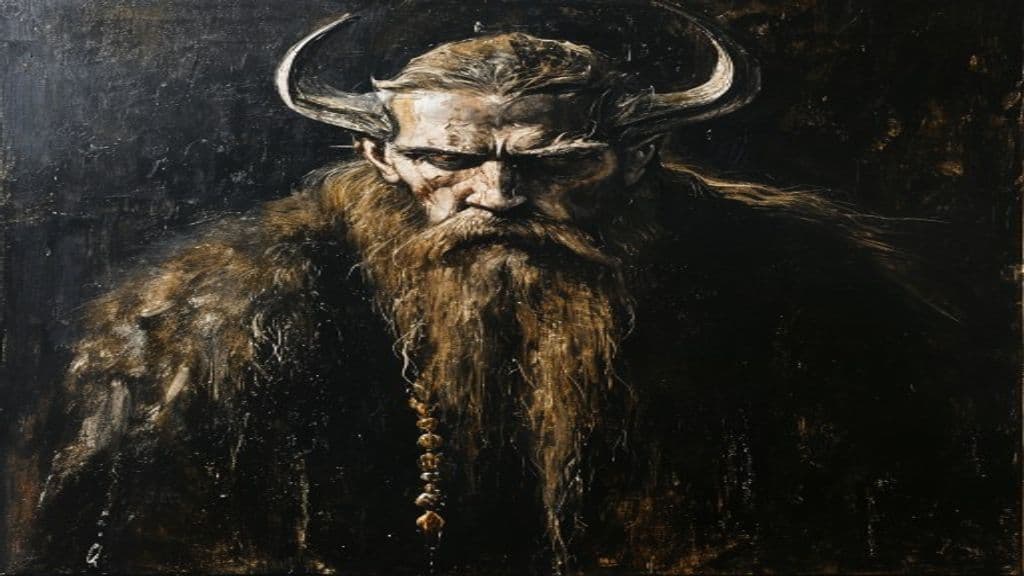
In the Norse mythic corpus Baldr is presented as a son of Odin and Frigg, brother to gods including Thor and the blind Höðr, husband to Nanna and father of Forseti. Mythic narratives (Poetic Edda and Prose Edda summaries) relate that Baldr began to have ill omens and prophetic dreams; despite Frigg extracting oaths from almost all things not to harm him, Loki tricked Höðr into slaying Baldr by directing a mistletoe projectile. Baldr's death is followed by the birth of Váli to avenge him; his death is portrayed as both a great tragedy for the Æsir and a harbinger of Ragnarök, with later prophecy (Völuspá) envisioning Baldr's return in the renewed, peaceful world.
Primary Eddic poems and summaries offer no consistent, detailed physical portrait; sources emphasize his being beloved and, in medieval prose summaries and later scholarly tradition, associate him with beauty and a shining aspect. Snorri's prose tradition and older scholarship link Baldr with shining/white attributes inferred from name-derivation theories, but the Poetic Edda itself provides no extended bodily description.
Baldr's powers are expressed chiefly as moral and social authority: he is universally loved by gods and mortals and occupies beautiful possessions such as the ship Hringhorni and the hall Breiðablik. He is central in prophetic and cosmological motifs — his death and promised return shape eschatological narrative — rather than shown performing explicit magical feats in the supplied materials. The Merseburg Incantation (continental Germanic) names Balder(es) in a healing charm context (though identification is debated), indicating that his name could appear in therapeutic/song-ritual settings.
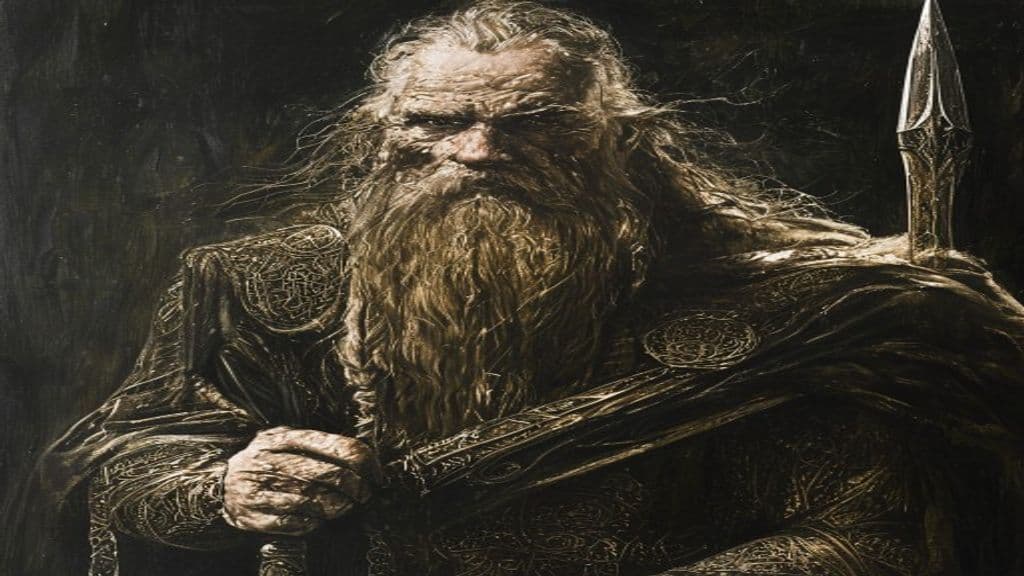
Odin
Odin (Old Norse: Óðinn) is the chief god of the Norse (Æsir) pantheon, a multifaceted deity associated with wisdom obtained by sacrifice, poetic inspiration, death and warfare, and rulership over the hall Valhöll where chosen slain warriors (einherjar) dwell. He appears throughout Germanic tradition from Roman-era accounts through the Viking Age and in later folklore as leader of the Wild Hunt.
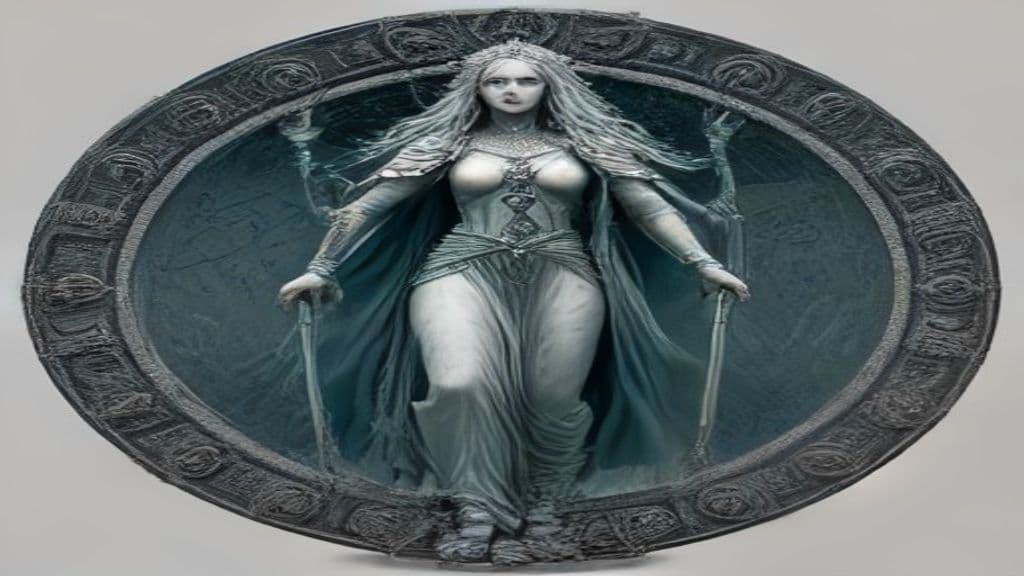
Frigg
Frigg is an Old Norse goddess of the Æsir, foremost among the pantheon as Odin's wife, associated with marriage, motherhood and foresight. She dwells in Fensalir and is attested across North and West Germanic traditions (Old Norse Frigg; Old English Frīg; Old High German Frīja; Lombardic Frea). Her name survives in the weekday Friday and persisted in Scandinavian folklore after Christianization.
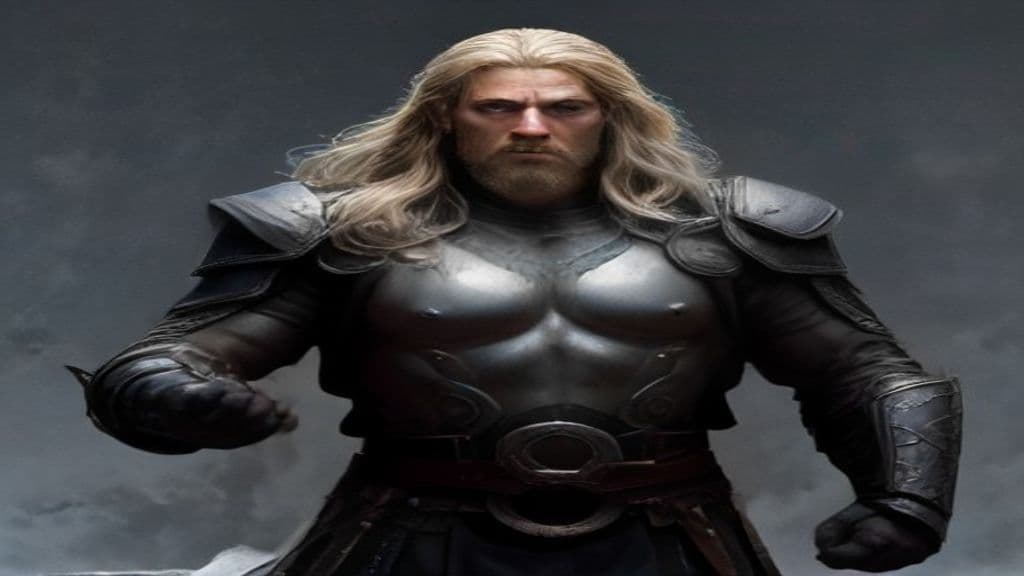
Thor (Þórr)
Thor (Old Norse Þórr) is a central god in the pre-Christian Germanic/Norse religious framework, primarily associated with thunder, storms, strength, protection, fertility, and the welfare of farmers. He is a hammer-wielding warrior who fights monstrous enemies (notably Jörmungandr) and is widely attested from Roman-era Germania through the Viking Age, with ongoing cultural presence in personal and place-names and weekday nomenclature (Thursday).
Alp
A German nightmare demon — often the projected spirit of a living person — who sits on sleeping victims' chests causing terrifying dreams, sleep paralysis, and wasting illness.
Andvari
Andvari is a dwarf from Old Norse sources (attested in the 12th century) who lives beneath a waterfall, hoards gold, owns a magical ring called Andvaranaut, can change into a pike, and curses the gold when it is stolen—events that set in motion tragic outcomes in Norse heroic narrative.
Angrboða
Angrboða is a jötunn (giantess) in Norse myth attested briefly in the Poetic Edda and Prose Edda as the partner of Loki and the mother of three world‑shaping offspring: Fenrir, Jörmungandr, and Hel. Surviving medieval attestations are sparse; most descriptions of her beyond genealogy derive from modern retellings and popular culture.
Ask and Embla
In Norse myth Ask (Askr) and Embla (Embla) are the first human man and woman, fashioned from wood/trees by the gods at the beginning of the cosmos and endowed with the gifts that make them human; they serve as the progenitors of humankind in the Norse cosmological narrative.
Atter
In Norse tradition, Atter refers to various forms of poison, corruption, or noxious influence that can manifest physically or morally. (Note: * Power tier should be Primordial only for its ability to cause cosmic-scale harm (e.g., societal consumption). However, most of its described abilities fall under Greater or Lesser powers, implying A)
Aurboða
Aurboða is a jötunn (giantess) in Norse mythology attested as the wife of the jötunn Gymir and mother of the jötunn Gerðr; the name also appears separately as one of the nine maidens in the poem Fjölsvinnsmál. Her name is debated etymologically as either 'gravel-bidder' (aurr + boða) or, in an alternative reading, 'gold-bidder' (aur + boða).
Auðumbla
Auðumbla is the primeval cow of Old Norse cosmogony attested in the Prose Edda: she nourishes the primordial jötunn Ymir with rivers of milk and by licking salty rime-stones reveals Búri, an ancestor of the gods. Her name and role link fertility, nourishment, and the emergence of key lineages in the Norse origin narrative.
Barri
Barri (also attested Barrey/Barey) is a mythic place-name in Old Norse tradition, named in Skírnismál and Snorri Sturluson’s Gylfaginning as the rendezvous-site where Freyr and Gerðr will meet nine nights after prior events. The term is etymologically ambiguous between a grove/wood and an island or a grain-field, and scholars debate whether its semantic field evokes woodland or agricultural fertility.
Baugi
Baugi is a jötunn (giant) in Old Norse myth who appears as a secondary actor in the mead of poetry narrative preserved in Skáldskaparmál and the þulur. He is presented as the brother of Suttungr, provides and uses an auger named Rati to bore into the mountain Hnitbjörg, and figures in Odin's (Bölverk’s) bargain and deception to obtain the mead of poetry.
Beli
Beli is a jötunn (giant) in Old Norse myth known chiefly as an adversary slain by the god Freyr. Attestations are fragmentary: he appears in Eddic and skaldic references as the named foe of Freyr and as an element in kennings, and scholars treat the fuller myth as largely lost.
Bergelmir
Bergelmir is a jötunn in Norse mythology, attested as a descendant of the primordial giant Aurgelmir (Ymir) and portrayed as the survivor who preserves the frost-jötunn line after the primeval flood caused by Ymir's death. He appears in two primary Old Norse contexts: the poem Vafþrúðnismál (where he is implied to be an infant laid in a lúðr) and Snorri Sturluson's Gylfaginning (where he and his wife escape on a lúðr).
Beyla
Beyla is a minor attendant of the Vanir god Freyr attested only in the Poetic Edda poem Lokasenna (prose introduction and stanzas 55 and 66). Surviving texts give her no independent cult or clear domain; modern scholars have proposed she may be an agricultural personification based on name-interpretation and association with Freyr.
Community Record
- [1]Balder - Wikipedia. "Baldr in Old Norse, Bældæġ in Old English, Balder or Palter in Old High German, is a god in Germanic mythology. In Norse mythology, he is a son of the god Odin and the goddess Frigg, and has numerous brothers, such as Thor and Váli."wiki
- [2]Balder - Wikidata. Wikidata entry for Balder (records modern onomastic usage and identifiers).other
- [3]Friday the 13th: Baldr, Baphomet & The Knights Templar (podcast listing). Episode description lists 'Balder The Beautiful' among discussed Norse myth themes and situates Baldr within modern cultural discussion of myth and superstition.other
- [4]Baldur — Wikidata. Wikidata item summarizing associations with light, beauty, love and happiness.wiki